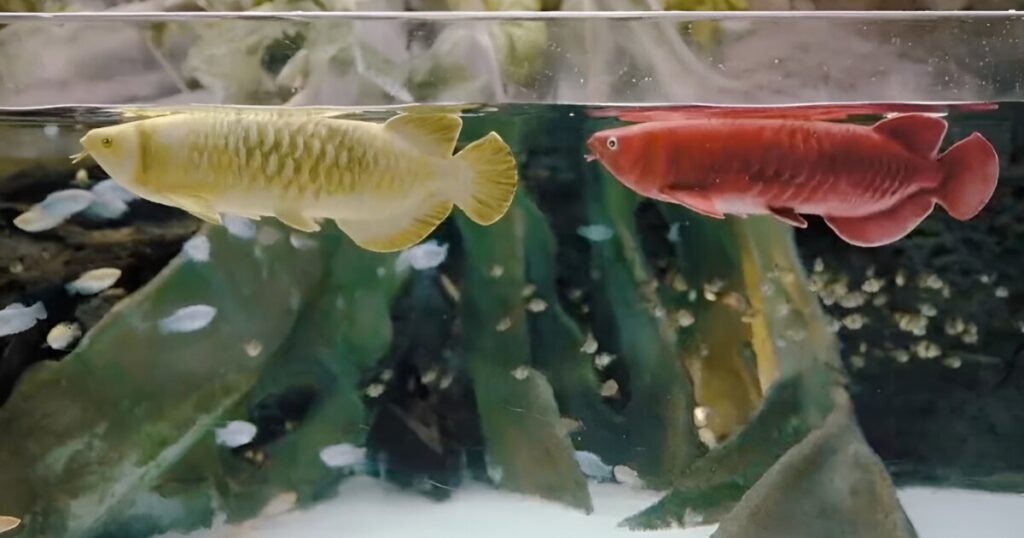
A robot fish indistinguishable from a real one: an aquarium that requires no maintenance
An aquarium with exotic fish is a decoration for any home or office. It has long been known that animals help reduce stress, and watching fish often works as a simple form of home meditation. But keeping finicky tropical fish requires serious knowledge, time, and money. Chinese company FullDepth has proposed a radical solution: a soft-bodied robot fish that swims so realistically that telling it apart from a live arowana at first glance is nearly impossible. The only thing it needs is a daily battery charge.
What Is the FullDepth Bionic Fish and How Does It Work
The device is officially called the Intelligent Soft-Bodied Bionic Arowana and is manufactured by Chinese company FullDepth — a Shenzhen-based manufacturer specializing in underwater devices, ROVs (remotely operated underwater vehicles), and cameras. In other words, this is not a garage startup but a company with real experience in underwater robotics. Engineers have long been creating robots that mimic animal behavior, and the bionic fish is a logical continuation of that work.
The robot measures 69 cm in length and 20 cm in height, weighs 3.8 kg, and can swim at speeds of up to 1.9 km/h — roughly as leisurely as a live arowana in an aquarium. A single charge of its lithium battery provides up to 12 hours of autonomous swimming.
The Bionic Arowana is available in standard colors — gold and red — although custom coloring can be ordered, as well as a robot modeled after a different fish species. The device was unveiled in China in March 2026.
How the Robot Fish Works and Imitates Swimming
The main engineering challenge was to make the robot move through water not like a rigid toy but like a living creature. According to FullDepth, the robot “uses neuromotor models of fish combined with AI algorithms and high-precision orientation control to realistically imitate the swimming behavior of an arowana.”
In practice, this means the robot’s soft body bends in a wave-like motion, like the body of a real fish, rather than simply spinning a propeller. It is precisely this approach that makes the movements so natural that the result looks quite convincing even on video. A similar logic underlies the field where robots are made from soft materials to move more naturally and interact more safely with their environment.
By default, the robot arowana swims around the aquarium autonomously, but it can also be guided using a wireless remote control — though radio control only works at shallow depths. The robot’s maximum operating depth is 20 meters, which far exceeds the dimensions of any home aquarium and opens up possibilities for use in public water features.
Why Arowanas Are Difficult to Keep in a Home Aquarium
To appreciate the point of this invention, it’s worth understanding that the arowana is one of the most demanding aquarium fish in the world. These freshwater fish, found mainly in the Amazon basin, are highly prized among aquarists but are very finicky to keep: they need live food, perfectly clean water with strictly defined parameters, and a large aquarium, since adults can grow up to 120 cm.
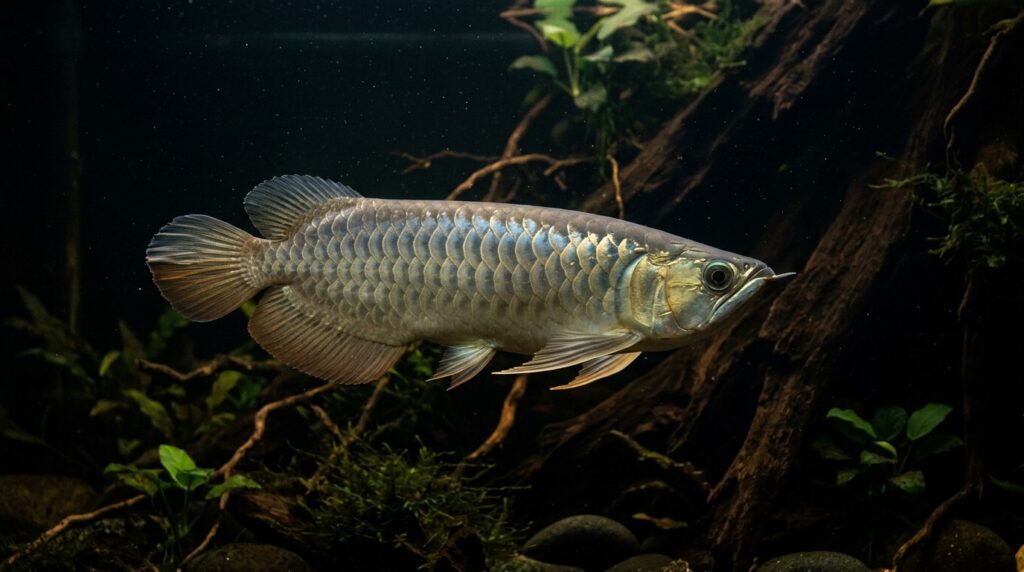
A live arowana — one of the largest and most demanding aquarium fish
The minimum recommended aquarium volume for an arowana is 150 gallons (about 570 liters), and ideally you need a tank 2.5 meters long with a volume of at least 950 liters. Arowanas are more sensitive to nitrates than most fish, so owners must regularly perform partial water changes and constantly monitor the chemical composition.
Additionally, arowanas are powerful jumpers, capable of leaping out of the water if something startles them. Adult arowanas are also loners — keeping multiple specimens together causes stress and aggression. In short, this is a fish for true enthusiasts with a large budget and plenty of time.
How Much Does the Robot Fish Cost, and What About a Live Arowana Today
A representative from FullDepth stated that the robot arowana is not yet officially sold outside China, and the final retail price has not been determined, but it is expected to be around $5,000 per unit.
Is that a lot? It depends on your perspective. Some species of real arowanas cost hundreds of thousands of dollars. Depending on the species and region, a live arowana can cost anywhere from a few hundred to $300,000 or more for individual specimens. The high price is explained by the fact that arowanas are endangered species with high demand — supply simply cannot keep up.
And beyond purchasing the fish itself, you still need to invest in a massive aquarium, filtration, heating, food, and regular maintenance. A $5,000 robot requires nothing but charging and cannot get sick, jump out of the aquarium, or die from stress.
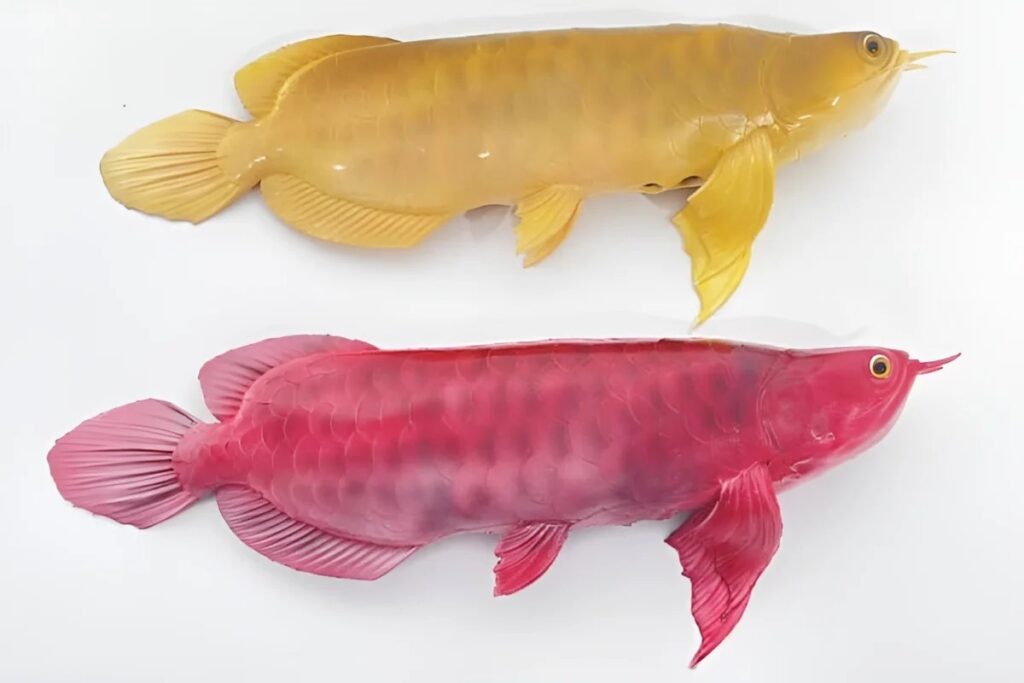
A robotic aquarium can become an interior element without the hassle of maintenance.
Who Is the FullDepth Bionic Arowana Made For and What Does Its Future Look Like
It’s clear that the robot arowana is not a replacement for real aquarium keeping as a hobby. People who breed fish for the process of caring for and observing living creatures will find a robot uninteresting. But for restaurants, hotels, clinic waiting rooms, and offices where an aquarium is needed as an element of design and atmosphere, such a solution looks quite practical.
Given that FullDepth is involved in the development and manufacture of underwater robots and components for professional and consumer applications, the appearance of a bionic fish is a logical expansion of their product line. The company already produces underwater cameras and rovers for marine engineering, meaning it has the expertise to refine the product.
But if demand proves sufficient, the emergence of new species of bionic fish and more affordable models is quite likely. After all, the idea of an aquarium without maintenance, feeding, or animal suffering may prove attractive to a much broader audience. Especially since the idea that robots will replace pets has been discussed for a long time — it’s just that now it’s starting to look not like science fiction but like a real product for interior design.