YaOS is Yandex’s own smart TV operating system, built on Android AOSP — the open-source version of Android without any Google services. If you’ve seen “YaOS” in a TV’s spec sheet and wondered what it means, the short answer is: it’s a standalone platform with its own app store, its own voice assistant (Alisa instead of Google Assistant), and deep integration with Yandex’s ecosystem of services. Launched in 2020 under the name “Yandex.TV” and rebranded to YaOS in 2023, the platform has grown to power over 5 million devices as of August 2025, with roughly 29% year-over-year growth according to the source.
What you need to know
- YaOS is built on Android AOSP (no Google services), with Yandex’s Alisa voice assistant and a dedicated YaOS Store for apps.
- There are two versions: basic YaOS (partner TVs, Yandex modules) and YaOS X (Yandex’s own TV Station devices), which adds hands-free voice control and regular feature updates.
- Over 5 million devices run YaOS or YaOS X as of August 2025, reportedly capturing around 30% of the Russian smart TV market.
- Apps can be installed from the YaOS Store, via manual APK sideloading, or through RuStore (which must be installed separately).
YaOS vs YaOS X: Two tiers of the same platform
Yandex splits its device lineup into two groups based on which version of the OS they run. The extended YaOS X powers Yandex’s own hardware — the TV Station Pro MiniLED, TV Station Pro QLED, TV Station MiniLED, TV Station QLED (second generation), TV Station LED (first generation), TV Station Basic QLED, TV Station Basic LED, Station Duo Max, and Station Max.
The basic YaOS runs on Yandex’s own smart TV with Alisa, the Yandex Module with Alisa, and partner TVs from brands such as Tuvio, Hyundai, Digma, BBK, Haier, Harper, Hi, and Starwind.
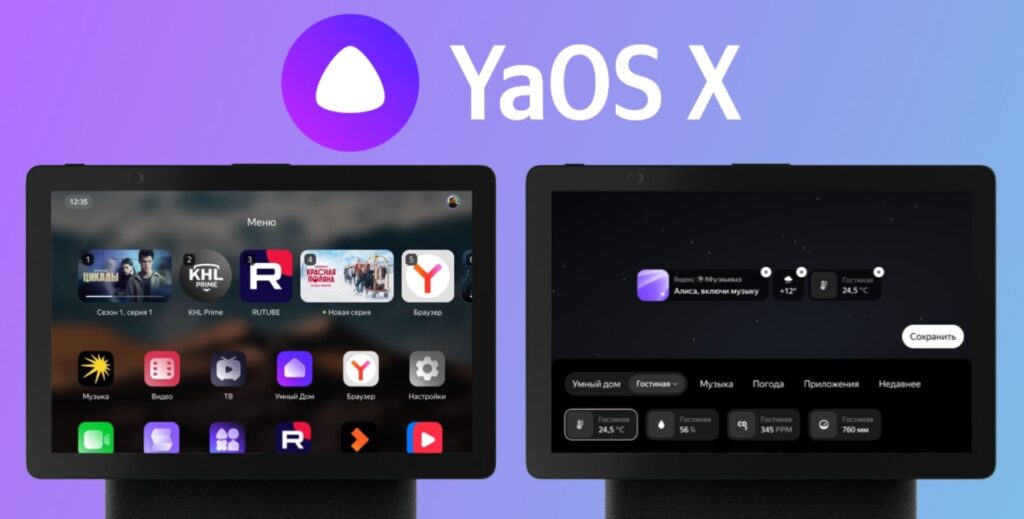
The system was previously called Yandex TV but was renamed when it expanded to smart speakers
The practical difference: basic YaOS provides Alisa with standard voice command recognition and stability-focused updates. YaOS X adds hands-free voice control (no remote needed), regular feature updates, and curated screensavers. In essence, YaOS keeps the device functioning as a conventional smart TV with a voice assistant, while YaOS X turns it into a hybrid of a TV and a Yandex Station smart speaker.
How YaOS compares to Android TV and other platforms
The fundamental difference between YaOS and Android TV comes down to Google services. Android TV ships with the full Google Play store and all of Google’s built-in services. YaOS, built on bare AOSP, has no Google Play and no Google services at all — Yandex’s own ecosystem fills that role.
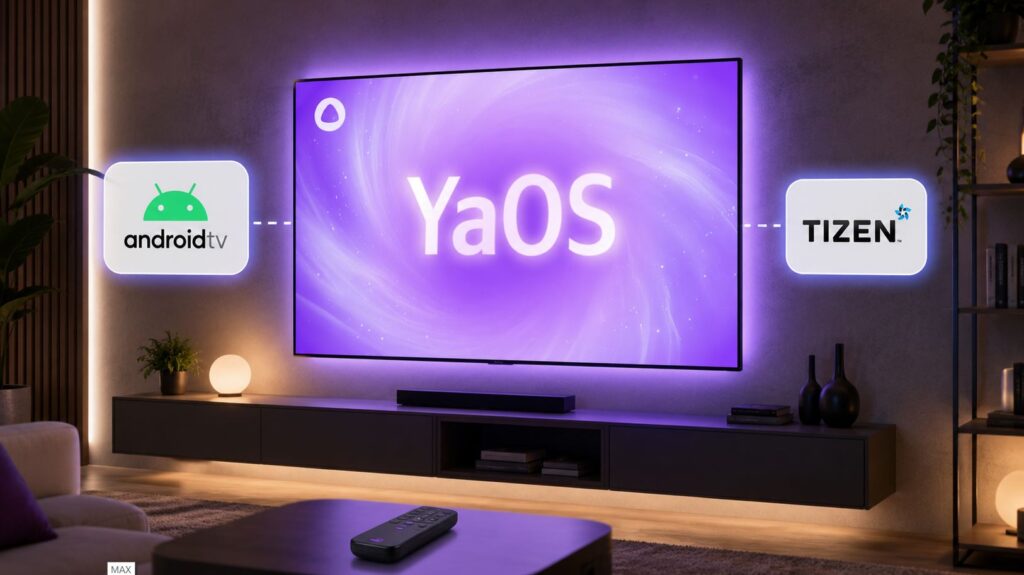
Comparing Yandex’s OS to other smart TV platforms
Here is a comparison of the major smart TV platforms:
| Platform | Base | App Store | Voice Assistant | Google Services |
|---|---|---|---|---|
| YaOS | Android AOSP | YaOS Store + APK, RuStore | Alisa | No |
| Android TV | Android + Google services | Google Play | Google Assistant | Yes |
| Salut TV | Android AOSP | SmartMarket + APK | Salut | No |
| Tizen | Proprietary (Samsung) | Tizen Store | Bixby | No |
| webOS | Proprietary (LG) | LG Content Store | ThinQ | No |
Another notable difference involves content recommendations. YaOS builds its home screen around the user’s interests and prioritizes Russian streaming services like Kinopoisk, Yandex Music, and VK Video. Android TV, by contrast, traditionally centers on YouTube and Google’s content ecosystem.
According to various estimates cited in the source, YaOS reportedly holds around 30% of the smart TV market in Russia and, together with Salut TV, has been significantly eroding Android TV’s previously dominant position.
Apps on YaOS: Sources and limitations
Without Google Play, YaOS users get apps from three sources. The primary channel is the YaOS Store, which carries popular services, games, and utilities, with a catalog that is gradually expanding. The second option is manual APK installation (sideloading), useful when a needed app isn’t in the store. The third is RuStore, though it must be installed manually first.
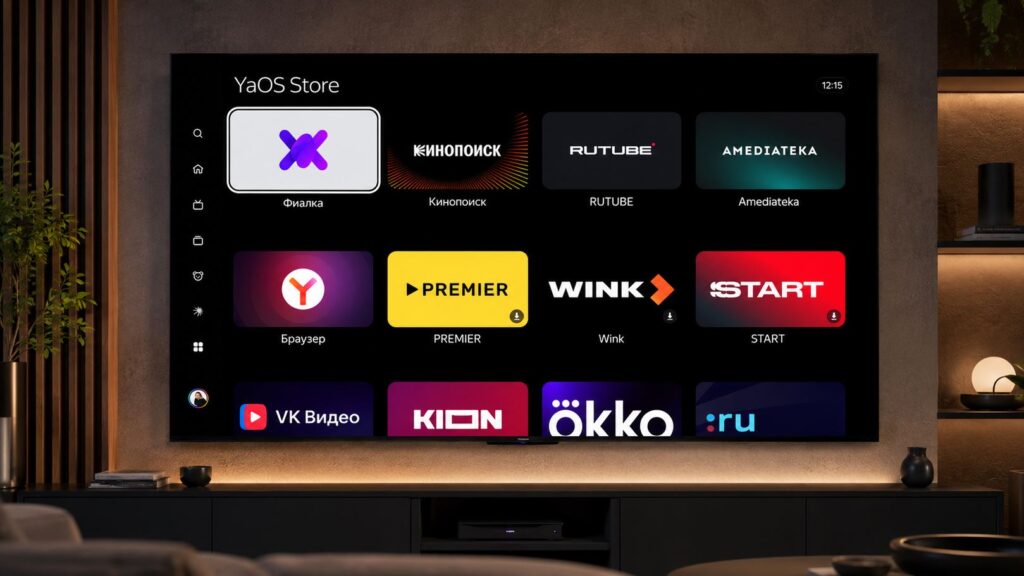
Android TV apps are compatible with YaOS
According to the source, YouTube, Okko, ivi, Kinopoisk, and other services popular in Russia are available. However, apps that are tightly dependent on Google services (such as those requiring a Google account) may not work properly. For typical use cases like streaming video and watching broadcast channels, the available selection is reportedly sufficient, but users accustomed to Google Play’s extensive catalog will notice the difference.
YaOS vs Salut TV: Competing Russian ecosystems
YaOS’s closest domestic competitor is Salut TV, backed by Sber (Russia’s largest bank). Salut TV is also built on Android AOSP without Google services and features its own voice assistant (Salut) along with Sber’s ecosystem — Okko, SberZvuk, and related services. Salut TV also offers cloud gaming via SberPlay and a mechanism that moves rarely used apps to the cloud to free up device memory.
According to the source, the choice between YaOS and Salut TV largely comes down to which ecosystem a user is already invested in — Yandex’s services or Sber’s.
Samsung’s Tizen and LG’s webOS: A different approach
Samsung’s Tizen and LG’s webOS stand apart because they are not based on Android at all. These are proprietary operating systems optimized for streaming and broadcast TV. According to the source, their app stores offer fewer titles than Google Play, but the systems are described as polished, smooth, and stable over long periods.
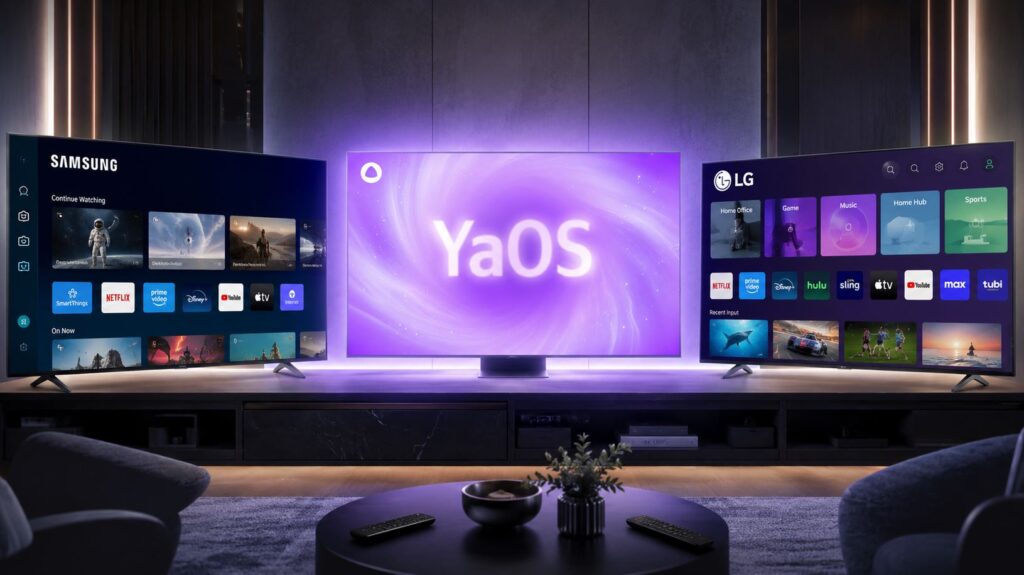
YaOS holds up well compared to Samsung and LG’s proprietary TV operating systems
The source notes that TVs running Tizen and webOS tend to be more expensive than budget Android or YaOS models, but argues they also tend to last longer. Budget devices on bare Android, the source claims, can start to slow down after a year or two, though this is not universal.
Choosing between platforms: A quick guide
Based on the source’s analysis, the decision framework breaks down as follows:
- YaOS suits users already invested in Yandex’s ecosystem who want Alisa and Russian services built in.
- Android TV is the better fit if access to Google Play and the widest possible app selection is a priority.
- Tizen or webOS may be preferable for users who value long-term stability and build quality over app flexibility.
- Salut TV makes sense for users closer to Sber’s ecosystem than Yandex’s.
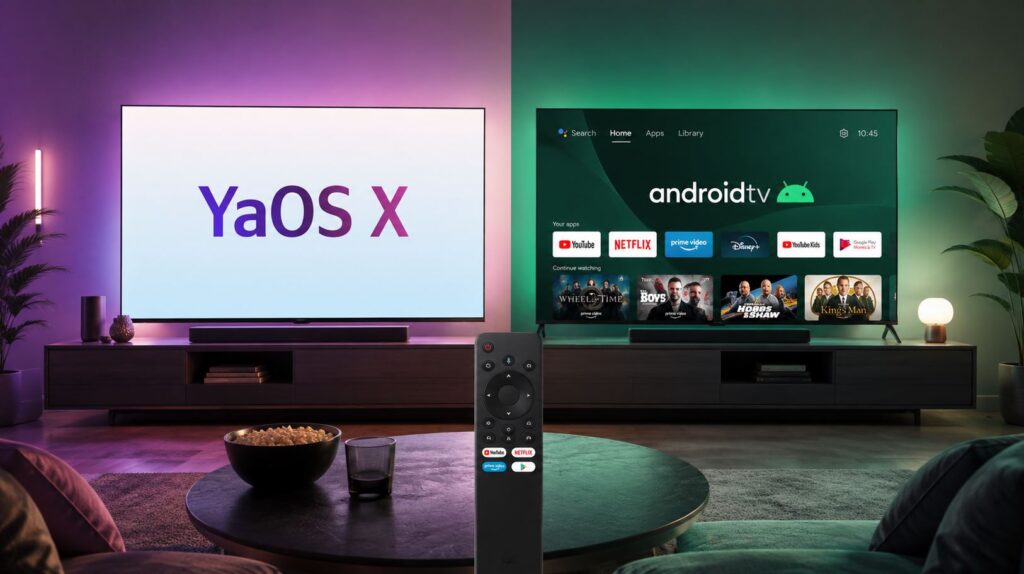
YaOS compared to Android TV
It’s worth noting that the operating system is only one factor in choosing a TV — display technology, brightness, and audio quality also matter significantly. But understanding what YaOS is and how it differs from the alternatives should help buyers make a more informed decision when they encounter it in a spec sheet.