Banks in Russia can stop a transfer, or put a card under suspicion, over everyday actions that have nothing to do with fraud. One example is a friendly payment note such as “for the cake.” According to the source, bank anti-fraud systems look beyond transfer amounts. They also check what senders write in payment comments, who they pay, and where and when they withdraw cash. The source author lists six ordinary actions that can lead to a block. One of them hits parents who collect money for a teacher’s gift particularly hard.
What you need to know
- Ekaterina Kosareva of the consultancy VMT Consult, cited by Lenta.ru, named notes such as “for the cake,” “thanks for the lashes” and “for the flat for January” as ones that may alert a bank.
- If someone sends money to payment details listed in the Bank of Russia’s fraud database, the bank must stop the transfer for two days and notify the sender right away.
- If a person’s own card ends up in that database, transfers to other people are capped at 100,000 rubles a month, the source says.
- The Bank of Russia takes up to 15 working days to review a request to be removed from the database.
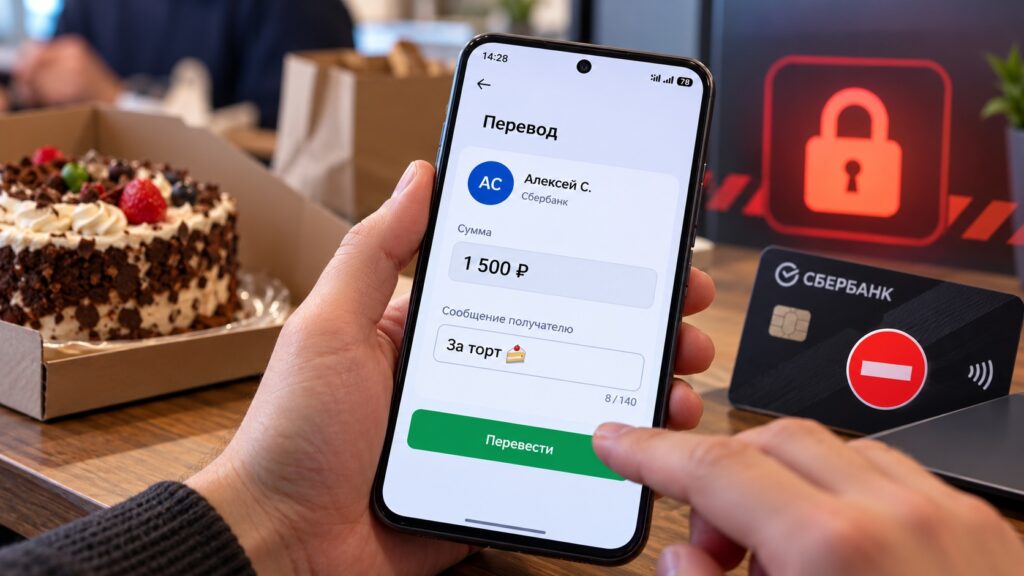
A person transferring money for a cake
1. The payment note is not read only by the recipient
The most unexpected item on the list is the payment comment. To the sender, it may simply be a thank-you to a friend or a service provider. A bank may read it differently. It can look like payment for goods or services without a receipt, which may suggest unregistered business activity. The source notes that self-employed people in Russia can issue such receipts quickly in a dedicated tax app.
Ekaterina Kosareva, managing partner of the consultancy VMT Consult, listed payment notes that may alert a bank:
- “for the cake”;
- “thanks for the lashes”;
- “for the flat for January.”
According to the source, a single transfer like this is unlikely to matter on its own. Questions may arise, though, if such notes reach a card every week.

The source suggests registering as self-employed if you really do take regular payments for things like cakes or eyelash services. If you don’t, you can simply leave the note on a transfer to a friend blank.
2. Large cash withdrawals at night in another city
The second trigger is a sudden change in habits. Imagine someone who has paid by card for years and suddenly starts withdrawing large sums every day, at night, from ATMs in other cities. To an anti-fraud system, this can look as if someone else is now controlling the card.
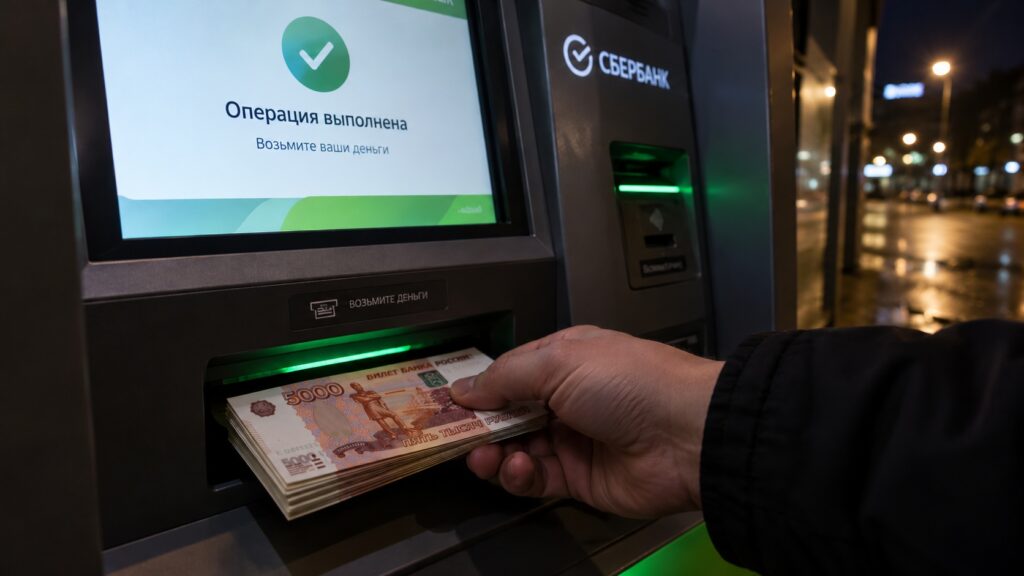
A person withdrawing money from an ATM
The source says that if you withdraw cash regularly, the system is used to it and does not raise questions. But if you have decided to carry cash again, as the source says many people have lately, it is better to withdraw it gradually rather than all at once on the first night.
3. A first bet with a bookmaker
Banks treat transfers to bookmakers and online casinos as risky. They are especially wary when such payments start suddenly on a card that never had them before.
The source explains the logic: this pattern often matches cases where someone else’s money is being moved out through gambling. The bank does not try to work out whether you simply wanted to try betting. It sees an abrupt change and stops the transaction as a precaution.

4. The recipient’s number is in the Bank of Russia database
The Bank of Russia keeps a database of payment details that have appeared in fraudulent transfers. It covers cards, accounts and the phone numbers linked to them. According to the source, if you transfer money to a number in this database, the bank must suspend the transaction for two days and notify you immediately.
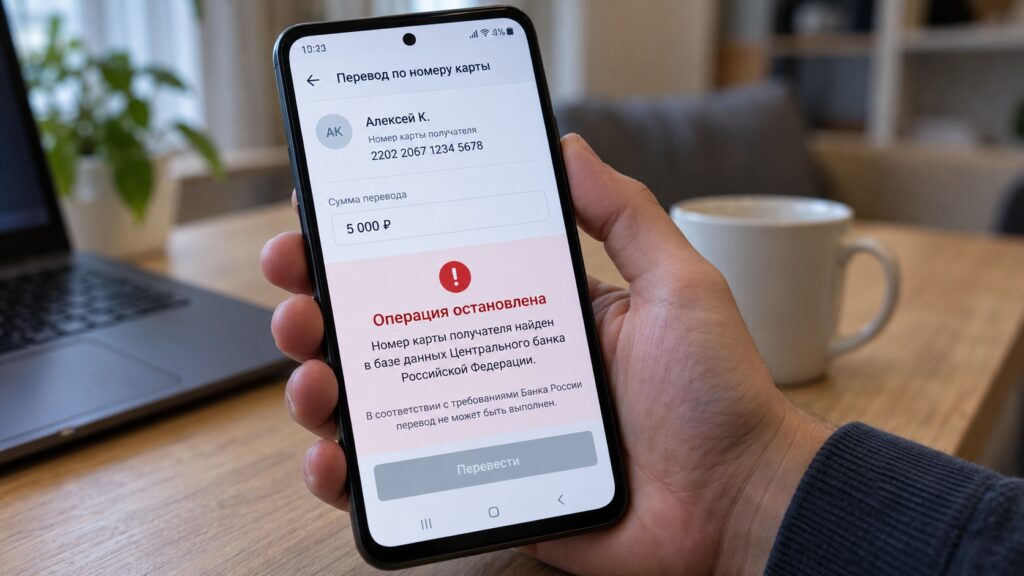
Illustration of a blocked transfer to a card
The source warns that an honest person can end up in the database too. A typical case is a resold phone number. The previous owner used it in fraud schemes, and the SIM card later passed to someone new. Transfers to or from that person may then stall, even though they have done nothing wrong.
According to the source, a suspended transfer can be confirmed within the first 24 hours, or repeated to the same details for the same amount. If you do nothing, the money simply stays in your account.
5. Money arrives and leaves straight away
The fifth sign is money that arrives on a card and is almost immediately withdrawn or sent on, again and again. This is typically what a “drop” card looks like, the kind fraudsters use to move stolen money. The source says a bank may stop such a transaction either when the money arrives or when it is withdrawn.

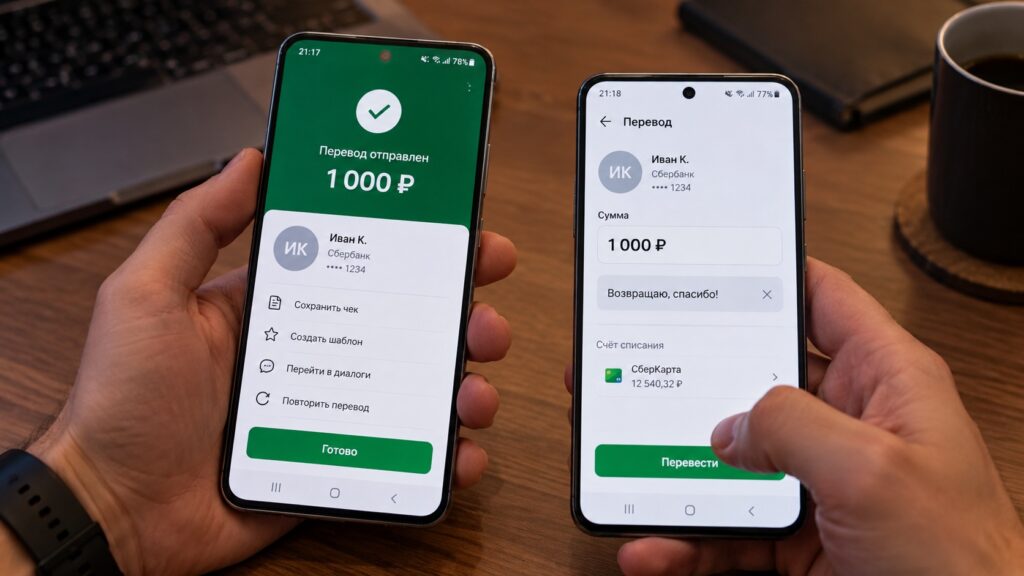
Illustration of a transfer back to the sender’s card
Selling something online and paying for a repair the same day is not a problem, according to the source. The risk comes from repetition: money in, money out, money in, money out. If your card does end up in the Bank of Russia database, transfers to other people are limited to 100,000 rubles a month. For other operations, you have to visit a branch with your passport.
6. Why parents’ committees come under suspicion
The source says the last item affects the most people, yet few think about it. Many small transfers from different people to a personal card can look to anti-fraud systems like an attempt to hide untaxed income.
That is exactly what a parents’ committee chair’s card looks like. Thirty parents might each chip in 500 rubles for a gift, a trip or new curtains for the classroom. According to the source, committee chairs at kindergartens and schools run into blocks over such collections more often than others.

A teacher showing a message asking parents to contribute money for curtains
If you are in charge of collections, the source recommends a few habits:

- Label every payment the same clear way, for example “gift 3A.”
- Keep the group chat messages that record the decision to collect.
- Do not mix this money with your salary.
If the bank later asks where the money came from, these steps make it much easier to explain.
Only your bank lifts a block, not someone who calls you
The source’s main rule: do not call back a number from an SMS, and do not deal with a “security service” that calls you first. Fraudsters know that people with a blocked card panic. That is the moment they offer “urgent help,” using the same playbook as calls supposedly from Russia’s Social Fund. Contact the bank yourself instead, either through the chat in its app or via the number on the back of your card.
Getting removed from the Bank of Russia database
If the block is linked to the Bank of Russia database, you need to apply to be removed from it. The source describes these steps:
- Submit the application at any bank where you have an account. That bank must pass it to the Bank of Russia no later than the next working day.
- Alternatively, submit it through the Bank of Russia’s online reception, signing in via Russia’s Gosuslugi public services portal.
- Include your full name, passport details, banks, account and card numbers, and phone number.
- Wait for a decision. The Bank of Russia reviews applications within up to 15 working days.
According to the source, salary and social payments continue to reach the account while the application is under review. Payments in shops, on online marketplaces and for utilities also work without restrictions.
Sometimes the bank only asks you to explain a transaction. In that case, the source advises answering calmly and attaching evidence such as messages, a contract or a receipt. It says this is usually enough to get the card working again.