Xiaomi has officially launched the first beta of HyperOS 4, its next-generation custom skin for smartphones and tablets. The initial wave covers ten devices — all recent flagships — with the company emphasizing speed improvements, system-level optimizations, and expanded AI capabilities. A broader rollout is expected by the end of 2026, and Xiaomi has also published a list of more than 70 models slated to receive Android 17. Here is what the update includes, which devices are eligible, and what remains uncertain.
What you need to know
- HyperOS 4 beta is currently available on ten devices, including the Xiaomi 17 series, Redmi K90 series, and Xiaomi Pad 8/8 Pro.
- Xiaomi claims faster app launches via two new HyperCore technologies — Load Calculation and Memory Preloading — though real-world results are unverified.
- Some older models may receive HyperOS 4 without upgrading to Android 17, remaining on Android 16 instead.
- Over 70 Xiaomi, Redmi, and POCO models are listed for eventual Android 17 support.
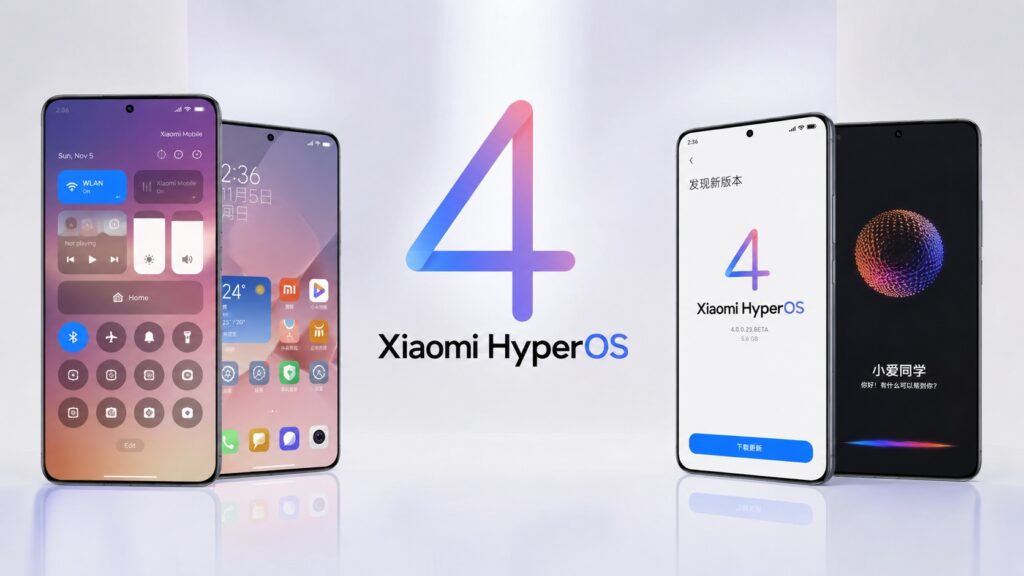
Xiaomi officially unveiled the key changes in HyperOS 4
Speed, Smoothness, and AI: What Changed in HyperOS 4
Xiaomi’s headline claim is faster device performance. The company says it has reworked the internal HyperCore architecture with two new technologies: Load Calculation and Memory Preloading. In practical terms, the system is supposed to distribute resources more intelligently and pre-load frequently used apps and functions into memory, resulting in quicker app launches.
Xiaomi also says it has overhauled the app runtime environment — the layer responsible for launching and managing applications — at both the kernel and software levels. The company promises smoother animations, better responsiveness, and a more comfortable daily experience. However, these are manufacturer claims; how noticeable the improvements are in practice will only become clear through independent testing on production hardware.
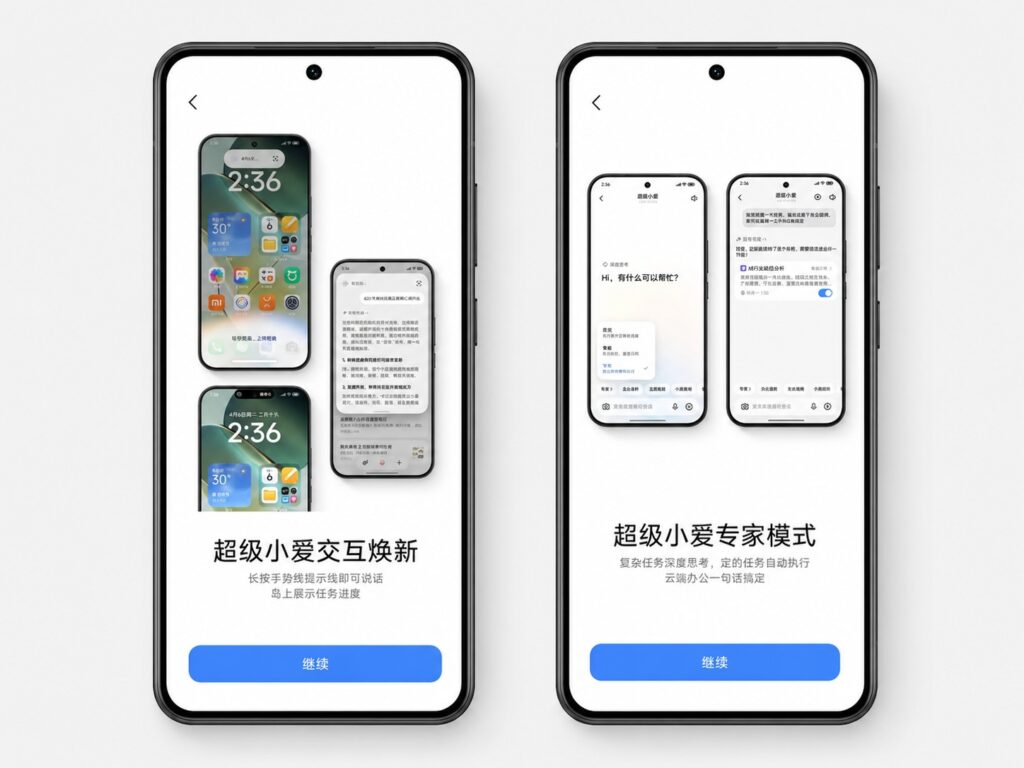
Xiaomi promises smoother overall performance
Super XiaoAi 2.0 and AI Features
The voice assistant has received a significant upgrade. HyperOS 4 introduces Super XiaoAi 2.0, powered by Xiaomi’s own language model, MiMo. According to Xiaomi, the assistant can now better plan tasks, generate content, and handle multi-app, multi-device scenarios across the Xiaomi ecosystem. An important caveat: XiaoAi has historically been oriented toward the Chinese market, so its availability and language support outside China remain limited.
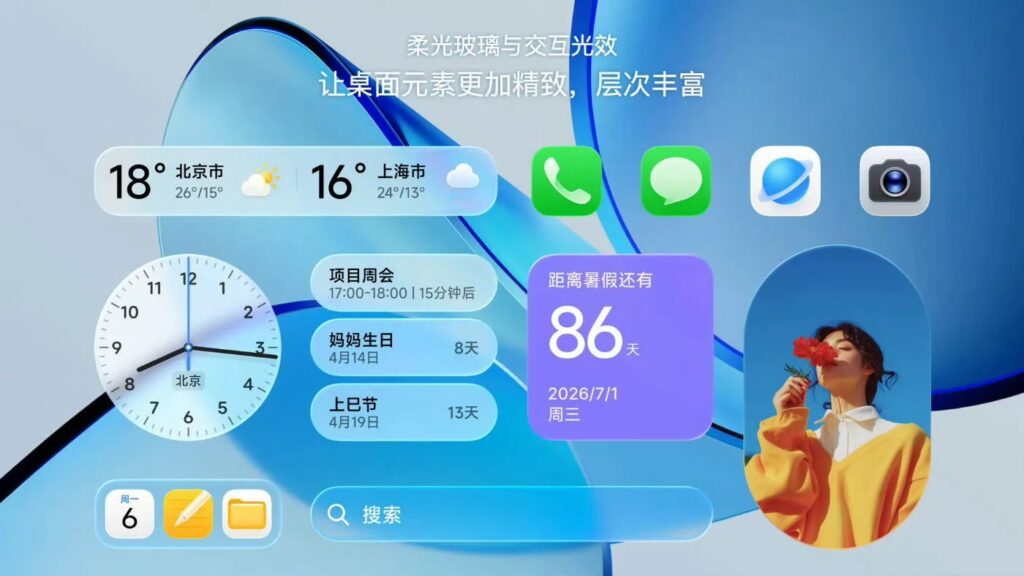
The “Liquid Glass” effect is a headline visual change
Visual Redesign: “Liquid Glass” Effect
On the design front, Xiaomi has tweaked system app layouts, icons, and the overall interface. The source describes the new look as leaning further into a “Liquid Glass” aesthetic reminiscent of Apple’s design language. However, these visual changes will only work fully on select smartphone models.

Devices That Already Have the Beta
The first HyperOS 4 beta is available for ten models — all recent flagships and two tablets:
- Xiaomi 17 Ultra
- Xiaomi 17 Ultra Leica Edition
- Xiaomi 17 Pro Max
- Xiaomi 17 Pro
- Xiaomi 17
- Redmi K90 Pro Max
- Redmi K90 Pro Max Champion Edition
- Redmi K90
- Xiaomi Pad 8 Pro
- Xiaomi Pad 8
Important: This is a beta release, not a stable update. Early beta builds typically contain bugs and instability. Users who prefer a reliable daily-driver experience should wait for the final release.
Broader Rollout Timeline and the Android 17 Connection
Xiaomi says it plans to expand HyperOS 4 support by the end of 2026, bringing the update to a much larger number of models. The company has not provided exact dates for individual devices; the general target is the second half of 2026 for most eligible smartphones and tablets.
A key nuance: HyperOS 4 does not necessarily mean Android 17 underneath. According to Xiaomi, less recent models may receive HyperOS 4 while remaining on Android 16, whereas newer devices will ship with Android 17. In other words, the new skin and the underlying Android version are not always bundled together. Xiaomi used a similar approach with HyperOS 3. The company also rolls out updates in regional waves, so timing may vary by market.
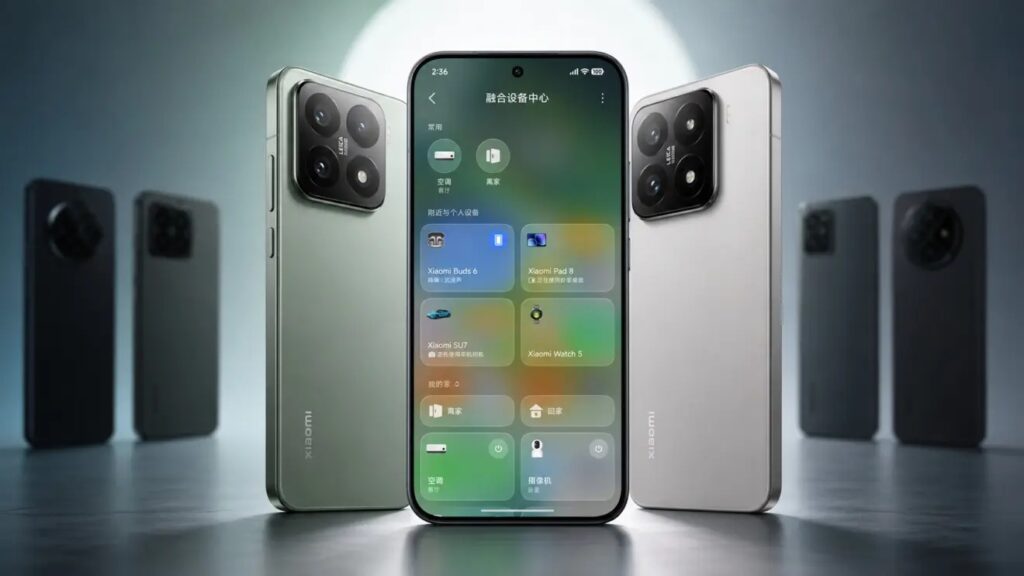
The rollout begins with flagship models
Full List of Models Expected to Receive Android 17
Xiaomi has separately published a list of devices slated for Android 17, based on the Xiaomi AER information page and the company’s device servicing policy. The list includes more than 70 models across the Xiaomi, Redmi, and POCO brands.
Xiaomi Models
- Xiaomi 17 Ultra, 17 Ultra Leica, 17, 17 Pro, 17 Pro Max
- Xiaomi 15T, 15T Pro, 15S Pro, 15 Ultra, 15, 15 Pro
- Xiaomi 14T, 14T Pro, 14 Ultra, 14, 14 Pro, 14 Civi
- Xiaomi Civi 5 Pro, Civi 4 Pro
- Xiaomi 13T, 13T Pro, 13 Ultra, 13, 13 Pro
- Xiaomi Mix Flip 2, Mix Flip, Mix Fold 4, Mix Fold 3
- Xiaomi Pad 8, Pad 8 Pro, Pad Mini, Pad 7S Pro 12.5, Pad 7 Ultra, Pad 7, Pad 7 Pro, Pad 6S Pro 12.4
Redmi Models
- Redmi Turbo 5, Turbo 5 Max, Turbo 4 Pro, Turbo 4, Turbo 3
- Redmi Note 15, Note 15 Pro, Note 15 Pro 4G, Note 15 5G, Note 15 Pro+
- Redmi Note 14S, Note 14 Pro, Note 14 Pro 4G, Note 14 4G, Note 14 Pro+
- Redmi K90, K90 Pro Max, K80, K80 Pro, K80 Ultra, K70 Ultra, K70e, K70, K60 Ultra, K Pad
- Redmi 15, 15 4G, 15C 5G, 15C 4G, 14R 5G, A5 4G
- Redmi Pad 2, Pad 2 4G, Pad 2 Pro, Pad 2 Pro 5G
POCO Models
- POCO M8 5G, M8 Pro 5G, M7 Plus, M7 4G, M7 5G
- POCO F8 Pro, F8 Ultra, F7, F7 Pro, F7 Ultra, F6, F6 Pro
- POCO X7, X7 Pro, X6 Pro
- POCO C85 5G, C85 4G, C71
- POCO Pad M1, Pad X1
Keep in mind that Xiaomi typically rolls out updates in waves and not simultaneously across all regions, so availability may vary by market and model variant.