The era of popping off a plastic back cover to swap a dead battery is long gone. Modern smartphones are sealed glass-and-metal slabs, and the reasons go well beyond corporate greed. The shift away from removable batteries comes down to engineering trade-offs in space, cost, and waterproofing — trade-offs that consumers consistently reward with their purchasing decisions, even when they say they want the old way back.
What you need to know
- Built-in batteries save internal space, allowing manufacturers to fit larger capacity cells, better cooling systems, and improved camera modules.
- Samsung’s Galaxy XCover7 Pro proves IP68 waterproofing with a removable battery is technically possible — but significantly more expensive to produce.
- Fairphone, which builds easily repairable phones with swappable batteries, sold 145,000 units in 2025 (a 42% increase) — a tiny fraction of the roughly one billion smartphones sold globally each year.
- New EU regulations taking effect in 2027 will require manufacturers to make battery replacement easier with common tools, though exceptions are expected for devices with strong water resistance.
Internal space is at a premium
Older removable batteries were self-contained units wrapped in rigid casings with robust contacts and locking mechanisms. That made them safe to carry loose in a pocket, but it also made phones bulkier. Modern built-in batteries are typically thin pouches installed directly into the chassis, eliminating the need for a separate housing.
The cubic millimeters saved by ditching the removable battery compartment can be reallocated to:
- Increased battery capacity
- Cooling systems for powerful processors
- Improved camera modules or larger haptic motors
For manufacturers, the calculus is straightforward: adding an extra 500 mAh of battery capacity makes for a more compelling spec sheet than offering a removable battery compartment. And as mobile processors grow more powerful, the thermal management hardware that replaces a battery bay becomes increasingly important.
Waterproofing with a removable cover is possible — but costly
A common assumption is that removable back panels are fundamentally incompatible with water resistance. According to the source, this is a myth. Samsung’s Galaxy XCover7 Pro, for instance, carries an IP68 rating while still offering a user-replaceable battery. According to a post on Samsung’s official site, the device is designed for construction workers and first responders who need to swap power sources quickly in the field.
The real issue is cost and reliability. Sealing a glued-on glass back panel at the factory is a one-time process. A removable panel requires a reusable rubber gasket that can become misaligned, clogged with debris, or worn out over time — all of which add manufacturing complexity and potential failure points.
Consumer behavior contradicts consumer surveys
Phones designed for easy self-repair do exist. Fairphone has made modularity its central selling point: its devices are assembled with minimal adhesive, and battery replacement takes just a few minutes. Sales figures show growth — 145,000 units in 2025, up 42% — but that number is vanishingly small against a global smartphone market measured in the billions.
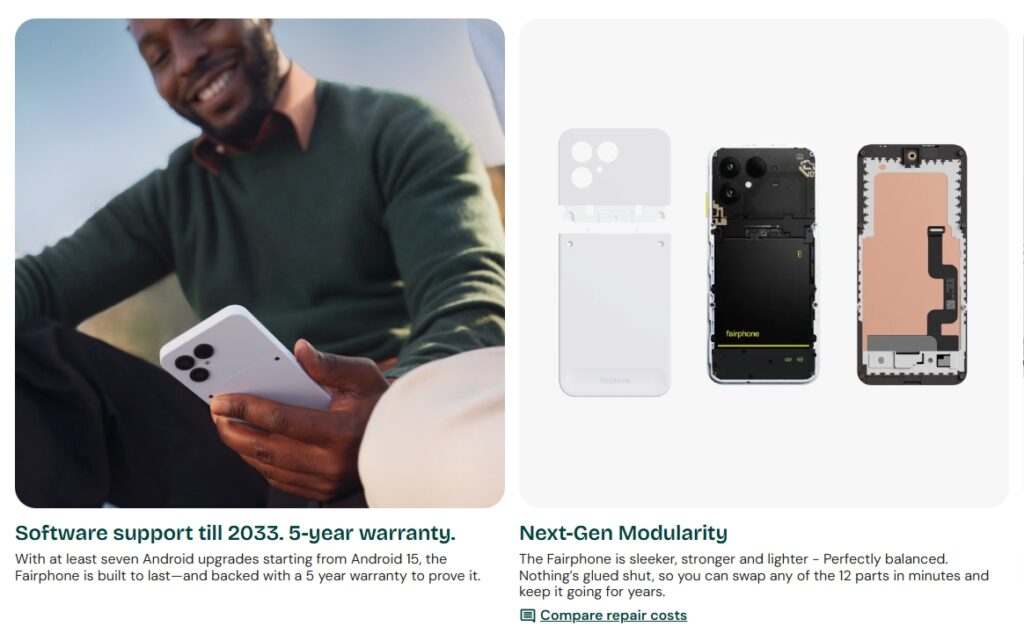
Fairphone’s website states that 12 parts of the smartphone can be easily replaced
The source highlights a fundamental tension: in surveys, consumers overwhelmingly say they want removable batteries. But when faced with two phones on a shelf — one thicker, more expensive, with a 4,400 mAh removable battery, and another that’s slim, has a superior camera, and packs a 6,000 mAh sealed cell — buyers predictably choose the latter.
The source author acknowledges that planned obsolescence plays a role: brands benefit when customers buy a new phone after three years rather than simply replacing the battery. But the article frames this as a welcome financial side effect for manufacturers rather than evidence of a deliberate industry conspiracy.
What the future likely holds
Modern processors and displays can remain capable for five to seven years, but batteries inevitably degrade over that lifespan. Regulation is beginning to address this gap.
According to 9to5Google, new EU rules taking effect in 2027 will require manufacturers to make battery replacement feasible with standard tools. However, the source notes that this does not mean a return to flimsy plastic clips — exceptions are expected for devices with robust water resistance and long-lasting batteries.
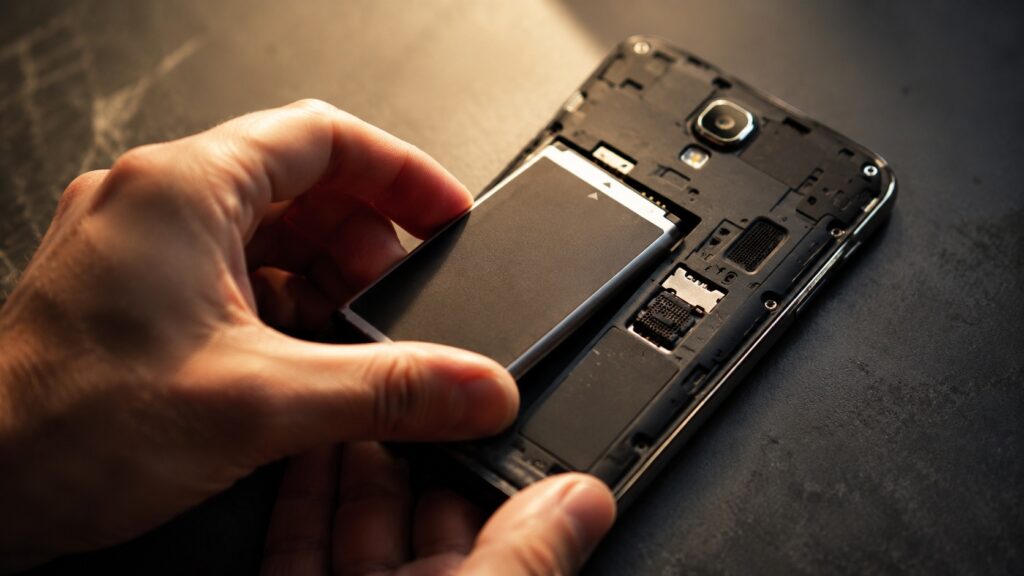
Even if smartphones with removable batteries appeared on the market, many consumers would not rush to buy them
The market is already shifting incrementally. The source notes that iFixit specialists have praised recent flagships for incorporating pull tabs that make battery cell extraction easier. The likely industry compromise is a battery hidden behind a panel secured with a few screws — replaceable with an ordinary screwdriver in minutes, without requiring a heat gun or risking a punctured cell. Phones would remain sleek and sealed in appearance, but the battery would once again become what it arguably should be: a standard consumable part.