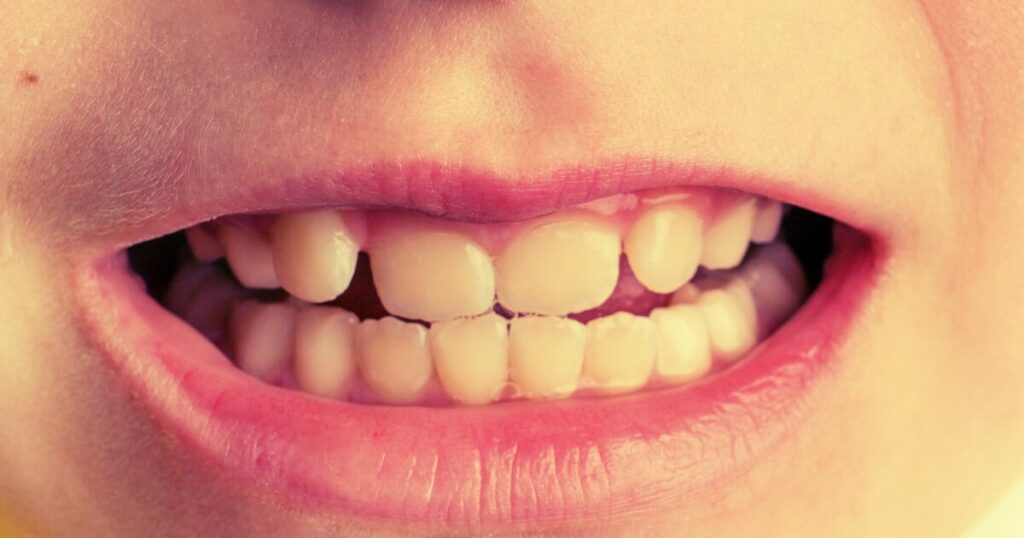
Silent epidemic: why every fourth child’s teeth are breaking
Your child’s baby teeth — small, white as chalk — fall out on schedule. But in their place grow yellowish-brown and strangely fragile permanent teeth. This condition is called molar-incisor hypomineralization, and it is almost as common as cavities, although hardly anyone outside of dentists has heard of it. But the most surprising thing is that it is not the result of poor hygiene, sweets, or heredity. The problem is established before the tooth has even erupted — at the stage when enamel is just forming inside the jaw.
What Is Molar-Incisor Hypomineralization
Enamel is the thin outer layer of a tooth and simultaneously the hardest material in the human body. But with molar-incisor hypomineralization, the process of its formation is disrupted, and the enamel ends up with a mineral deficiency. That is why such teeth look different and chip more easily.
The key point is the timing of the disruption. The disturbance occurs very early, while the teeth are still forming in the jaw: usually in the period from birth to about two years of age. By the time the tooth erupts, nothing can be changed — the enamel defect has already been established.
Most commonly affected are the first permanent molars — the so-called “six-year” teeth — and the front teeth. In addition to visible spots, children with this condition often avoid brushing because it causes pain, and cold and hot food or drinks trigger sensitivity.
Why Teeth Crumble: Causes and Prevalence
According to researchers from the dental clinic at the University of Copenhagen, tooth fragility affects about 28% of children in Scandinavia and is considered one of the most widespread dental disorders. Studies show that this condition is very common throughout Europe.
At the same time, in Africa and Asia the problem is less pronounced — at least based on available data. Scientists remain cautious in their explanations: the difference may be related not so much to actual disease rates as to differences in diagnosis and reporting, as well as the prevalence of diseases in early childhood and genetic factors.
Frankly speaking, for dentistry molar-incisor hypomineralization is still largely a mystery. Specialists know that the condition occurs in a large number of children and can leave permanent teeth forever weakened and discolored, but why some children develop it and others don’t remains unclear.
Five Possible Causes of Weakened Enamel in MIH
There is no ready answer, but research points to several suspects. It is important to understand: these are probable factors, not a proven cause-and-effect chain. Today, five possible causes of molar-incisor hypomineralization are identified:
- prolonged illness in early childhood — high fever, infections, or recurring periods of poor health
- long-term use of antibiotics
- complications during pregnancy or birth, such as oxygen deprivation or premature delivery
- environmental factors, including air pollution, and deficiencies — for example, a lack of vitamin D, which affects the body’s ability to build strong enamel
- possible genetic vulnerability, due to which some children are simply more susceptible to the condition
Note that almost all of these factors fall within that same early period when enamel is forming inside the jaw. This aligns with the main idea: the damage occurs before the tooth erupts, not after.
What to Do to Make Teeth Stronger
Here we need the honesty that the authors themselves provide: with current knowledge, it is impossible to prevent molar-incisor hypomineralization. There is no set of actions that will reliably stop the condition from developing.

Regular brushing with fluoride toothpaste helps protect softer enamel from cavities
But you can still help your teeth. The most obvious step is brushing teeth with fluoride toothpaste. This is especially important because children’s enamel is softer, such teeth are harder to keep clean, and they are at greater risk of developing cavities. It is equally important to help the child build a positive relationship with the dentist: calmly explain that the doctor protects teeth so they don’t hurt or break, and ask the child to describe where and how exactly the tooth hurts.
How a Dentist Treats Tooth Fragility
If the diagnosis is confirmed, the dentist assesses how serious the situation is and classifies the affected teeth as mild, moderate, or severe. The treatment plan depends on this.
- in mild cases, molars are treated with concentrated fluoride gel and/or sealed with a transparent protective coating against cavities
- in moderate cases, temporary fillings are placed, and due to the high sensitivity of the tooth, anesthesia is required
- in severe cases, fillings are placed, and in the most serious situations, a steel crown is used — a kind of protective cap that shields the tooth from destruction, cavities, and pain
Sometimes — although rarely — the dentist may suggest removing the tooth entirely if its long-term prognosis is too poor. This is usually done between the ages of eight and ten. Front teeth more often have mild or moderate forms, so they are typically not treated right away. But that does not mean monitoring them is pointless. It is very important to brush teeth and clean between them.
As children grow older, they often develop a concern for aesthetics. In such cases, whitening is used in combination with a relatively new method in which liquid resin penetrates the enamel and fills the voids in its structure. After this, the visible “spottiness” disappears, and the tooth crown looks even and uniform in color. In adulthood, severely damaged molars can be helped with a crown or porcelain inlay.