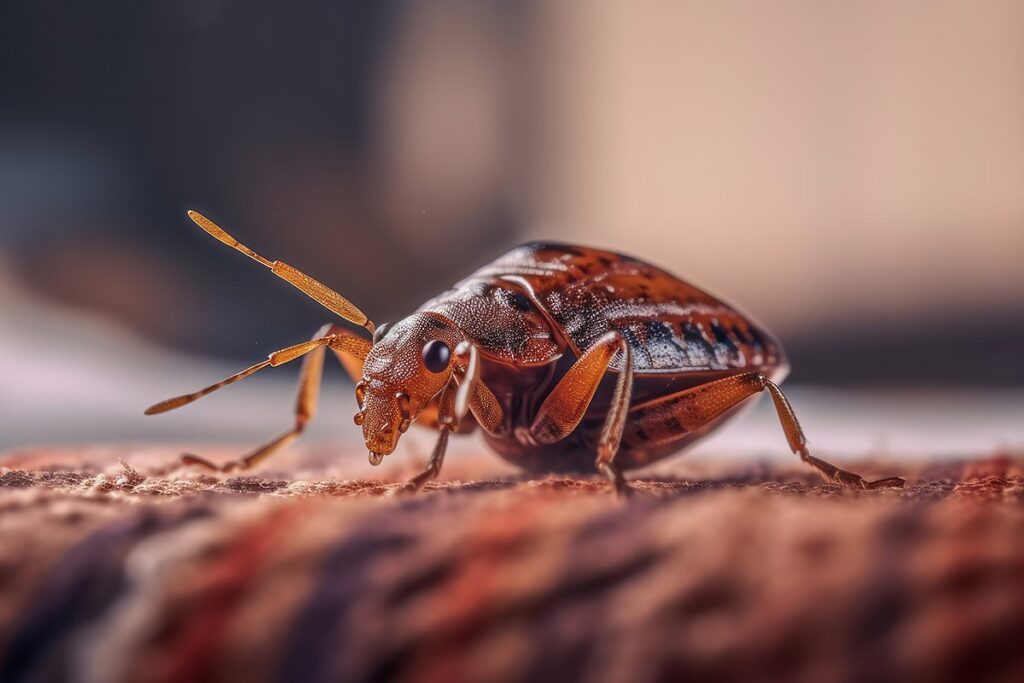
Bed bugs can appear even in a clean apartment, and you need to be prepared for this
The main myth about bed bugs is that they only infest homes of unclean people. In reality, bed bugs appear even in perfectly clean apartments because they don’t care about dirt — they need access to a sleeping human. Most often, they come from neighbors, arrive in a suitcase from vacation, or hide in a used sofa, and then go unnoticed for months.
What Bed Bugs Look Like and How Long They Live
Bed bugs are tiny brown insects measuring 5–7 millimeters, roughly the size of an apple seed. They have six legs and a flat, dorsally compressed body, and they feed on the blood of humans and animals, primarily at night.
Bed bug reproduction happens quickly. A female lays about five eggs per day and up to 500 throughout her lifetime. A larva grows from an egg to an adult insect in about a month, and a bed bug lives roughly one year in total.
But their main characteristic is resilience. These parasites can go hungry for a long time, hide in shelters, and survive temperature fluctuations, which is why fighting bed bugs often drags on.
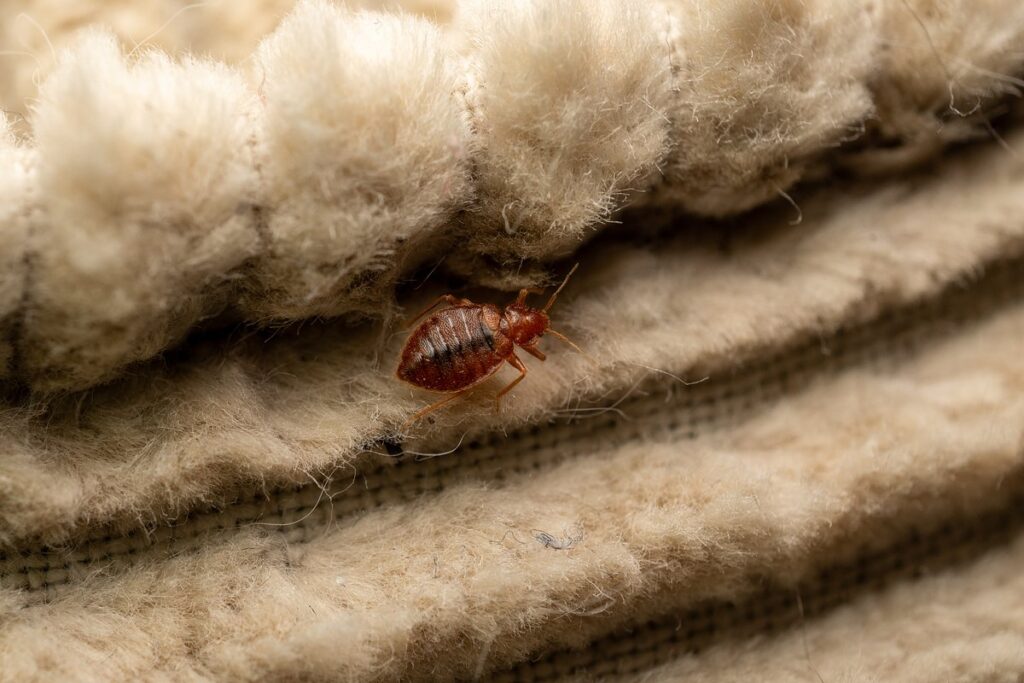
Bed bugs are usually the size of an apple seed
During the day, bed bugs hide in dark places and come out to humans in the early morning hours, when sleep is deepest. It is precisely this nocturnal activity and stealth that allows a colony to remain undetected for a long time, even when there are already many insects.
Where Do Bed Bugs in an Apartment Come From
Bed bugs almost always come from outside rather than appearing on their own. They have several pathways, and almost all of them have nothing to do with the cleanliness of the home:
- From neighbors through utilities. Bed bugs crawl through cracks, gaps, and shared structures, moving from heavily infested apartments to unoccupied ones;
- With luggage after trips. Parasites hide in the seams of bags, fabric folds, and suitcase hardware;
- With used furniture and items. Soft sofas and mattresses are especially dangerous, but bed bugs even hide in second-hand books;
- During neighbors’ renovations. Opening old coverings drives insects from their hiding spots, and they spread throughout the building.
Can Bed Bugs Come from Neighbors
Most often, bed bugs do indeed come from neighbors. When bed bug populations grow large, they start traveling in search of food, leaving treated or overcrowded apartments for neighboring ones. Older buildings with poor sealing and numerous cracks around pipes are especially vulnerable.
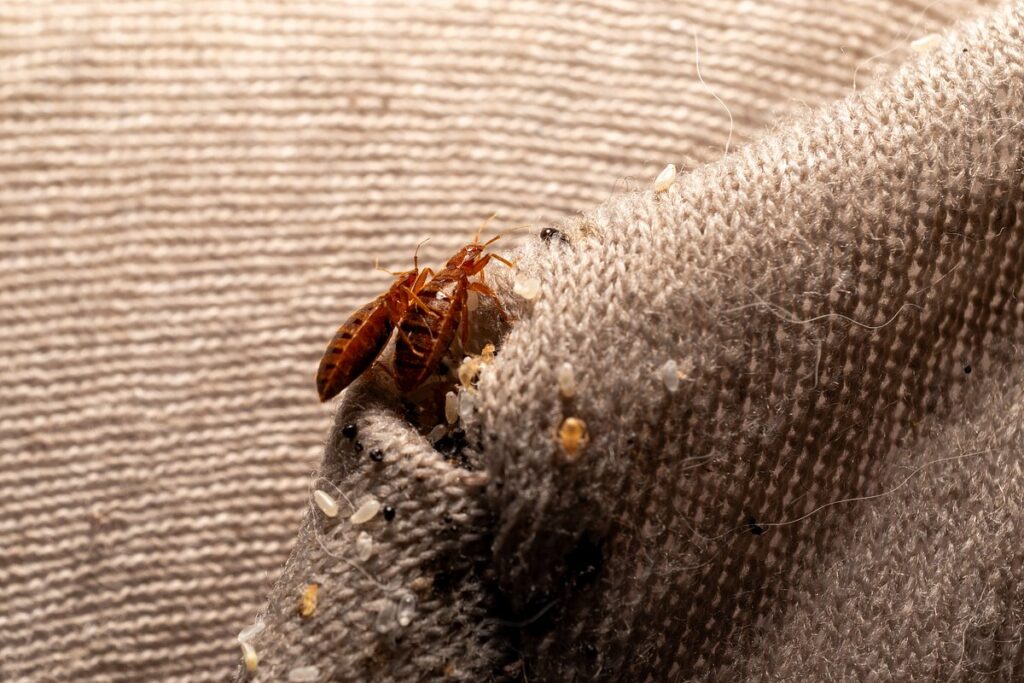
Bed bugs actively crawl through ventilation shafts between apartments
Bed bugs actively use ventilation shafts, utility niches, and wall gaps. They often settle behind electrical outlets and in cable conduits because such hidden areas are hard to notice, yet they serve as pathways for movement between rooms and neighbors.
Why a Clean Apartment Doesn’t Protect Against Bed Bugs
This is the key point to remember. According to specialists from Rospotrebnadzor, bed bugs don’t appear because of dirt — what matters more to them is access to a human. Bed bugs are found in both well-maintained and cluttered spaces, as long as there are entry points and suitable hiding spots.
This myth has an unpleasant consequence. Out of shame, people are afraid to seek help, and while they delay, the bed bug population has time to grow and spread throughout the entire building. Therefore, it’s better to treat bed bugs as a technical problem, like a plumbing leak, rather than as a judgment of the residents.
How to Tell If Bed Bugs Have Infested Your Apartment
You can detect bed bugs by three signs, and the first one you’ll notice on your own skin.
- Bites on the body. They appear as a trail of two to five red, itchy dots and show up by morning;
- Signs of activity. Tiny black dots (excrement), translucent shed larval skins, and brown blood spots on the sheets;
- A distinctive smell. A sweetish aroma resembling rancid nuts or fermented berries appears when there are already many bed bugs.
How to Tell Bed Bug Bites from Mosquito Bites
Bed bugs bite mainly at night, leaving marks on the arms, legs, neck, or back, and these bites are usually arranged in a line. This trajectory follows the path the insect crawls along the skin searching for a capillary. Mosquito bites, on the other hand, are scattered randomly and can appear at any time of day. Also, bed bug bites don’t itch the same way mosquito bites do.
How to Find Bed Bugs at Home
You need to look for bed bugs where they hide during daylight hours. Check the mattress seams, sofa joints and frame, the space behind baseboards, picture frames, and electrical outlets. If you notice even one sign of bed bugs — for example, bites, black dots, or a smell — carefully inspect the sleeping area. Most likely, you’ll find the insects themselves. A nest is revealed by clusters of excrement, shed skins, and eggs in secluded dark crevices near the bed.
How Dangerous Are Bed Bugs for Health
Bed bugs are more than just an annoyance. Constant bites lead to chronic skin irritation, itching, and sleep disruption, which in turn cause fatigue and decreased productivity.
There are also more serious consequences of bed bugs in the home:
- insect saliva can cause allergic reactions, from redness and rashes to severe manifestations in sensitive individuals;
- with frequent bites, children and the elderly may develop anemia, and chronic conditions may worsen;
- scratching bite sites creates entry points for infections;
- significant psychological discomfort, anxiety, and shame can develop.
So the problem is not only dermatological: sleep deprivation and constant anxiety impact well-being no less than the bites themselves.
What Bed Bug Treatments Actually Work
The most reliable way to get rid of bed bugs is professional pest control using products that have passed toxicological evaluation. Licensed specialists inspect the premises, assess the level of infestation, and apply treatments in areas where insects congregate and along their travel routes.
To reach bed bugs in hard-to-access places, cold or hot fog generators are used. This makes it possible to destroy not only adult insects but also larvae behind baseboards, inside sofas, and near pipes.
Here’s what you need to do before a bed bug treatment:
- move furniture away from walls;
- clear access to sleeping areas;
- wash bedding and clothing at high temperature;
- put dishes and food in closed cabinets;
- pack personal belongings in bags or boxes.
After the treatment, you need to leave the apartment for several hours, then ventilate and do a wet cleaning. In some cases, the treatment is repeated after 10–14 days because during this time new bed bugs hatch from surviving eggs, and it’s important to destroy them too. In cases of severe infestation, this second round is mandatory.
How to Protect Your Apartment from Bed Bugs
Even after a successful treatment, bed bugs can return, especially in an apartment building. Therefore, it’s important not only to treat your own apartment but also, if possible, to inform your neighbors about the problem. Otherwise, the insects will come back through ventilation, pipes, and wall cracks.
For prevention, it’s worth sealing cracks and gaps around pipes, inspecting the bed when checking into hotels, checking suitcases after trips, and washing travel clothes at high temperature. Used furniture and second-hand books should be thoroughly inspected before bringing them into the home, keeping in mind that bed bugs and their eggs hide deep in seams, frames, and bindings.