10 professions that artificial intelligence doesn’t threaten: why they are beyond competition
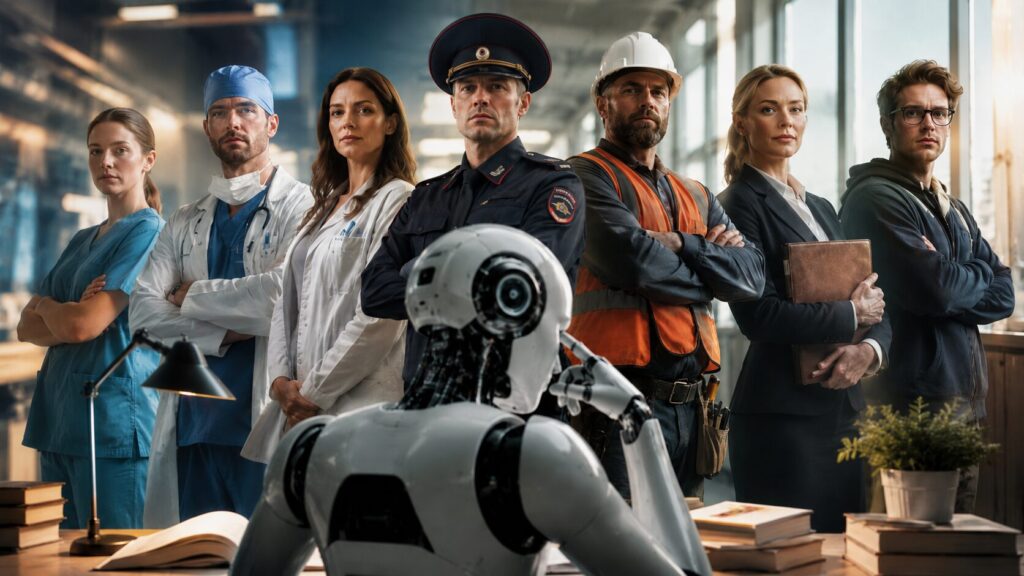
Neural networks can already compose emails, write code, plan our day, and many people are seriously — and not without reason — afraid that they’ll soon be out of a job. But artificial intelligence has a weak spot, and that’s the real, physical world. The professions most protected from automation share one thing in common: they require looking a living person in the eye and working with your hands.
Which Profession Is Considered the Most Protected from Artificial Intelligence
The American platform GoTu evaluated 30 professions based on several criteria — how automatable they are, how many job openings exist, and how easy it is to find stable employment. But the main factor turned out to be live human interaction. The more a job requires face-to-face contact, the harder it is to replace a person with software.
The most reliable profession in the study was named as the physical therapist — a specialist who helps people recover after injuries and surgeries. The risk of being replaced by technology is only 10% — the lowest figure in the entire list. And the unemployment rate in this field is a tiny 0.6%.
The logic is simple: physical contact cannot be downloaded. And simple human touch is so important for health. A chatbot can easily generate a list of rehabilitation exercises, but it won’t guide a damaged knee through a mobility test, catch a person if they stumble, or massage a muscle with its hands. That’s why the work of a physical therapist remains stubbornly human.
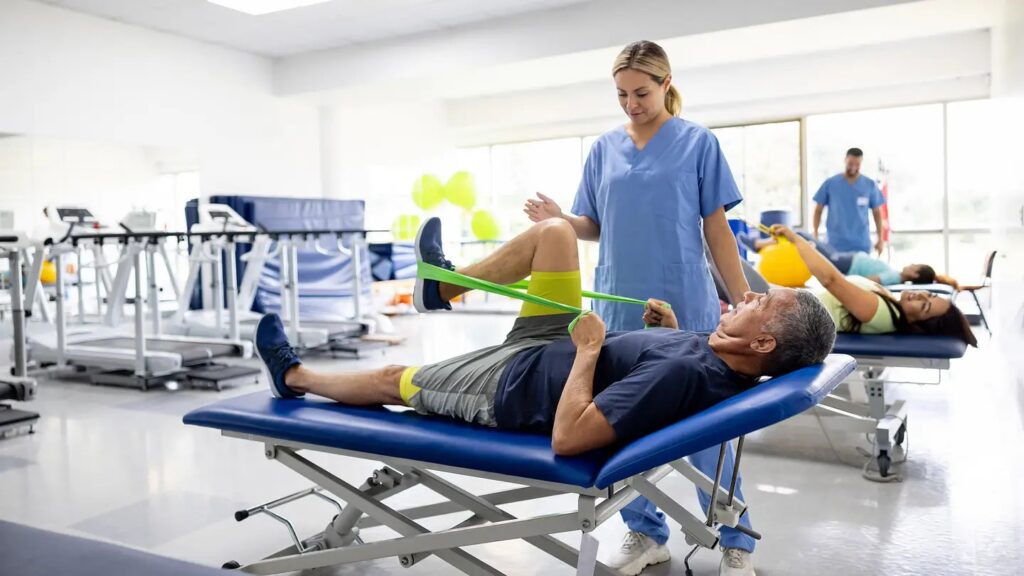
Physical therapists are the most protected category of workers at the moment. Only one in ten of them risks being replaced by technology — this is the lowest threat level.
10 Professions with Minimal Automation Risk That AI Cannot Replace
The remaining positions in the ranking all point to the same thing. If your work involves unpredictable environments, manual labor, or human crises — you’re in a safe zone.
At the top of the list, surgeons, dentists, and psychologists predictably appeared. And this makes sense: despite the fact that AI knows more than doctors, it won’t give you a confident and accurate diagnosis or perform surgery. But it’s not just about hospitals.
Construction foremen also made the ranking, since a program cannot physically manage the chaos on a construction site or argue with a concrete supplier. Yes, robots are already being trained to work at real production facilities, but construction is still too unpredictable. And police officers maintain an unemployment rate of 0.0% because real emergencies require intuition that code cannot yet replicate.
Here’s what the top ten most stable professions look like, with automation risk and unemployment levels:
- Physical therapists — replacement risk 10%, unemployment 0.6%
- Surgeons — 10%, 0.2%
- Dentists — 8%, 0.9%
- Construction foremen — 13%, 1.8%
- Police officers, detectives, investigators — 13%, 0.0%
- Psychologists — 20%, 0.3%
- Information security specialists — 53%, 2.1%
- Dental hygienists — 39%, 0.4%
- Social workers — 12%, 2.1%
- Lawyers — 31%, 0.8%
Interestingly, some professions on the list have a high automation risk — for example, cybersecurity specialists face a 53% risk. But demand for them is growing so fast that automation risk doesn’t currently look like the main problem: over 10 years, the number of jobs in this field has grown by 29%, and there still aren’t enough specialists for all the tasks, especially now that even AI-powered computer viruses are emerging.
What Makes a Profession Resilient to AI
Protection from artificial intelligence isn’t about hiding from a screen. On the contrary, it’s about being able to do things that programs are still hopelessly bad at. Usually it’s a combination of three things:
- years of specialized education and experience that can’t simply be loaded into a system,
- hands-on work in the real world, where everything is unpredictable,
- live communication and human participation during difficult moments.
This even includes ordinary small talk about nothing. Many people pretend they don’t like conversations about the weather, but it’s precisely this casual chat that adds humanity to difficult situations, whether it’s a police interrogation or a serious medical procedure.
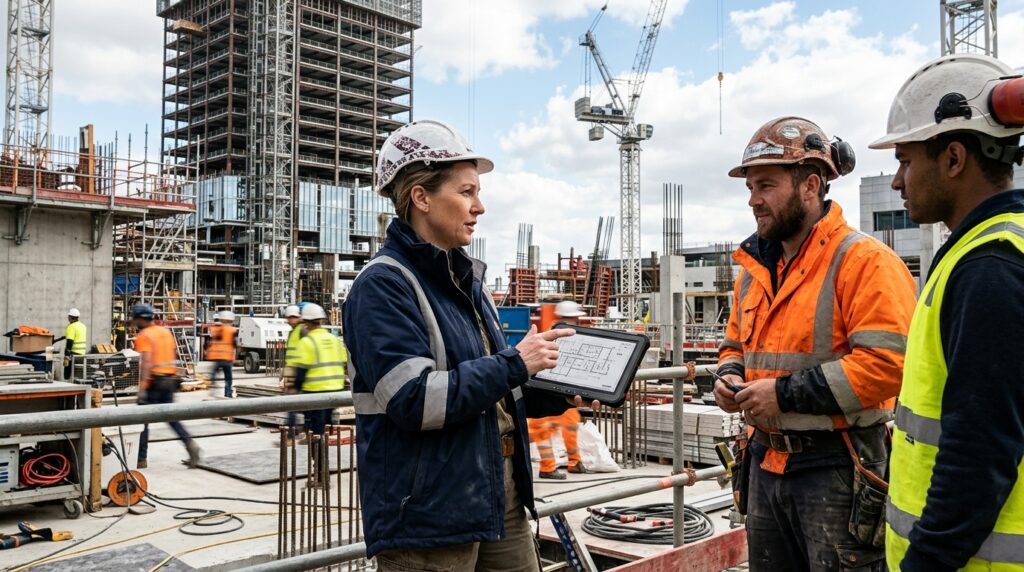
A foreman coordinates work at a construction site — a task that software cannot perform.
Accountability for Decisions and Mistakes: Why AI Cannot Fully Replace a Doctor or Lawyer
There’s another factor that people rarely think about — accountability. A program can easily find the right document or flag a threat in a system, but it cannot take the blame when something goes wrong.
When life, health, or a legally significant decision is at stake, an algorithm cannot be held accountable. You can’t sue a neural network. That’s why society will always need a living person who will sign off and take on the final responsibility.
The more real, physical, and human a job is, the more calmly you can look at the development of technology. AI is good at taking over screen-based routine, but hands-on work, human participation, and accountability for outcomes remain with us for now — and the experience of companies that have already tried to replace people with neural networks demonstrates this well.