When you make a call, send an SMS, or simply carry your phone with you, your mobile carrier records a vast amount of data. Since July 2018, under the “Yarovaya Law,” not only call details are stored, but also the actual content of conversations and SMS, as well as internet session history. What’s more, your carrier even knows when you turn on a VPN and can report you to the authorities if needed. Let’s break down what exactly your carrier knows about you, how long all of this is stored, who has the right to access this data, and how to request a call detail report for your own number.
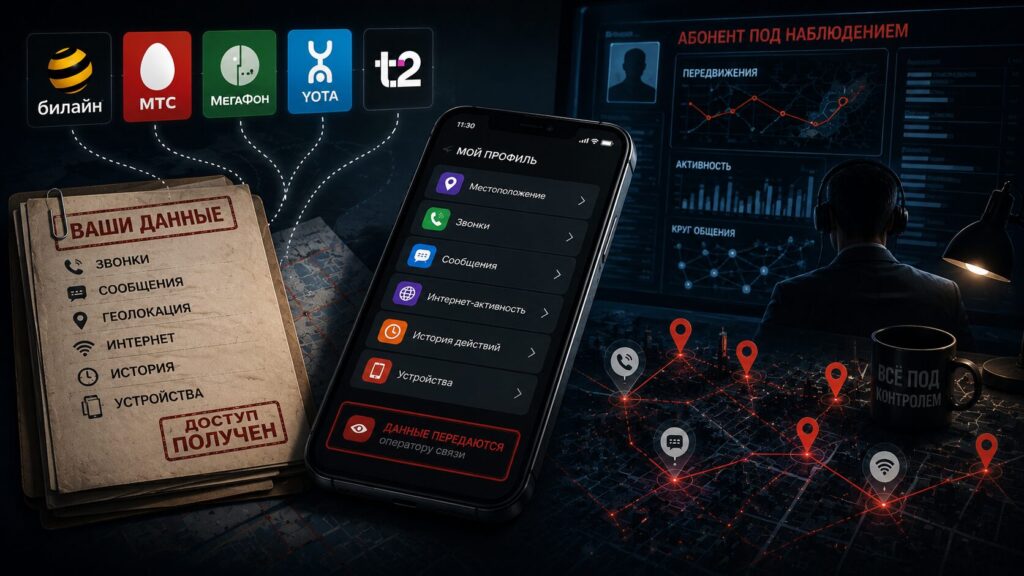
Carriers know a great deal about us
What Is Stored in Call Detail Records
The main thing to understand is that call detail records and the content archive are two separate storage systems. In special databases, you can find call details — incoming and outgoing numbers, connection time, duration, as well as information about SMS and internet sessions. The actual recordings of conversations and message texts are not included in the detail records. Their content is stored separately.
Technically, it works like this: the data resides in large databases deployed on powerful servers. The detail records log the fact of a call, its time, the sending and receiving of SMS, and information about internet access. A separate billing platform also operates — a database that tracks your balance and deducts money after each call.

Under the Yarovaya Law, all carriers must store phone conversation history and more for at least six months
Can the Carrier See SMS Content and Does It Record Calls
This is the most common fear among subscribers, and here, unlike older articles, the answer is no longer reassuring. Since July 1, 2018, the “Yarovaya package” (Federal Law 374) has required carriers to store the actual content of communications:
- recordings of phone conversations and SMS texts — 6 months;
- internet traffic (carriers have been storing it since October 1, 2018) and connection metadata — up to 3 years;
- audio and video content transmitted by subscribers — approximately 30 days.
All of this is stored exclusively on Russian territory, and access to the data is granted to law enforcement agencies through the SORM system.
It’s important to distinguish between the two storage systems. In the detail records that you request yourself, there is no SMS text or call recording — only the facts of connections. But in parallel, under the “Yarovaya Law,” both the call recording and the message text are stored in a separate archive that is not provided to the subscriber and is intended for law enforcement agencies.
Therefore, the claim that “conversations are not recorded anywhere” no longer applies to Russia since 2018. If it matters to you that your correspondence doesn’t end up with the carrier, it makes sense to choose messengers with end-to-end encryption — the carrier technically cannot save their content, unlike regular SMS and calls.
Who Can Obtain Call Details and How Much It Costs on the Black Market
There are two lawful recipients: the subscriber themselves for their own number and law enforcement. Detail records and connection data are requested by law enforcement under Article 186.1 of the Criminal Procedure Code through a court order and only when it is proven that the data is critically important for the case. The content of conversations and correspondence that carriers store under the “Yarovaya Law” is also available to law enforcement through SORM by court order. The subscriber can obtain their own number’s detail records at any time — more on that below.
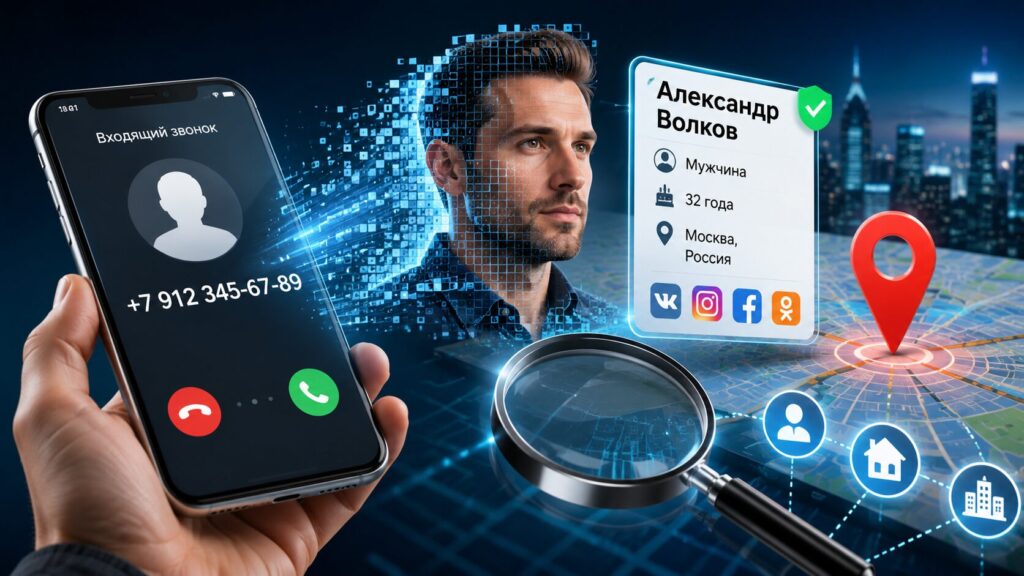
Call details won’t show who called — only the number
At the same time, a black market exists, and it is responsible for most data leaks. Most often, data is leaked by employees themselves intentionally. According to 2018 data, information about a specific subscriber’s calls and SMS for one month cost between two and ten thousand rubles, a one-time phone location determination cost between three and ten thousand, and information about the five nearest devices to a subscriber could reach nearly one hundred thousand rubles.
Such data is obtained by so-called “punchers” — intermediaries who connect with corrupt carrier employees or law enforcement officers. At the same time, even an experienced IT specialist cannot connect to a carrier’s databases directly due to serious encryption, although experts do not completely rule out a physical data export by an employee.
By the way, the level of data protection is worth considering when choosing a carrier — for example, if you’re looking at a virtual mobile operator, it still relies on the infrastructure of a major carrier.
How to Request Call Details for Your Number
The good news is that to find out what is stored for your number, you don’t need punchers or a court order. The personal account on any carrier’s website allows you to receive call details via email at the subscriber’s own request. The process is usually as follows:
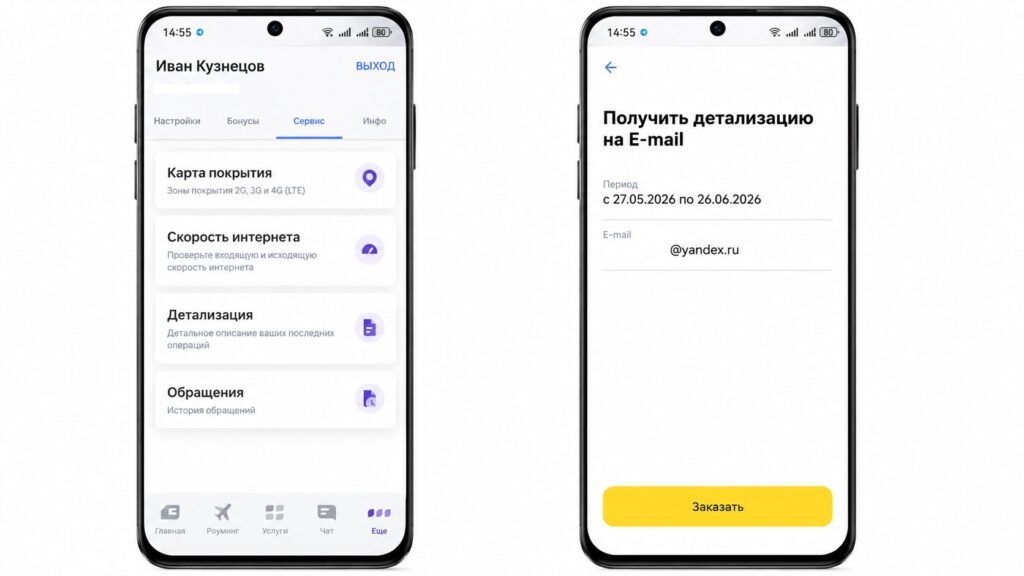
All carriers without exception provide this data
- Log in to your personal account on your carrier’s website or app using your number.
- Find the section for services or spending history — there will be an option called “Detail Records” or “Call Details.”
- Select the period for which you need data and the delivery format (most often via email).
- Confirm the request — the detail records will be sent to the specified email, sometimes as a password-protected file.
In the detail records, you will see numbers, dates, times, and call durations, as well as sent SMS and internet usage — but not the text of messages or the content of conversations (this content is stored separately under the “Yarovaya Law” and is not provided to the subscriber). This is a useful tool if you need to sort out charges, verify a disputed call, or understand where your data traffic is going. And separately, it’s worth keeping basic digital hygiene in mind: the less data you leave about yourself, the better — this applies both to what permissions you grant to apps and to your overall digital footprint.
The bottom line is simple: your carrier knows a lot about you — who and when you called, when you sent SMS, and when you went online. And since 2018, under the “Yarovaya package,” it is also required to store the content of conversations and SMS (6 months), as well as metadata and traffic (up to 3 years). This data is intended for law enforcement and is not provided to the subscriber. The main threat to the average user is not hacking carrier databases, but the human factor and the black market for data lookups. You can check your detail records at any time for free through your personal account, and it’s worth doing at least to monitor charges and suspicious calls.