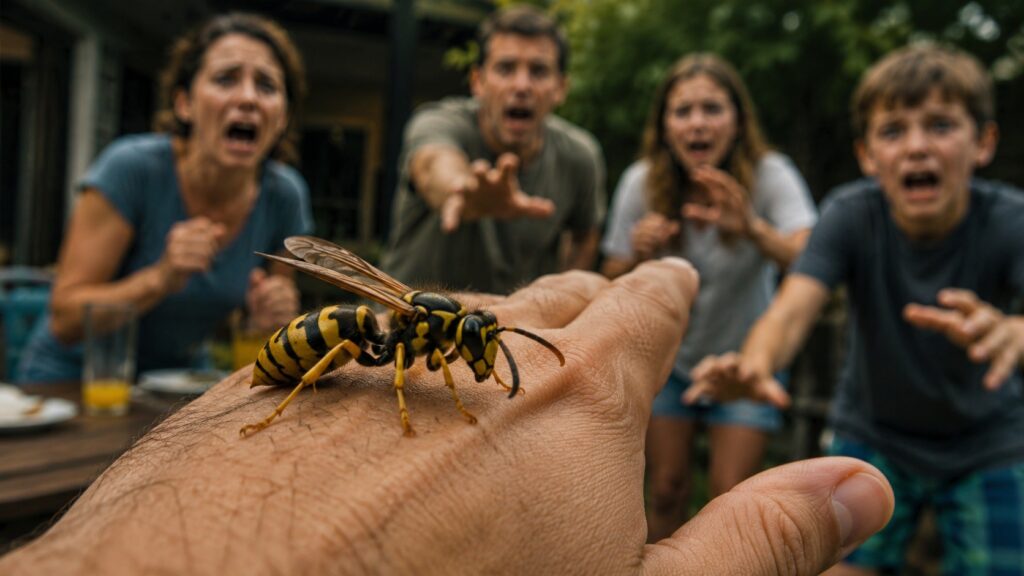
In rare cases, wasp stings are deadly
Most people are convinced that a wasp attacks simply because it has a bad temper. It’s not a bee, which at least dies after stinging. A wasp stings again and again and seems to enjoy it. But the truth is that wasps aren’t looking for victims in summer. They need food like meat, sweets, and water. And if you know who’s in charge in their family and what their dance around your glass of fruit drink means, you’ll stop being a victim.
Which Wasps Sting People in Russia
Not all wasps are equally dangerous to humans. Only so-called paper wasps sting us — insects that live in colonies and build characteristic gray nests from chewed wood fibers. There are just over 1,000 species of paper wasps in total. They are found worldwide, with about 30 species in Russia.
The most common culprits behind painful encounters are the common wasp, the German wasp, and the hornet. The first two look very similar to each other: black and yellow stripes, roughly the same size. The difference lies in their preferences: the German wasp gravitates toward cities, while the common wasp is more often found in rural areas.
The hornet is the largest and most dangerous wasp in our latitudes, and its sting is particularly painful. Fortunately, hornets are encountered far less frequently than their smaller relatives. Unlike bees, wasps have a smooth stinger without barbs and don’t leave it in the skin, so they can sting multiple times.
When Wasps Are Most Dangerous
To understand why wasps are especially aggressive in August, you need to look at the history of a wasp family from the very beginning.
In spring, a single fertilized female emerges from hibernation. She finds a suitable spot under a barn roof, in an attic, or in a hollow and begins building a tiny paper nest. One egg is laid in each cell. At first, the wasp cares for and feeds the larvae herself, until the first worker wasps emerge as helpers.
To build their nests, wasps use paper that they make themselves by chewing and moistening wood fibers with sticky saliva. In essence, wasps invented paper millions of years before humans.
All worker wasps are females, and their stinger is a modified ovipositor. Once the first helpers appear, the queen focuses solely on laying eggs, while everything else — food gathering, nest expansion, and guarding — falls on the sisters. Around the first small sphere, a second layer appears, then a third, then a fourth. The colony grows all summer, and only autumn cold stops the construction.
This is precisely why peak wasp aggression occurs at the end of summer: by August, the colony reaches its maximum size, and all family members have hatched and are actively flying in search of food.
What Wasps Eat
Adult social wasps are essentially vegetarians. According to Daily Mail, they feed on liquid food: sweet nectar and fruit juice. This is exactly why they’re so drawn to your jam, fruit drinks, and sliced watermelon on the table.
However, wasps feed their larvae protein-rich food. For this, worker wasps catch various insects and don’t even shy away from carrion. So if you see a wasp gnawing off a piece of fish or meat from your plate — it’s not for herself; she’s bringing lunch to the next generation.
Wasp larvae are incredibly voracious. When they’re hungry, they loudly scrape their mandibles against the paper walls of the nest. This is a signal to the sisters that it’s time to feed them, and the worker wasps immediately fly out to hunt.
Why Wasps Sting and How Their Venom Works
Wasps sting primarily in self-defense — protecting themselves or their nest. The main danger lies in the fact that a wasp releases a pheromone that warns its sisters about a threat to the nest and causes the swarm to attack. Simply put, the first sting works like a battle horn: the scent of the venom tells the entire colony it’s time to attack.
What greatly increases the risk of aggression:
- Sweet-scented perfume, as well as makeup with cosmetic fragrances;
- Bright clothing — wasps distinguish colors well;
- Sudden movements, which wasps perceive as an attempt to harm their nest;
- The scent of fear hormones — insects can sense it, and it irritates them even more.
Wasp venom is a very potent allergen — its composition includes enzymes and biologically active substances, including histamine, which intensifies allergic reactions. For most people, the effects are limited to localized redness and swelling, but systemic allergic reactions to hymenoptera venom occur in 1–5% of the population. In severe cases, anaphylactic shock is possible, which is a life-threatening emergency.
A separate danger is swallowing a wasp that has landed in food or a drink. A person stung in the oral cavity or esophagus risks developing swelling that can lead to suffocation.
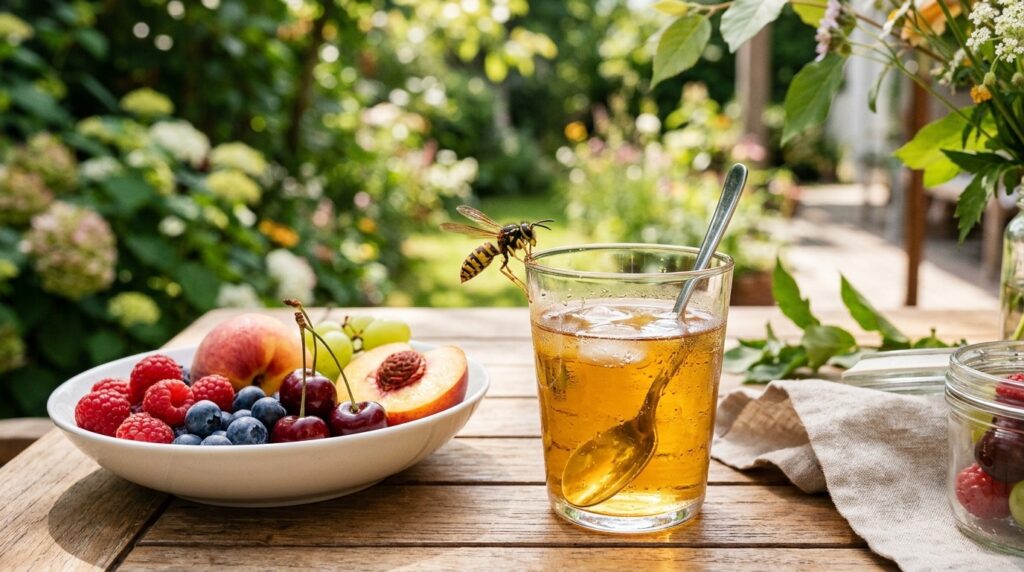
Wasps swarm to sweet drinks and fruits on a garden table
First Aid for a Wasp Sting
If a wasp does sting you, it’s important to act quickly and correctly:
- Take an antihistamine — this will reduce the allergic reaction;
- If the stinger remains in the skin, carefully remove it with a disinfected tool after washing your hands;
- Treat the sting site with an acidic solution — vinegar or lemon juice: the acid helps neutralize components of wasp venom;
- After the acid treatment, apply an antiseptic to prevent infection from entering the wound if scratched;
- Apply something cold to the affected area — this will reduce pain and swelling;
- Do not consume alcohol — it will only worsen your condition.
If shortness of breath, dizziness, or swelling of the face or throat occurs, call emergency services immediately. Within the first twenty minutes after a sting, anaphylactic shock may cause tingling and itching throughout the body, heat, weakness, shortness of breath, heart rhythm disturbances, and a drop in blood pressure. If you know you’re allergic to insect stings, consult an allergist in advance and keep the necessary medications with you.
How to Avoid Wasp Stings in Summer
The best sting is the one that never happened. Here are simple rules that significantly reduce the risk:
- Put on a robe after showering — wasps are attracted to the smell of a wet body;
- Don’t walk barefoot on grass: wasps often hunt near the ground;
- Put sliced fruits in the fridge or under a cover, as well as berries, sweet desserts, and fresh meat and fish;
- Check glasses and bottles before drinking — a wasp in your drink is more dangerous than a wasp nearby;
- Regularly inspect attics, sheds, and other outbuildings — it’s much easier to destroy a nest at an early stage when the colony is still small;
- Avoid sweet perfumes and bright clothing if you plan to spend time outdoors.
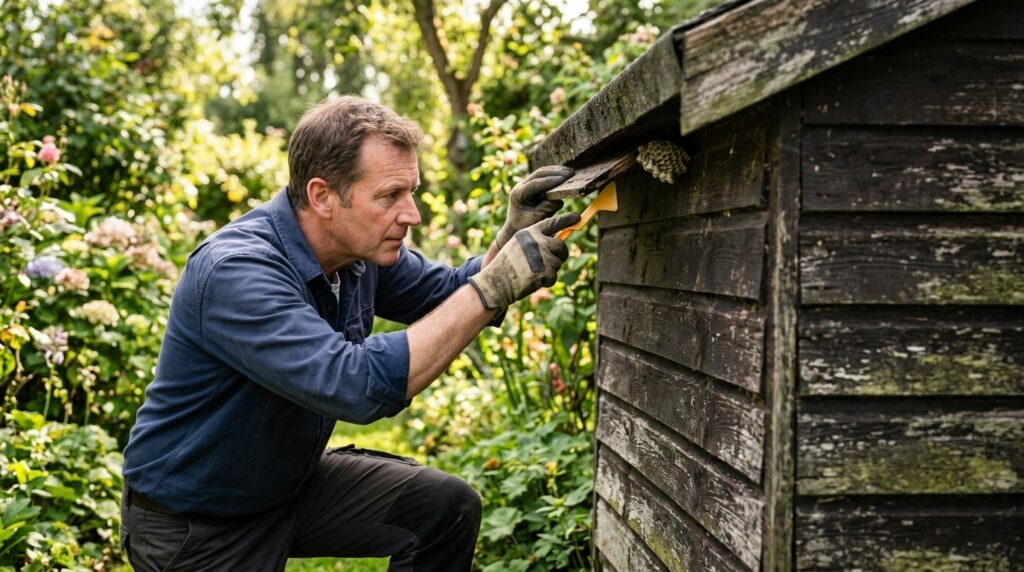
Inspecting outbuildings will help detect a nest at an early stage
If a wasp flies up to you, don’t wave your arms and don’t panic. Insects may perceive sudden movements as an act of aggression and attack in response. Calmly step aside and let the wasp fly away. Remember that it’s not hunting you — it’s simply looking for food or checking whether you pose a threat to the nest.
Wasps are an important part of the ecosystem: they destroy harmful insects and participate in plant pollination. It’s impossible to get rid of them completely, and there’s no need to. But understanding their behavior is the best protection. Knowing what attracts wasps and what provokes them, you can spend the summer without painful surprises.