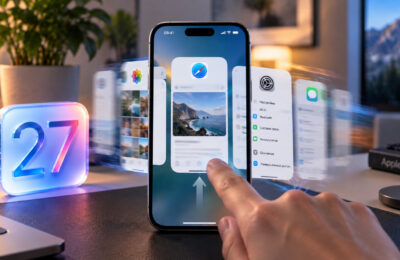
We recently learned practically everything about the foldable iPhone Ultra — its design, specs, price, and release date. And now it’s time to look at its main feature, which is hidden at the system level. I’ve long been used to doing one thing at a time on my iPhone 16 Plus. The big screen is there, but in terms of multitasking — it’s useless. Open notes, minimize, open the browser. And yet, right next to it sits an iPad, where two apps have been living side by side for years. And now, it seems, Apple has finally decided to fix this strange injustice in iOS 27, but, of course, with its own caveats.
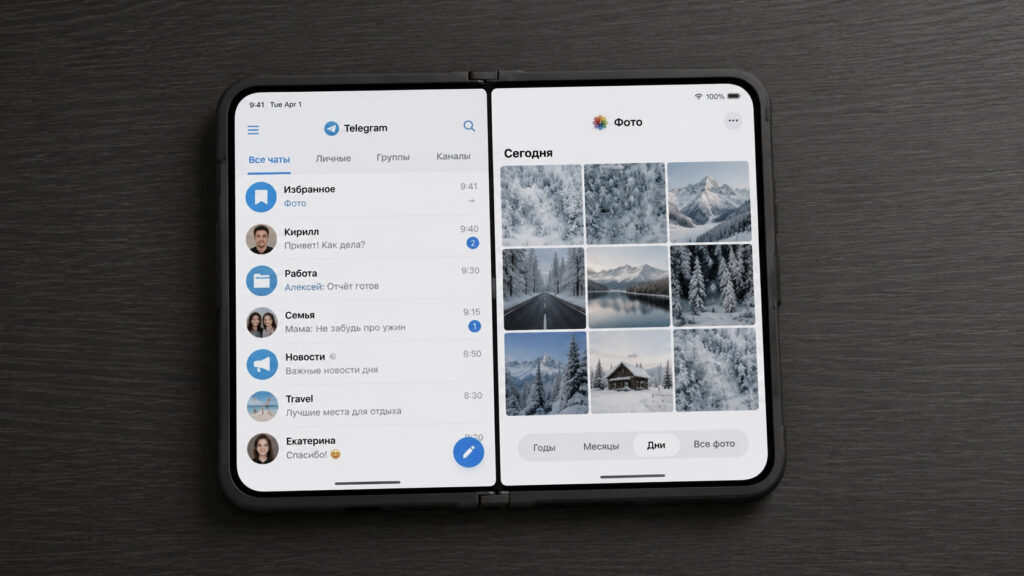
iPhone in iOS 27 will get the long-awaited split screen
How Split Screen Will Work on iPhone
The information came from a well-known insider under the nickname Fixed Focus Digital. In a fresh post on Weibo, he revealed that Apple is developing a mechanism for iOS tentatively called Parallel View. In short — it’s an automatic adaptation of apps for wide screens at the system level.
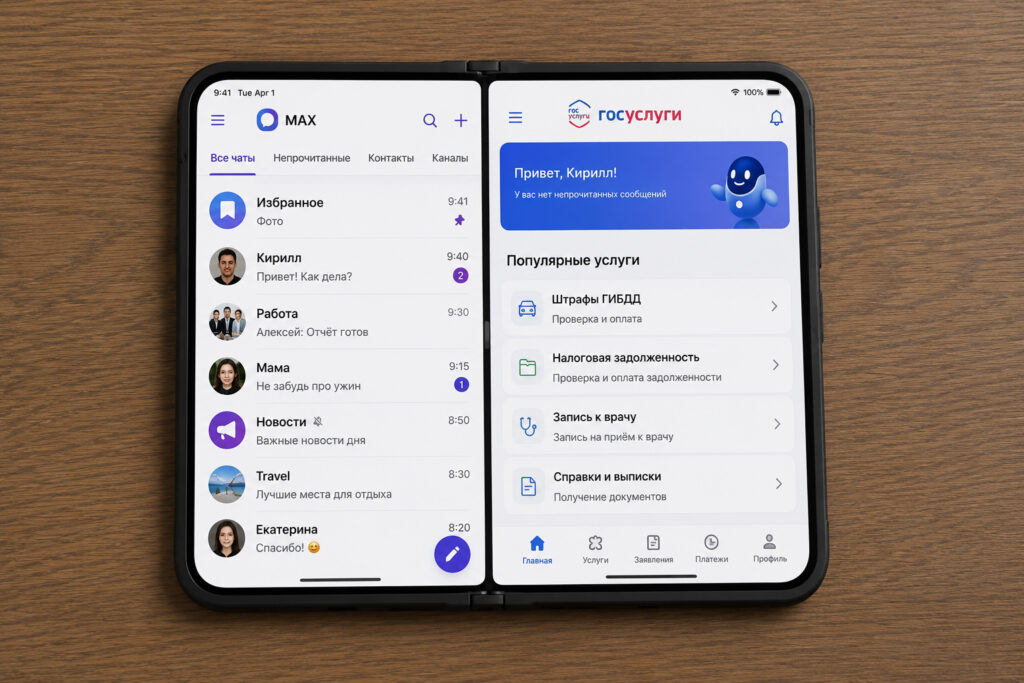
You’ll be able to open two apps simultaneously
The term Parallel View itself didn’t come from the Apple world. That’s what the feature in HarmonyOS from Huawei is called, which expands smartphone apps on wide displays without developer involvement. The insider uses this name simply as a reference point — he doesn’t claim that Apple is literally copying Huawei’s solution. Rather, he’s showing what result Cupertino is moving toward.
And you know what caught my attention the most here? The fact that apps won’t need to be redesigned at all. The system itself will adapt the interface for the wide screen. This is a huge difference compared to how Apple usually puts such work on developers’ shoulders.
Why Apps Need to Stretch for the Foldable iPhone Screen
The main goal of the new feature is the foldable iPhone. Its inner display, according to rumors, will have a diagonal of 7.8 inches. And this is where a fundamental weakness of iOS is exposed: virtually every iPhone app is designed for a tall and narrow screen.
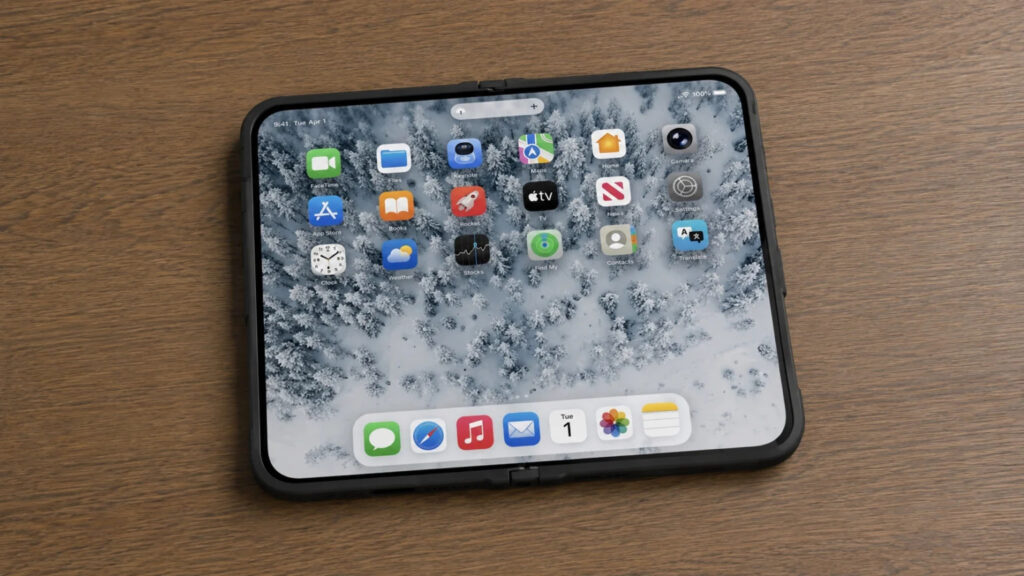
The inner screen of iPhone Ultra is ready to run multiple apps
Imagine unfolding your foldable iPhone, and your favorite app remains a narrow strip in the center with black bars on the sides. That would look, to put it mildly, ridiculous. It’s exactly this letterbox effect that Apple is trying to overcome. Without a system-level solution, the large screen of the foldable smartphone would have turned into an expensive but useless toy.
The insider himself noted that iOS as a platform is “really great.” The problem has always been one thing — Apple’s adaptation for large screens has consistently been lacking. And now, on the verge of releasing a foldable device, it’s no longer possible to bypass this issue.
How Split Screen Works on iPad
The funniest thing is that Apple won’t have to reinvent the wheel. The company has long known how to adapt interfaces for landscape orientation at the system level — on iPad. It’s been working there for years: rotate the tablet, and the app rearranges itself.
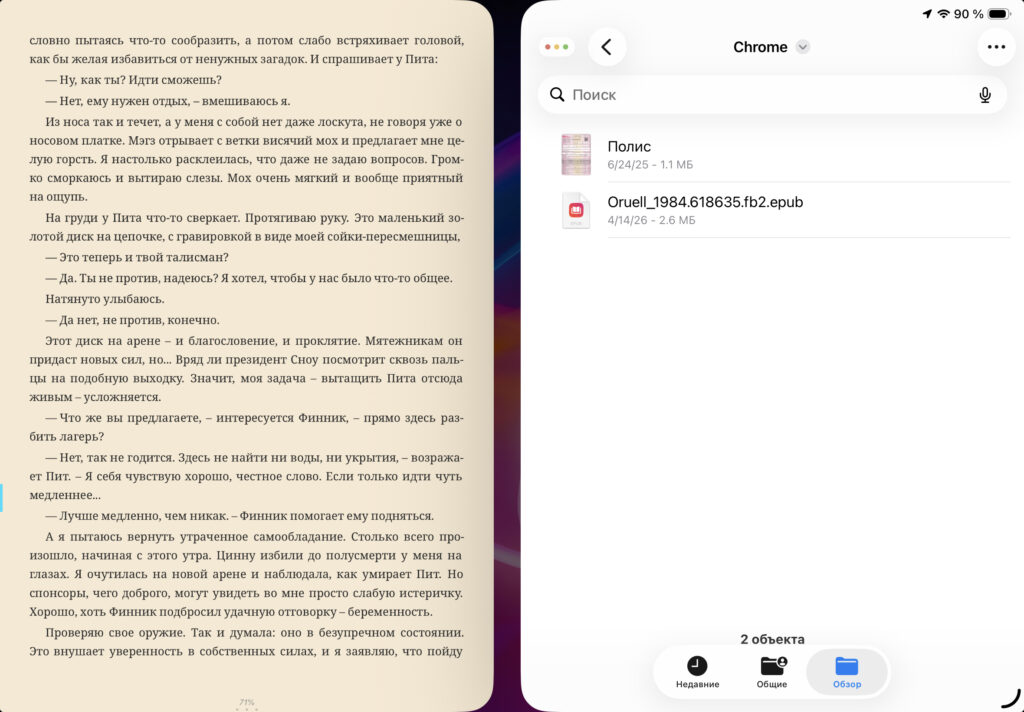
Split screen works similarly on iPad
But iOS never had such a mechanism. It created an absurd situation: within one ecosystem, the tablet could adapt to screen width, but the smartphone couldn’t. Bringing this logic to iPhone looks like an absolutely logical step.
Fixed Focus Digital’s rumors, by the way, are not isolated. They confirm earlier information from Mark Gurman at Bloomberg. Back in March, he wrote that iOS 27 would allow users to keep two apps side by side on the foldable iPhone’s inner display — with an iPad-style layout and navigation side panels on the left in supported apps. When two independent sources talk about the same thing, it becomes much easier to believe them.
Which iPhones Will Get the New Multitasking
The premiere of iOS 27 is expected very soon — Apple will present the system at WWDC 2026 this month. And the full release will come in the fall, along with the iPhone 18 Pro lineup and that very foldable iPhone.
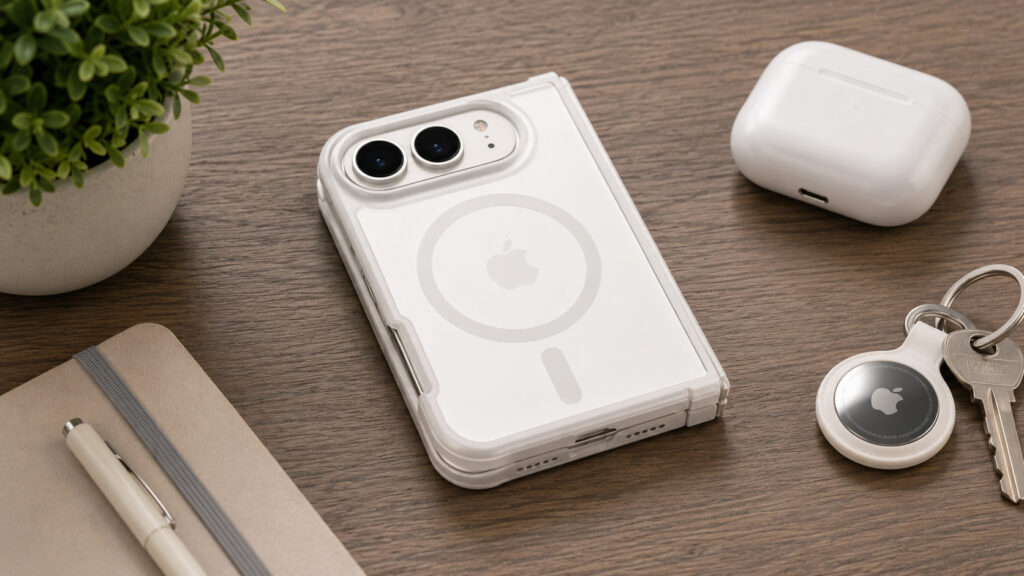
Unfortunately, this feature will be exclusive to iPhone Ultra
Here the main question arises for all of us, owners of regular models. Will split screen be exclusive to the foldable device, or will regular iPhones get the feature too? There’s no clarity yet. From a technical standpoint, the wide-screen adaptation system is needed specifically for the foldable smartphone — on the narrow display of a regular iPhone, there’s not much to split.
But I wouldn’t rush to be disappointed. Even if the feature is initially tied to the foldable model, the very fact that such a mechanism appears in iOS is a serious foundation for the future.