Recently, Russian apps started actively blocking VPN. The situation is unpleasant, as access to banks and other services through a virtual private network is practically impossible. In other words, VPN on Android already works intermittently, but now a new threat has appeared. It turns out that an enabled VPN can blow up a smartphone. At least, that’s what one headline that went viral this week suggests. Let’s see what’s behind it.

This pest caused trouble here too!
How Dangerous Is VPN on Android
The publication “Absatz” published a story with the headline “IT expert explained when using a VPN can lead to a smartphone explosion.” Naturally, the news spread instantly. Many didn’t bother reading past the headline. Why would they, when everything seems clear?

This is how the publication “Komsomolskaya Pravda” presented the news
IT expert Alexey Boyko said literally the following: an explosion is possible only when several conditions coincide simultaneously:
- first: a very old phone that was designed long before modern software appeared;
- second: a resource-heavy app with a high computational load;
- third: direct sunlight that additionally heats up the body.
And even with all of this, the expert himself called such a scenario “very unlikely events.” On a modern smartphone of at least mid-range class, according to him, such problems “shouldn’t even come close.” That’s quite a bombshell. Literally.
Can VPN Blow Up a Smartphone
In short — no. Dangerous VPN in the sense of “explosive substance” is certainly a powerful image, but has nothing to do with reality. VPN heats up a smartphone. That’s true, because traffic encryption creates additional load on the processor. But the heat from VPN is roughly the same as from any other background process: maps, email synchronization, music streaming.
For VPN on a phone to bring the situation to a critical temperature, you’d need to create a perfect storm:
- a phone about ten years old with a degraded battery;
- simultaneously running heavy applications;
- direct sunlight on the body in hot weather;
- and at the same time, none of the built-in protections kicked in.
Modern smartphones have multi-level overheating protection: the processor reduces its frequency, the system warns the user, and charging shuts off. A battery explosion is a story about a physically damaged power cell, not about using VPN in Russia or anywhere else. Mixing these two phenomena is like blaming a calculator for a fire because it also gets warm.
Why Does an Android Phone Overheat
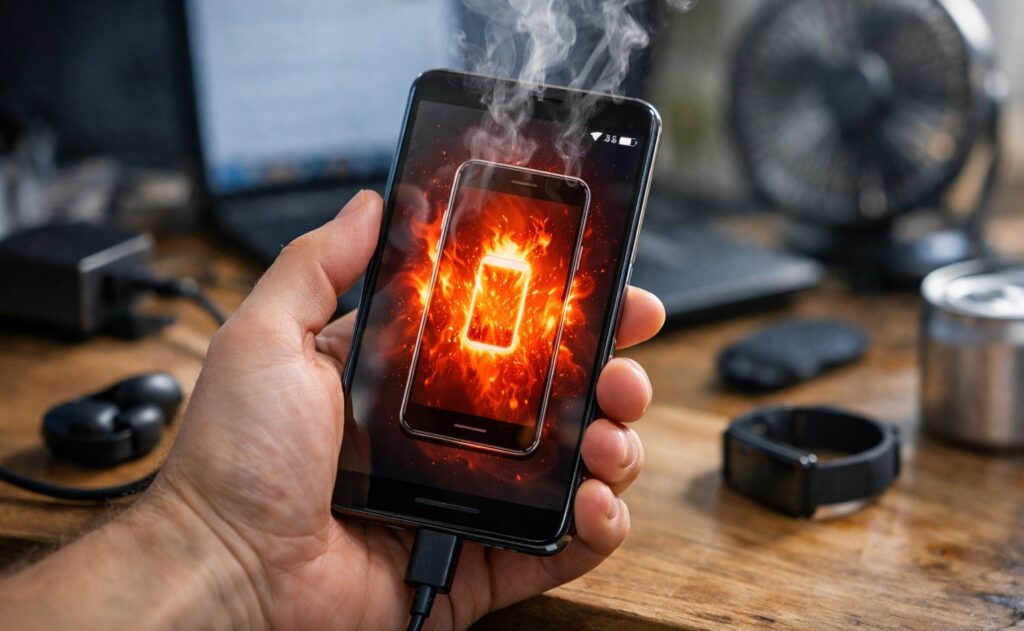
VPN is not as dangerous compared to other causes of overheating
The real causes of smartphone overheating are not related to any specific app at all. Here’s what actually heats up a phone:
- direct sunlight (the fastest way to overheat any smartphone);
- charging during active use (the processor and battery heat up simultaneously);
- a damaged or heavily degraded battery;
- games with high graphics load;
- unoptimized background processes (including some free VPNs with aggressive advertising inside).
VPN interferes with app performance and creates load on the network and processor — that’s a fact. But in the list of overheating causes, it’s far from first. If a phone gets hotter than usual, you should first check whether it’s sitting in the sun or if you’re charging it while gaming. If you’d like, read the guide on how to disable VPN on Android to put your mind at ease.
Is It Dangerous to Use VPN on a Smartphone
Is VPN dangerous in terms of a physical threat to a smartphone? No, if the phone is less than five years old and you’re not using it as a barbecue stand. A safe VPN from a hardware perspective is virtually any modern service on a current device.
Other risks exist, but they are of a different kind. Free VPNs often collect user data (this is a real privacy threat, not a physical safety issue for the smartphone). Additionally, VPN blocking is rapidly developing. Add to this the VPN fees in Russia that are also being discussed, and the picture is not a cheerful one. But there’s definitely no explosion in it. If you want to be afraid of a virtual private network — be afraid of data loss and sudden service disconnection. Those are real risks. A smartphone explosion from an enabled tunnel — we’ll leave that for the next viral headline. Disabling VPN on Android is sometimes worth doing, but definitely not because the phone will explode.