
Some scientists believe the male chromosome is disappearing, while journalists write alarming headlines
We’re used to thinking that men are the stronger sex. Stronger bones, more powerful muscles, taller by an average of 13 centimeters. However, inside every man lives a quiet genetic “retiree” that shrinks with every generation. We’re talking about the Y chromosome. Over 300 million years, it has lost almost all of its genetic assets, with only about 3% of its former wealth remaining. And many scientists seriously predict that one day it could disappear entirely. Are men facing their end?
How the Y Chromosome Loses Its Genes
To understand the essence of this story, we need to recall what sex chromosomes are. Humans have two: X and Y. Women carry the XX combination, men carry XY. It is the Y chromosome that triggers male development thanks to a special gene called SRY, which initiates the formation of testes in the embryo.
But it wasn’t always this way. Approximately 200 million years ago, X and Y were identical chromosomes containing about 800 of the same genes. Then the Y chromosome “specialized” in sex determination and stopped exchanging segments with the X chromosome. Without this exchange, which helps correct errors in DNA, the Y chromosome began gradually losing genes and shrinking. Today, it has only about 45 genes left, compared to roughly a thousand on the X chromosome.
Too complicated? Then imagine two copies of the same book. One is regularly compared to the original and typos are corrected, while the other is rewritten by hand over and over without verification. After hundreds of thousands of rewritings, the second copy has become nearly unreadable. This is the fate of the Y chromosome.
Will Men Go Extinct in the Future?
Australian evolutionary biologist Jenny Graves published a calculation in PubMed that caused quite a stir. She calculated that if the Y chromosome lost genes at a constant rate over all 300 million years, the remaining genes could disappear in roughly 5–10 million years. Graves herself, however, acknowledged that this was a simplified “back-of-the-napkin” estimate, and the real range is “from tomorrow to never.”
The media seized on the idea and inflated it into headlines like “men will go extinct.” But this has nothing to do with reality. Graves did not predict the end of the male sex. She merely drew attention to a long-term evolutionary trend.
I’m still amazed that anyone is concerned about the extinction of men in 5–6 million years. After all, we’ve only been human for 0.1 million years. I think we’ll be lucky if we survive the next century!, — Graves said in an interview with ScienceAlert.
Who Disagrees with the Disappearance of the Y Chromosome
Not all scientists agree with Graves. Evolutionary biologist Jenn Hughes believes the Y chromosome passed through its phase of active decay long ago and is now in a stable state.
In 2012, Hughes and her colleagues showed that over the last approximately 25 million years, the human Y chromosome has barely lost any key genes. Later studies confirmed that in primates, the core genes of the Y chromosome are well preserved, unlike in fish and amphibians, where degradation continues.
The genes remaining on the Y chromosome perform critical functions throughout the body. The selective pressure to preserve them is too strong for them to simply disappear, — explains Hughes.
Graves disagrees. She points out that many “new” genes found on the Y chromosome in recent years are repeated copies, some of which may be inactive. Graves calls the Y chromosome a “genetic junkyard”: creating multiple copies of a gene increases the chances of at least one copy surviving, but simultaneously creates junk in the form of non-functional duplicates.
In 2011, at the International Chromosome Conference, Hughes and Graves held a public debate. The audience voted — and the votes split exactly 50/50.

Debates are even held on the topic of Y chromosome disappearance
Animals Without a Y Chromosome
The most interesting part of this story isn’t the predictions, but the real-world examples. In nature, there are already mammals that have completely lost the Y chromosome and are doing just fine.
Several species of mole voles, small burrowing rodents from Central Asia, get by entirely without a Y chromosome. In some species, both males and females have an XO set (one X chromosome and that’s it), while in others both sexes are XX. Males continue to be born, reproduce, and outwardly look no different from their “normal” relatives. The SRY gene, which triggers male development in humans, is simply absent in these animals, and its function has been taken over by other parts of the genome.
Another revealing case involves spiny rats from Japan’s Amami-Oshima Island. Their Y chromosome has completely disappeared, but in its place a new genetic “instruction” for sex determination has emerged — a duplication of an enhancer before the Sox9 gene on a regular chromosome.
In other words, nature has already pulled off this trick several times. When the Y chromosome broke down, the organism found an alternative way to determine sex. Species didn’t go extinct — they simply switched to a different mechanism.
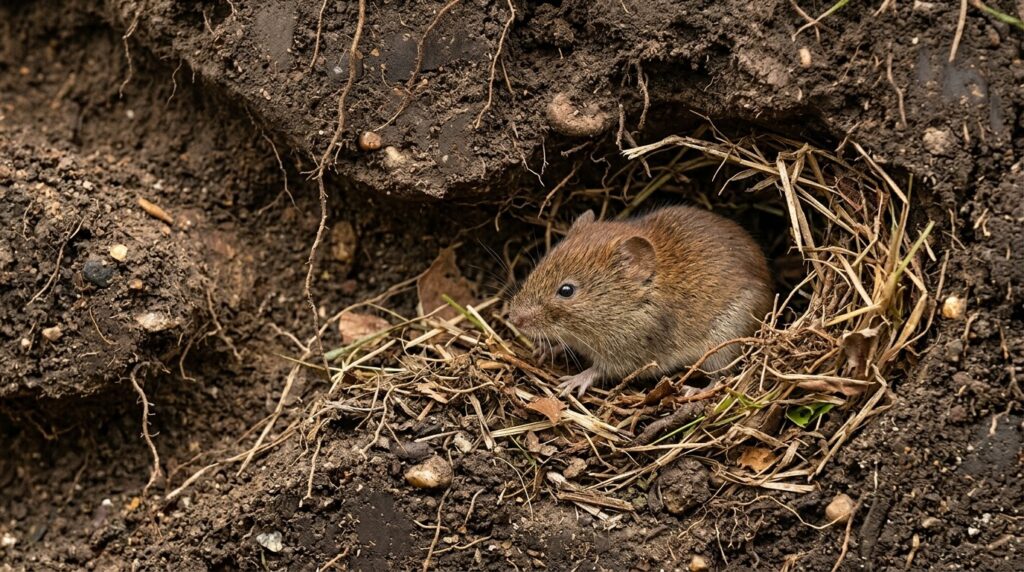
Mole voles of the genus Ellobius — rodents that successfully live and reproduce without a Y chromosome
Could the Y Chromosome Disappear in Humans
If the Y chromosome is indeed continuing to degrade, albeit very slowly, can we imagine that humans might someday develop a new mechanism for sex determination?
Jenny Graves considers this entirely possible. If a new variant emerges that works better than our poor old Y, it could spread very quickly. Perhaps this has already happened in some human population, and we simply don’t know about it.
The thing is, in large-scale genomic studies, sex determination variants aren’t usually checked separately. If someone’s Y chromosome function were taken over by another chromosome, it would be virtually unnoticeable — the men would look the same and could have offspring normally.
But it’s worth emphasizing that even if the Y chromosome someday disappears entirely, this does not mean the end of the male sex. As the rodent examples show, sex is not the property of a single chromosome. It’s the result of an entire network of genes that can be reconfigured.
What the Disappearance of the Y Chromosome Means for the Future of Men
No catastrophe for men is expected in the coming thousands or even millions of years. This entire debate between proponents of Y chromosome degradation and stability isn’t really about whether we’ll go extinct or not. It’s about a much more interesting question: can a chromosome that has already lost almost everything continue to lose more? Or will evolution provide a safety net after all?
Today, neither side can boast ironclad proof. Both versions have a right to exist. That’s precisely why scientists argue over this topic with such passion.
And for the average person, there’s one simple and even reassuring lesson to take from this whole story: biology is far more cunning and adaptable than we think. Even when a mechanism falls apart, nature almost always manages to cushion the fall. Or find a workaround. Sometimes long before we even notice there’s a problem.