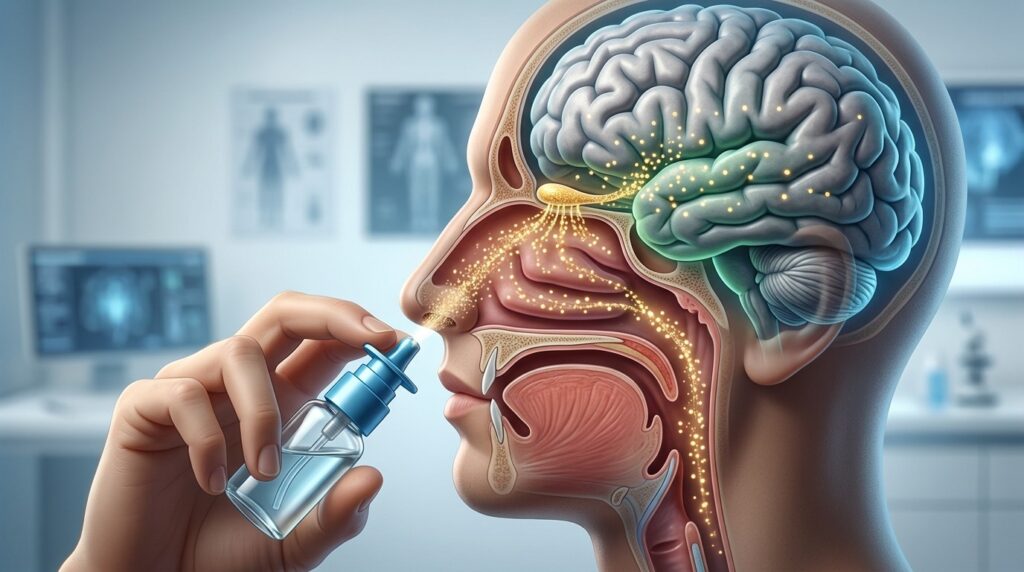
Scientists propose restoring brain youth using a nasal spray
With each passing year, neuroinflammation builds up in the brain. It is precisely what’s behind age-related brain fog, memory decline, and an increased risk of the brain-destroying Alzheimer’s disease. For a long time, this process was considered irreversible. But American scientists have shown in mice that just two sprays of a nasal spray can suppress inflammation, recharge neurons, and significantly improve cognitive function.
What Is Neuroinflammation and Why Does It Impair Memory
To understand why such a spray is even needed, it’s worth examining what happens in the aging brain. With age, a chronic inflammatory process is triggered. Imagine a small campfire that no one extinguishes: there’s no open flame, but smoke constantly fills the space. That’s exactly how neuroinflammation works — it doesn’t cause acute symptoms, but day after day it prevents neurons from functioning normally.
The smoke from this inflammation is that very brain fog: difficulty concentrating, impaired ability to form new memories, and difficulty adapting to new situations. Moreover, chronic neuroinflammation is considered one of the key risk factors for developing Alzheimer’s disease and other neurodegenerative conditions. Until recently, scientists viewed this process as an inevitable part of aging.
How the Nasal Spray Treats the Brain
The main protagonist of this new study isn’t some familiar drug molecule but extracellular vesicles. These are tiny bubbles that cells use to communicate with each other. You can think of them as microscopic parcels: inside each one is a set of molecules, including microRNAs, which are capable of regulating the activity of hundreds of genes simultaneously.
MicroRNAs act as master regulators. They help modulate multiple gene and signaling pathways in the brain, — the study authors explained.
It is precisely these regulatory molecules that are delivered to the brain via the nasal spray. Why the nose? Because the intranasal route allows bypassing the blood-brain barrier — the brain’s protective shield that normally blocks most medications. The spray delivers vesicles directly into brain tissue without surgical intervention and without the need for long courses of pills.
The delivery method is one of the most impressive aspects of our approach, — emphasized researcher Mahidhar Kodali.
How the Spray Suppresses Inflammation and Restores Neurons
When extracellular vesicles reach the brain, they are absorbed by resident immune cells — microglia. Inside these cells, the microRNAs from the vesicles get to work: they suppress two key inflammatory mechanisms — the NLRP3 inflammasome and the cGAS-STING signaling pathway. Both of these mechanisms are in a state of constant activation in the aging brain, sustaining that very chronic inflammation.
But suppressing inflammation is only half the battle. Simultaneously, the vesicles help restore the function of mitochondria — the energy powerhouses inside neurons. With age, mitochondria lose efficiency, and neurons literally lack the energy for normal operation. After the spray was administered, mitochondria in the neurons of mice began working actively again, oxidative stress decreased, and cells gained the resources for processing and storing information.
We are returning the spark to neurons by reducing oxidative stress and reactivating brain mitochondria, — explained Narayana.
What Mouse Tests Showed: Results Within Weeks
Theory is one thing, but does the spray actually work in practice? Behavioral tests on mice showed unambiguous results. Animals that received just two doses of the nasal spray performed significantly better on memory tasks compared to the control group. They were more successful at recognizing familiar objects, noticed changes in their surroundings faster, and oriented themselves better in new conditions.
An important point: improvements occurred within just a few weeks after the drug was administered. For comparison, many experimental methods for combating neurodegeneration require months of treatment, and the results often remain modest. Here, two doses through the nose produced a noticeable effect in a short period.
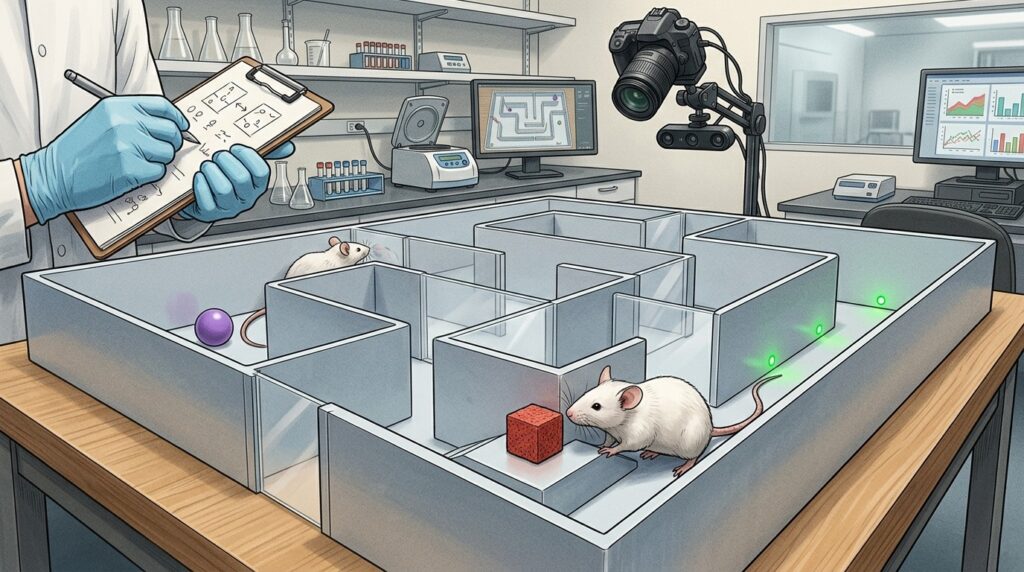
Mice that received the spray performed better on memory and orientation tests
When Will the Anti-Brain-Aging Nasal Spray Become Available for Humans
Before imagining an anti-aging nasal spray on a pharmacy shelf, an important caveat must be made: these are still early results in mice, and clinical application is still a long way off. The research must go through human trials, which could take years and yield entirely different results.
Nevertheless, the scientists have already filed a patent for their development. The very fact that age-related brain inflammation was reversed, even if only in mice, changes the perception of aging as an irreversible process. If the results are confirmed in humans, this could open the door to a simple and non-invasive therapy that helps maintain mental clarity in old age.
The study results have been published in the peer-reviewed Journal of Extracellular Vesicles. The next step is testing safety and efficacy in humans. That step will determine whether a simple nasal spray becomes a real tool against brain aging or remains a beautiful but still merely laboratory story.