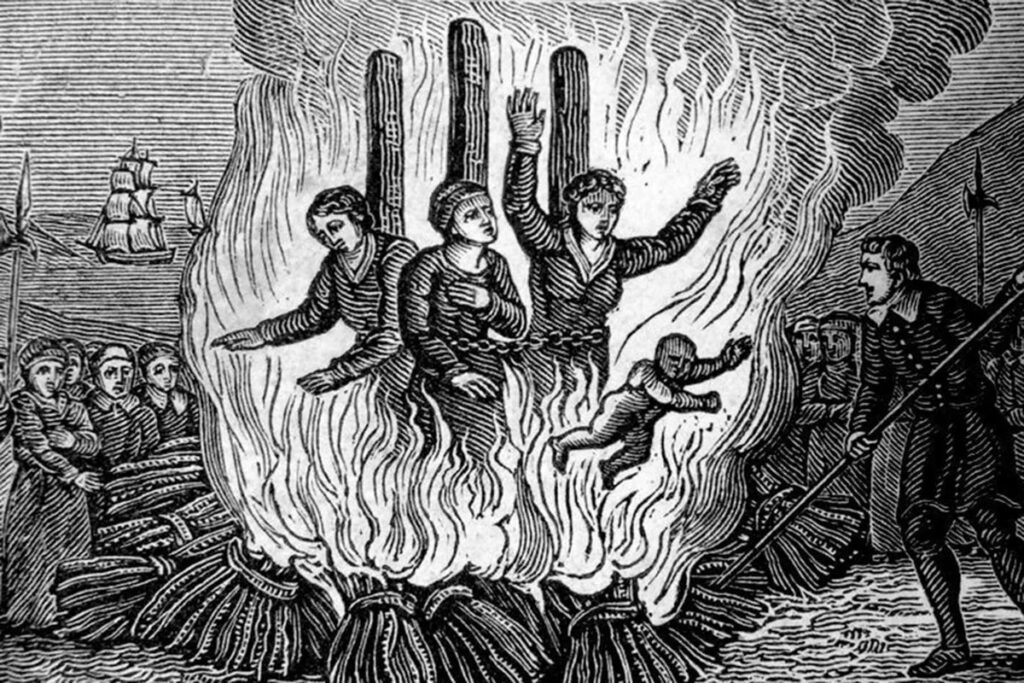
The Salem witch trials of 1692 are one of the darkest and most frightening chapters in history.
The Salem witch trials are one of the darkest and most mythologized pages of American history, where fear easily turned into mass hysteria. Books, films, and plays have retold this story for centuries — and with each retelling drifted further from the facts, as often happens with historical misconceptions (which end up living longer than the truth). You probably believe that the Salem witches were burned at the stake. That’s not true — and that’s just the beginning.
Salem Witches: Were Men Accused and How Many Were There
Today the word “witch” is almost automatically associated with a woman. For men there are separate terms — “warlock,” “sorcerer.” But in 1692 in Salem, the word witch was applied to anyone, regardless of gender. About 25% of the accused in the Salem trials were men. Among those executed by court order were five men — they were hanged alongside fourteen women.
Why were women accused more often? Historian and Puritanism specialist Dr. John Howard Smith explains this by the strong patriarchal ideology of the time. Seventeenth-century men considered women more vulnerable to the devil — because of the biblical Eve, the first to succumb to temptation. But this didn’t mean men were protected from accusations. Even animals suffered: two dogs were executed for their alleged connection to witchcraft.
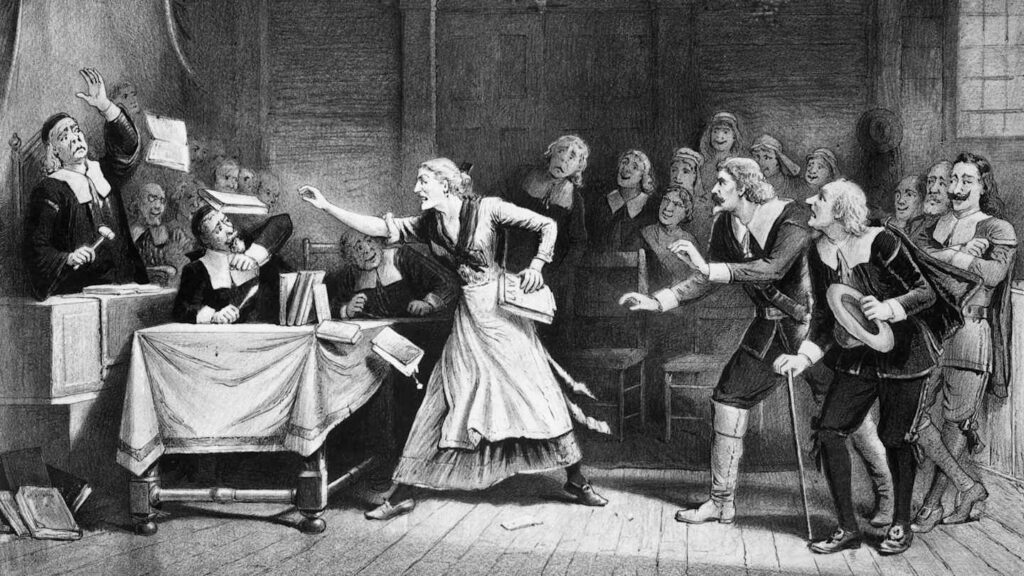
Lithograph by George H. Walker “After the Witch. Number 3” based on a painting by J. E. Baker
Where Did the Salem Trials Take Place and Which Towns Were Affected
The name “Salem trials” creates a misleading impression that everything took place strictly in one small town. In reality, accusations and arrests encompassed dozens of settlements. Traces of those accused of witchcraft can be found in 25 different New England communities, including Andover, Topsfield, and towns in Connecticut.
What made Salem unique? The speed at which panic spread. In Connecticut, witch hunts dragged on for decades. In Salem and its surroundings, 20 people were executed in a single year. It was precisely the swiftness and concentration of events that made this story a symbol of mass hysteria.
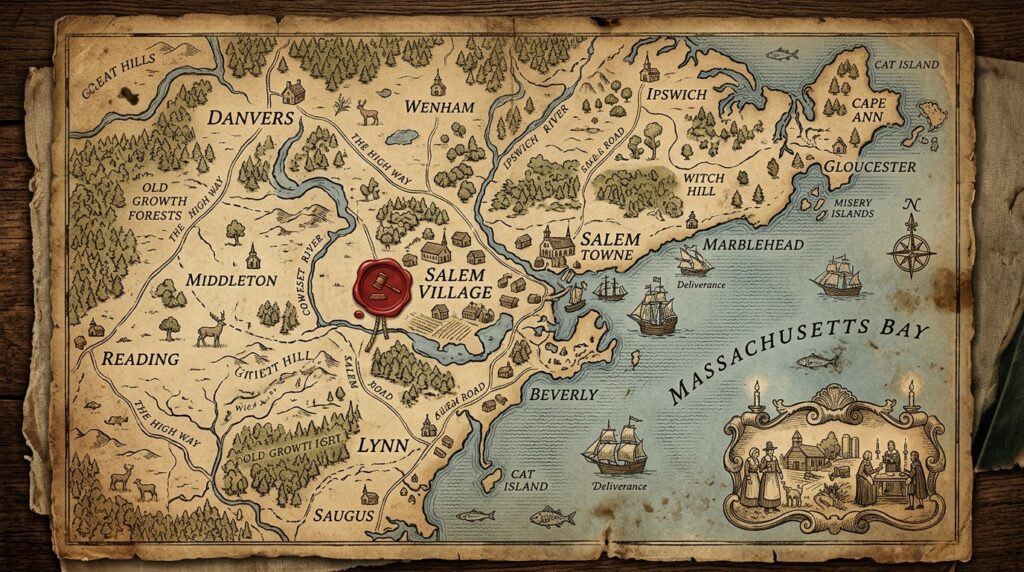
Accusations of witchcraft extended far beyond Salem
Were Witches Burned in Salem or Executed by Another Method
The image of a witch at the stake is one of the most enduring in popular culture (like many other popular myths that seem true only out of habit). However, neither in Salem nor in any other English-speaking colonies were those accused of witchcraft burned. The primary method of execution was hanging.
Burning alive was practiced in European witch hunts, which began approximately 300 years before Salem. By the end of the 17th century, this method was already considered too barbaric, and the English legal system had switched to hanging.
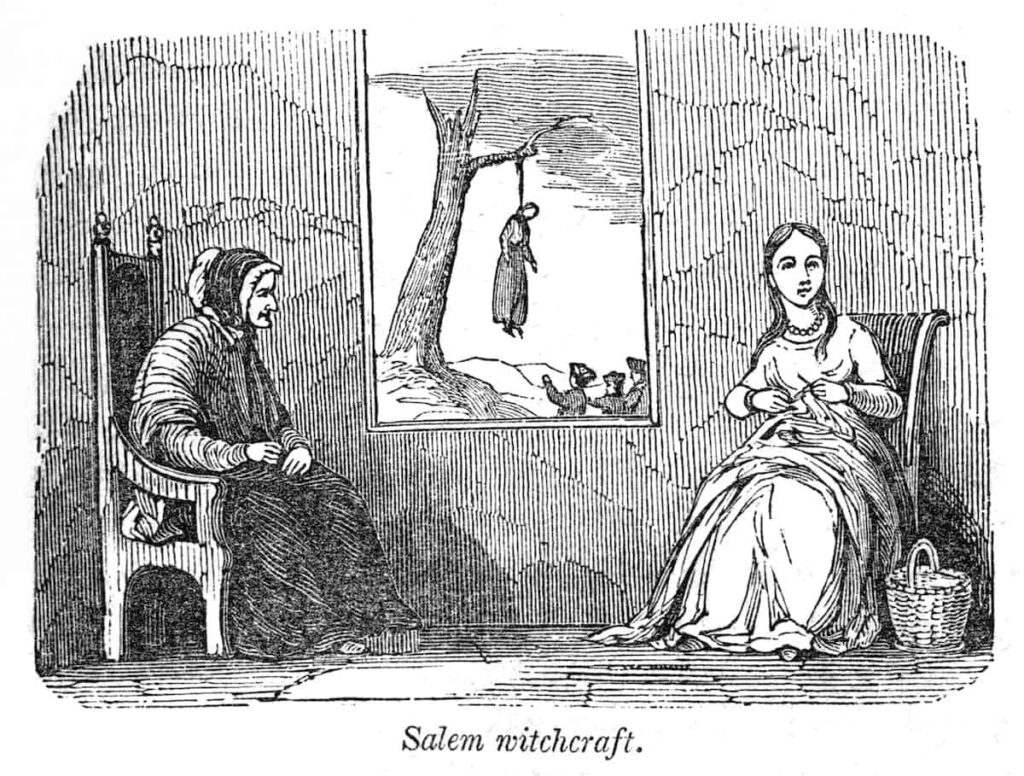
By the time described, burning witches had long been abandoned; instead they were usually hanged.
One execution in Salem does stand out from the rest. 81-year-old farmer Giles Corey refused to enter a plea of guilty or not guilty — he knew the court had already decided his fate, and a guilty plea would have meant confiscation of his family’s property. He was subjected to the medieval torture of peine forte et dure — “strong and harsh punishment”: a board was placed on his chest and gradually loaded with stones. Corey took three days to die. According to eyewitness accounts, his last words were “more weight.” At least four other accused died in prison without ever reaching trial.
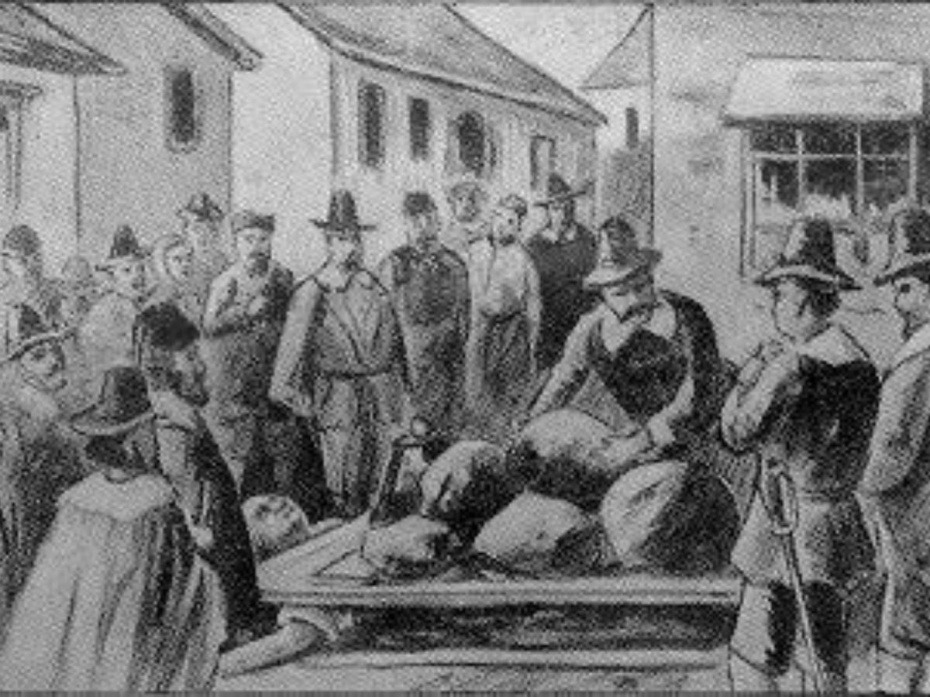
The execution of Giles Corey in Salem.
Who Were the Accused in Salem and What Did They Actually Believe
Modern perception often links those accused of witchcraft with some kind of alternative religious practices — paganism, Wicca, voodoo. This picture was reinforced by Arthur Miller in his play “The Crucible,” which depicted the enslaved woman Tituba practicing voodoo. But historical evidence paints a completely different picture — and clearly shows why people still believe in the supernatural even without evidence.
Tituba was an enslaved Indigenous woman, presumably of Arawak origin, brought by Samuel Parris from Barbados. In court documents she is described as an “Indian.” There is no evidence that she practiced voodoo or any non-European forms of magic. The image of Tituba as a voodoo sorceress is an invention of 19th and 20th century writers who found such a version more captivating. Even the “witch cake” ritual in which Tituba participated was an English superstition — she was prompted to perform it by parishioner Mary Sibley.
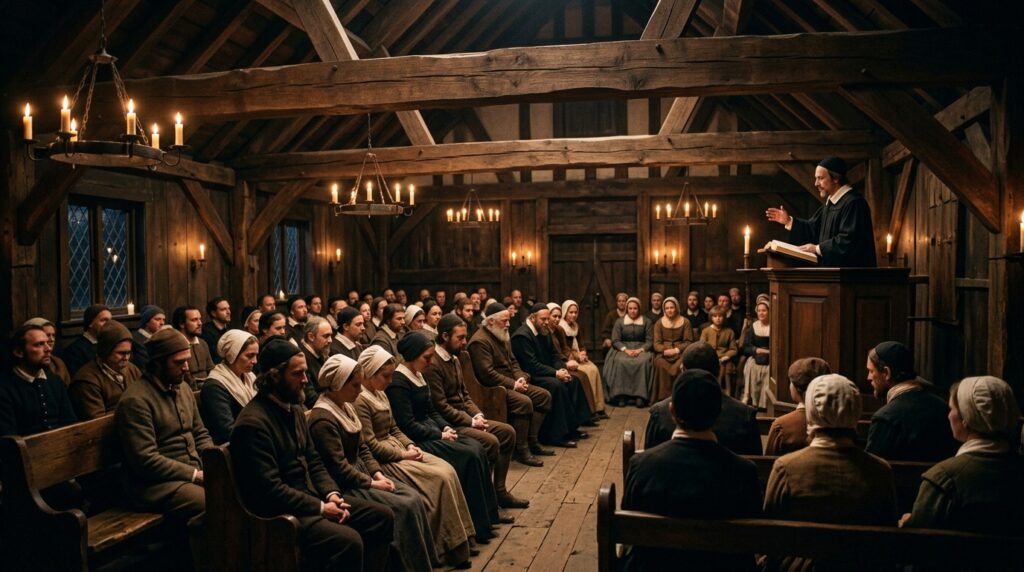
Salem Puritans were strict Christians — but that very fact did not protect them from accusations
The accused in Salem were the same Puritans as their accusers. The trials were not driven by xenophobia or religious persecution in the conventional sense. Historians point out that behind the accusations lay power struggles, property disputes, and family feuds. The Putnam and Porter families — two warring clans — found themselves on opposite sides both among the accusers and the accused.
The Ergot Theory: Poisoning or a Myth About the Causes of Salem
In 1976, student Linnda Caporael published an article in the journal Science with an intriguing hypothesis. She suggested that the strange behavior of the “bewitched” girls could be explained by ergotism — poisoning by ergot alkaloids (a fungus that infects rye). Ergot can indeed cause hallucinations, seizures, and muscle spasms — symptoms similar to descriptions found in court records.
The hypothesis quickly became popular, but most historians and toxicologists rejected it almost immediately. That same year, a critical response by Nicholas Spanos and Jack Gottlieb appeared in Science, in which they pointed out that the available data did not support the role of ergotism in the Salem crisis.

Ergot — a fungus on rye that causes severe poisoning. But it most likely has nothing to do with the events in Salem