Scientists thawed 40,000-year-old microbes in Alaska — and they came back to life after six months
Permafrost seems like a reliable natural freezer where everything ancient has long been frozen solid and no longer poses a threat. But an experiment revealed something unexpected: microorganisms trapped in Alaska’s frozen soil since the Ice Age turned out to be alive — and when temperatures rose, they began actively reproducing. The main question now is not how they survived, but what will happen to the climate as permafrost continues to thaw, and what else will awaken along with it.
How Permafrost Samples Are Collected for Research: A Tunnel with Mammoth Bones
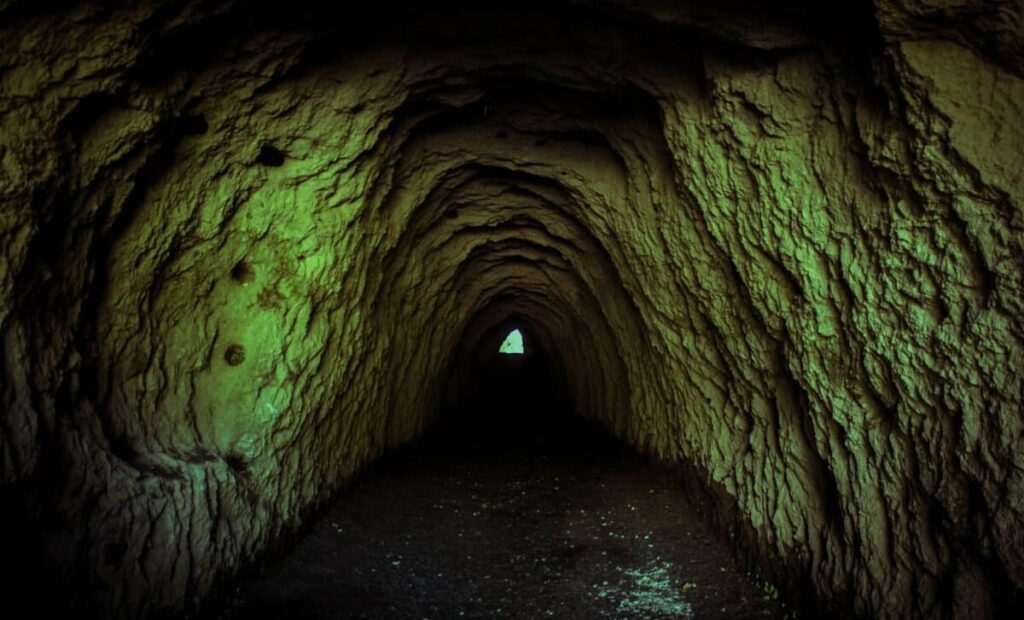
To study ancient life entombed in permafrost, a team of scientists led by Tristan Caro from the University of Colorado Boulder traveled to an unusual location. Samples were collected from a permafrost research tunnel — a U.S. Army Corps of Engineers facility located in central Alaska, near Fairbanks. The tunnel extends more than 100 meters deep into frozen ground.
Inside, it resembles a mine shaft, with bones of ancient bison and mammoths protruding directly from the walls. Permafrost is remarkably capable of preserving animals for millennia, making such tunnels akin to natural archives for scientists.
“The first thing you notice when you walk in is the terrible smell. Like a basement that nobody has cleaned in an eternity,” Caro describes.
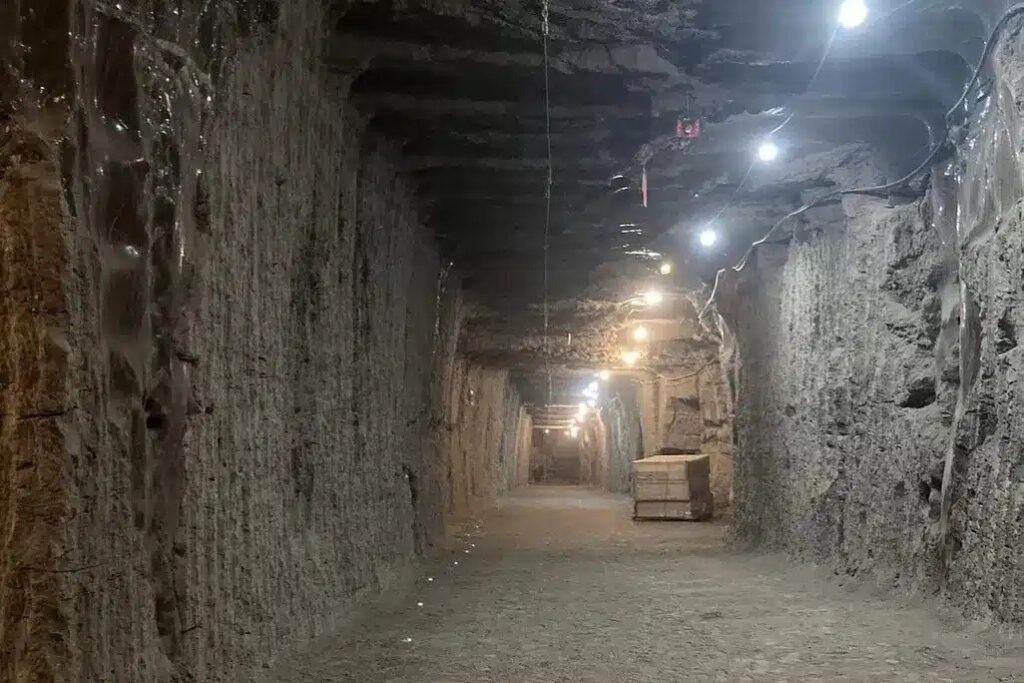
A tunnel in permafrost built by the U.S. Army Corps of Engineers in central Alaska.
For a microbiologist, however, such a smell is a good sign: it indicates the presence of living microorganisms.
The scientists extracted soil samples ranging from 4,000 to 42,000 years old. These were then taken to a laboratory, water was added, and they were incubated at temperatures of 4 and 12 °C — cool for humans, but practically scorching for the Arctic. The goal was to simulate Alaskan summer conditions and future climate scenarios in which warmth penetrates deep layers of permafrost.
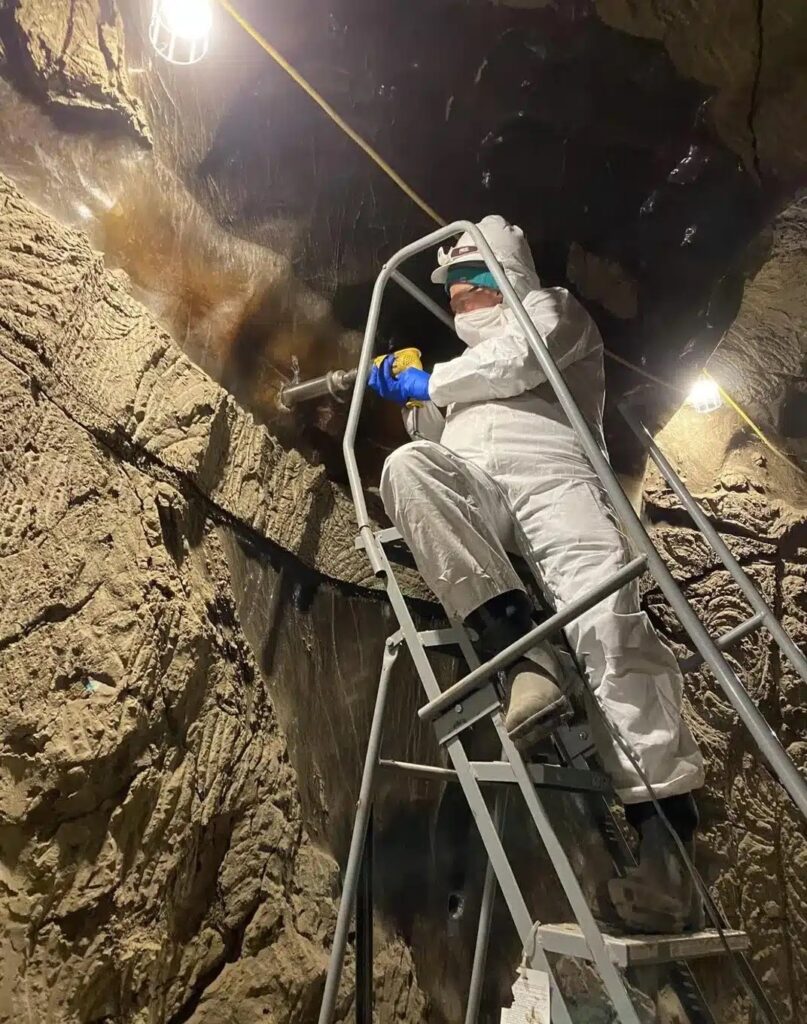
A scientist drills ancient permafrost in the research tunnel in Alaska.
How Ancient Microbes Come Back to Life After Thawing
For the first weeks and months, the samples showed virtually no signs of life. Microbial growth remained extremely slow during the first 30 days after thawing. In the initial period, only about one cell in 100,000 divided per day — for comparison, most laboratory bacteria double in just a few hours.
But approximately six months later, scientists recorded “dramatic” changes in the samples. Microbes began forming visible slimy structures — biofilms. A biofilm is an organized community of microorganisms attached to a surface and surrounded by a protective slime. Its appearance indicates that cells are not merely surviving individually but are cooperating and actively growing.
To track this process, the researchers used a method involving “heavy” water containing deuterium, which shows how cells incorporate liquid into their membranes. This allowed them to precisely measure growth rates even at the earliest stages.
Why Ancient Microbes from Permafrost Are a Climate Problem
The very fact that 40,000-year-old organisms can come back to life is impressive, but the real problem lies elsewhere. When permafrost thaws, microbes begin decomposing organic matter and releasing carbon dioxide and methane into the atmosphere — powerful greenhouse gases.
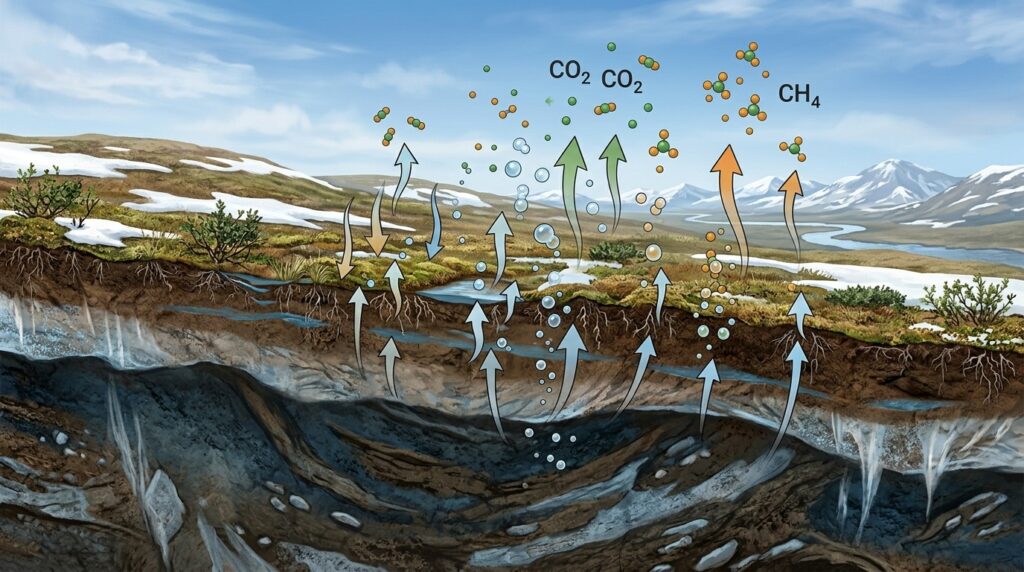
Diagram: when permafrost thaws, microbes decompose ancient organic matter and release CO₂ and methane
Permafrost covers nearly a quarter of the Northern Hemisphere’s land surface. Arctic permafrost stores approximately 1,700 billion tons of organic carbon — nearly twice as much as is contained in Earth’s entire atmosphere. This gigantic “freezer” has kept the remains of plants, animals, and microbes outside the carbon cycle for millennia. Now the lock is beginning to open — and this is already affecting not only the climate but also cities built on permafrost.
“This is one of the great unknowns in climate science,” says study co-author Sebastian Kopf, a professor of geological sciences. “How will the thawing of all these frozen soils with enormous carbon reserves affect regional ecology and the pace of climate change?“
Permafrost Thawing: A Long Arctic Summer Is More Dangerous Than a Short Heat Wave
One of the key findings of the study is that it’s not so much the peak temperature that matters, but the duration of the warm period. Scientists noticed that colonies did not wake up noticeably faster at higher temperatures. The difference between 4 °C and 12 °C turned out to be less significant than the duration of warming.
The results point to a practical lesson for the real world: after a hot period, it may take several months before microbes become active enough to release greenhouse gases in large volumes. This means that the longer Arctic summers become, the greater the risks for the planet.
“A single hot day of an Alaskan summer doesn’t change much. What matters far more is the lengthening of the warm season, when high temperatures extend into autumn and spring,” Caro explains. Think of it like defrosting a refrigerator: if you turn it off for an hour, the contents survive, but if you leave it open for a week — everything spoils.
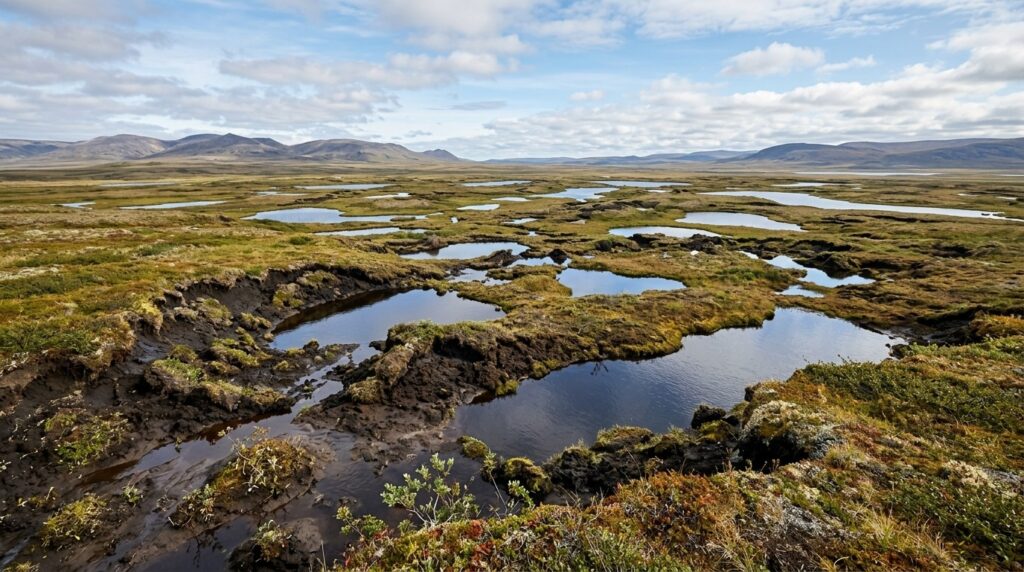
Arctic tundra: as permafrost thaws, lakes form on the surface and ancient organic matter is exposed
What Scientists Still Don’t Know About Permafrost Microbes
The study is important, but its authors are the first to acknowledge its limitations. “There is an enormous amount of permafrost in the world — in Alaska, Siberia, and other northern regions. We took only a tiny slice,” says Caro. The question remains open whether ancient microbes from permafrost in other locations will behave the same way — or activate faster, slower, releasing different gases.
Another unknown — ancient microbes build their membranes not from ordinary phospholipids but from glycolipids, which presumably serve as a kind of antifreeze. Exactly how this adaptation affects the speed of reactivation and colony behavior under different conditions remains unclear.
The study showed that permafrost does not “dump” all its carbon at once upon thawing — microbes revive gradually, and time passes between the onset of thawing and large-scale emissions. This is critically important for climate models that still do not account for this delay.
Understanding the speed at which Arctic microbes awaken directly affects the accuracy of future climate predictions. One tunnel in Alaska is just the beginning — next, Siberia, Canada, and Scandinavia need to be studied.