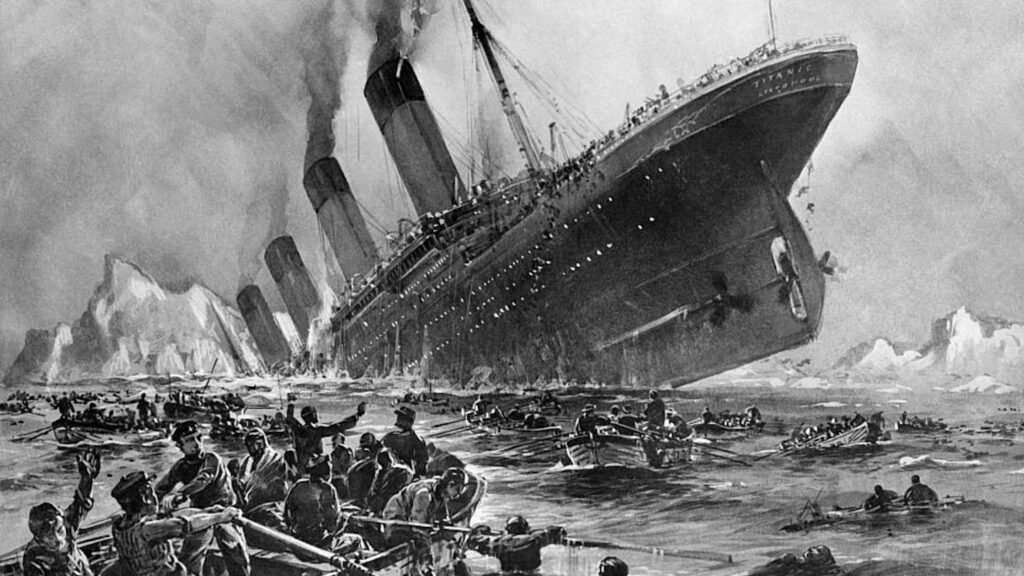
If the Titanic sank today: what would your chances of survival be?
On April 15, 1912, the Titanic claimed the lives of more than 1,500 of the approximately 2,200 people on board. Only about 700 survived. But what if the exact same disaster happened today — in 2026? How much have passengers’ chances changed over 114 years? The answer seems obvious: of course, everything would be different today. But to understand exactly how different, it’s worth examining why the Titanic sank and what has changed since then in navigation, rescue equipment, and evacuation procedures.
Why the Titanic Collided with an Iceberg in 1912
Captain Edward Smith in 1912 did not consider icebergs a serious threat. Before the voyage, he commented on the topic as follows: modern shipbuilding had outgrown such dangers. The lookouts on deck weren’t even given binoculars. The Titanic’s radio operator ignored iceberg warnings from four nearby ships — partly because he was busy sending passenger telegrams.
Worse still, the nearest ship to the Titanic, SS Californian, didn’t receive the distress signal at all — the radio operator had already gone to sleep, and round-the-clock radio watch was not required at the time. The coordinates in the SOS signal turned out to be inaccurate, which further delayed the rescue operation.
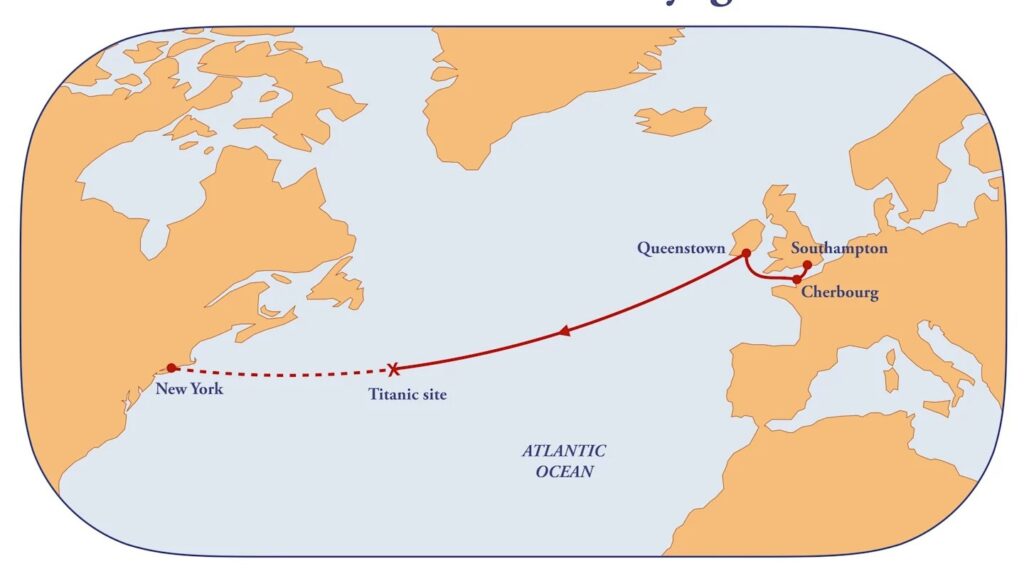
Voyage on the Titanic
In other words, the disaster was the result of a chain of errors, each of which was quite ordinary for its time. None seemed fatal on its own — but together they led to the greatest maritime tragedy of the 20th century.
How Modern Technologies Prevent Shipwrecks
Immediately after the Titanic’s sinking, the world began changing the rules. In 1914, the first International Convention for the Safety of Life at Sea — SOLAS — was adopted. It became the foundation of maritime safety and has been updated several times — the current version dates from 1974 and continues to be supplemented.
Also in 1914, the International Ice Patrol was established — a service that tracks icebergs in the North Atlantic. Today this work is performed by C-130J aircraft with radar and satellites, not observers on deck. The result is impressive: since the creation of the ice patrol, not a single ship following its recommendations has collided with an iceberg.
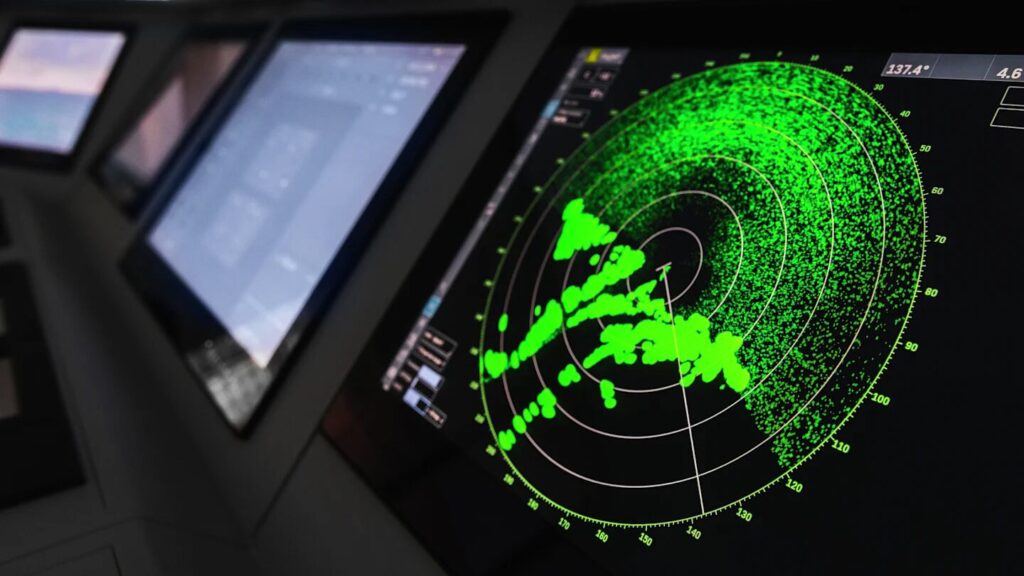
Modern radar detector
On modern ships, radar and sonar allow obstacles to be detected well before a close approach. GPS provides precise coordinates, and radio communication operates around the clock — the law requires a radio operator to be on watch at all times. Emergency messages are standardized and transmitted instantly.
All this means that the scenario of the Titanic colliding with an iceberg in 2026 is virtually impossible. The threat would be noticed well in advance, and the ship would simply change course.
Would There Be Enough Lifeboats on the Titanic Under Modern Rules
One of the most tragic details of the disaster was the shortage of lifeboats. The Titanic could accommodate 64 lifeboats, but set sail with only 20. The engineers and management of the White Star Line were so confident in the ship’s unsinkability that they believed: in case of an accident, passengers would simply transfer to a nearby vessel.
The result is well known: about 700 Titanic survivors were taken aboard the rescue ship Carpathia. More than 1,500 perished — most in the icy waters of the Atlantic, unable to wait for help.
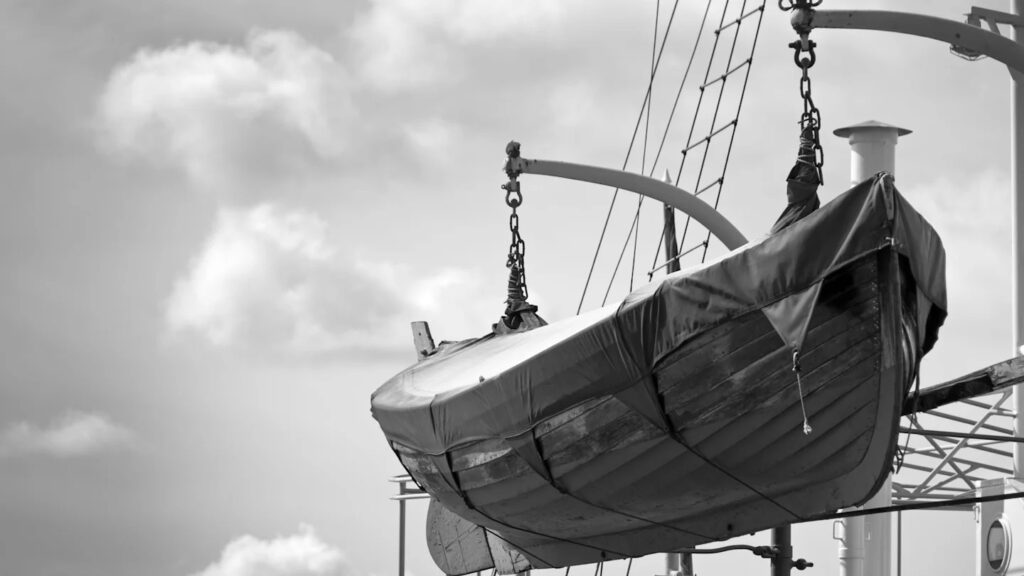
Old lifeboat
Today, SOLAS rules explicitly prohibit this: any passenger vessel must have enough lifeboats and rafts for all people on board. Crews undergo regular evacuation drills, and passenger safety briefings are conducted before departure from port.
After the Costa Concordia wreck in 2012 (more on that below), requirements became even stricter. Cruise companies introduced mandatory muster drills for passengers right before departure. After the Titanic’s sinking, the world fundamentally changed its approach to maritime transport, and now even liners larger than the Titanic go to sea, built to entirely different safety standards.
How Evacuation Works on Cruise Liners Today
On the night of April 15, 1912, an unwritten rule was in effect on the Titanic: women and children boarded the lifeboats first. Many men remained on the sinking ship without a place. Approximately 62% of first-class passengers survived, 43% of second class, and only 25% of third class.
It’s important to understand: “women and children first” was never a formal maritime law. Researchers call it an “unwritten law” — a tradition followed specifically by the Titanic’s crew. Modern studies show that in most maritime disasters after World War II, men and crew members actually survived more often than women and children, although the gap gradually narrowed.
In 2026, no maritime rules prescribe evacuation priority by gender or age. Chances of rescue depend on crew preparedness, the number of rescue equipment, and circumstances — not on whether you are a man or a woman.
The Costa Concordia Wreck as an Example of a Modern Disaster
The wreck of the cruise liner Costa Concordia in 2012 is often called the closest modern analogue to the Titanic. On January 13, this ship with more than 4,200 people on board struck rocks off the coast of the Italian island of Giglio. Captain Francesco Schettino disabled the collision warning system to make an impressive close pass near the shore.
32 people died — a tragedy, but the scale is incomparable to the Titanic. The difference is explained by several factors:
- Costa Concordia sank in warm waters right near the shore, not in the icy Atlantic hundreds of miles from land
- Passengers could use life jackets and swim to shore
- Rescue services were notified and arrived relatively quickly
But even with all modern technologies, human error remained the primary cause of the disaster. Schettino was convicted of manslaughter and sentenced to 16 years in prison.
Chances of Surviving a Shipwreck Today in 2026
So, if we imagine that a ship the size of the Titanic struck an obstacle and began sinking right now — what are the passengers’ chances?
They are significantly higher than in 1912, and here’s why:
- There would be enough motorized lifeboats for everyone — this is a legal requirement
- Evacuation protocols are practiced in drills, and the crew is trained to act in emergencies
- Nearby ships would receive precise GPS distress coordinates and come to assist
- Coast guard, helicopters, and rescue boats would be dispatched immediately
In 1912, the Carpathia took about four hours to reach the Titanic’s wreck site, and many other ships never received the signal at all. Today, emergency alerts reach all nearby ships and shore services virtually instantly.
Of course, the ocean remains an unpredictable environment, and human errors happen in the 21st century too — Costa Concordia proved that. But the combination of technologies, safety standards, and rescue protocols makes a repeat of a disaster on the scale of the Titanic virtually impossible.
The main lesson of 1912 is simple: no ship should be called unsinkable, and overconfidence is the worst enemy of safety. This very idea lies at the foundation of all international maritime standards adopted over the past 114 years. And it is precisely because of it that your chances of returning home from a cruise today are incomparably higher than those of the passengers on that April voyage.