IBM has demonstrated a modular cryogenic system at its Yorktown Heights facility near New York that can cool down to below 15 millikelvin — far colder than the few degrees above absolute zero found in deep space. The system, which resembles a pair of large industrial refrigerators, is designed to house quantum computing hardware that demands extreme cold to function. Two cryogenic modules have already been assembled and connected: they were cooled to 4 kelvin (the temperature of liquid helium) in under five days, then brought down further to the millikelvin range.
What you need to know
- IBM’s new modular cryogenic system at Yorktown Heights reaches below 15 millikelvin — millions of times warmer than the 2018 Bremen record of 38 picokelvin, but sufficient for quantum computing.
- The system is part of IBM’s stated roadmap to build the world’s first fault-tolerant quantum computer by 2029.
- The modular design allows additional quantum chips to be connected over time, scaling up computing power.
- The lowest man-made temperature on record — 38 picokelvin — was achieved in Bremen, Germany, in 2018.
Why quantum computers need extreme cold
Temperature is fundamentally a measure of atomic and molecular motion. Absolute zero (−273.15 °C, or 0 kelvin) is the theoretical floor where that motion nearly stops. Quantum states — the basis of quantum computation — are extraordinarily fragile. Any stray thermal energy introduces noise and vibrations that corrupt calculations. Cooling hardware to millikelvin temperatures suppresses that noise, making stable quantum operations possible. In this context, extreme cold is not a luxury but a prerequisite.

One of the coldest places in the universe is now a refrigerator-like system near New York
How cold is 15 millikelvin, really?
Deep space, far from any star, sits at roughly a few degrees above absolute zero. IBM’s system operates far colder than that. Still, it is important to note that 15 millikelvin is millions of times warmer than the all-time laboratory record: in 2018, researchers in Bremen, Germany, cooled matter to 38 picokelvin — just 38 trillionths of a degree above absolute zero. For quantum computing purposes, however, the millikelvin range is more than adequate.
IBM’s modular approach and the road to fault tolerance
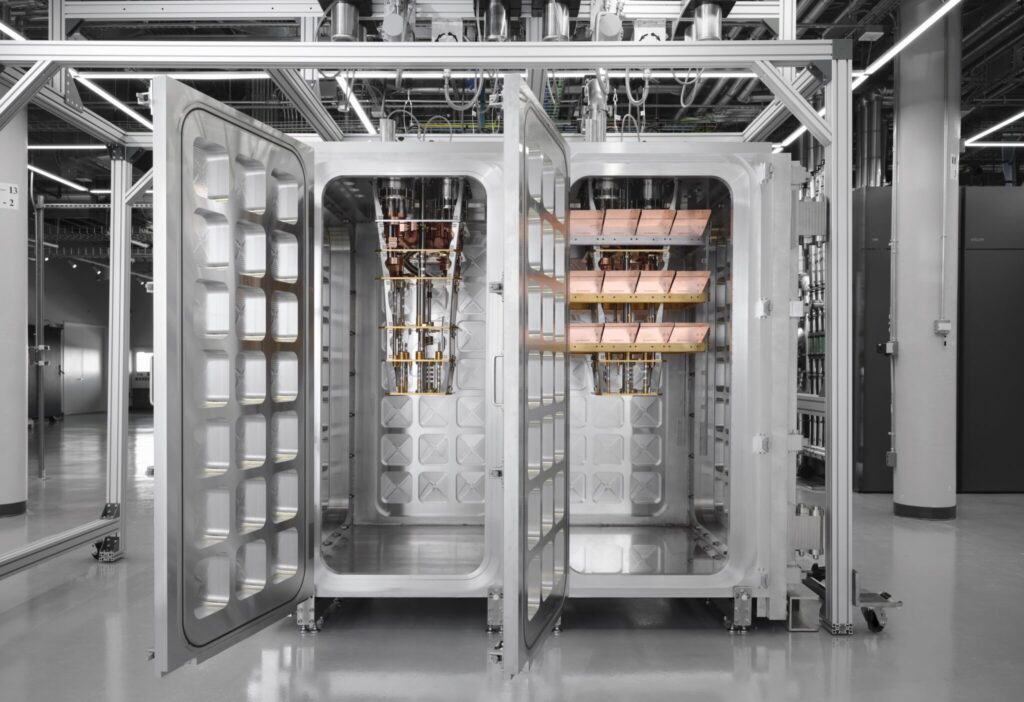
IBM’s cryogenic system really does look like a pair of large refrigerators
The cryogenic system is a key piece of IBM’s announced milestone toward fault-tolerant quantum computing — a machine capable of detecting and correcting its own errors during computation. According to IBM’s published roadmap, the company aims to deliver the world’s first fault-tolerant quantum computer by 2029.
The modular design is central to that ambition. As quantum processors grow larger, errors multiply. A fault-tolerant system must continuously correct those errors in real time. By making the cryogenic infrastructure modular, IBM intends to connect additional quantum chips over time, scaling up processing power without redesigning the cooling architecture from scratch.
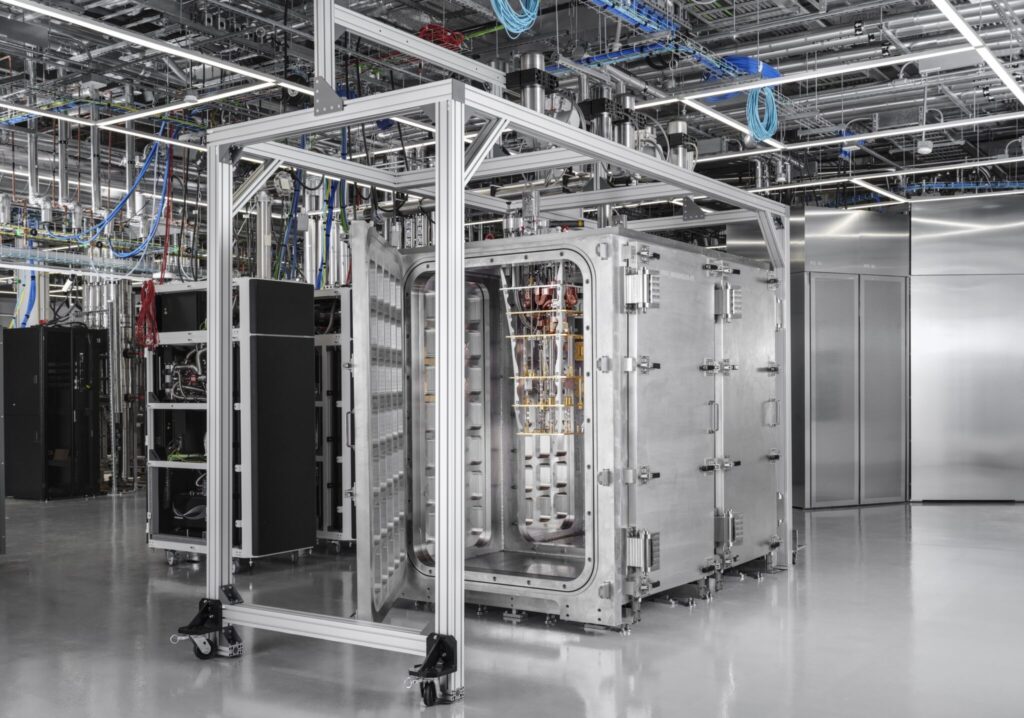
IBM connects its first modular cryogenic systems on the path to fault-tolerant quantum computing
What remains uncertain
IBM’s 2029 target for a fault-tolerant quantum computer is a stated goal, not a guaranteed outcome. Significant engineering challenges remain — from error rates and qubit counts to the practical scalability of modular cryogenic systems. Many in the field consider fault-tolerant quantum computing the next major leap in computation, but the timeline and feasibility are still subjects of active research and debate. What is clear is that the path runs through temperatures far colder than anything found naturally in the universe.