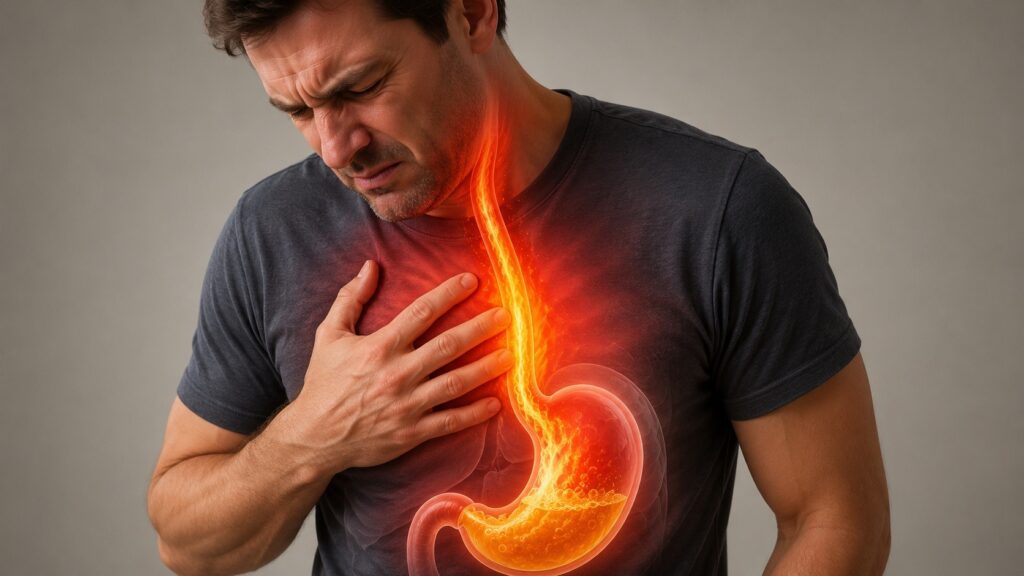
Heartburn is unpleasant, but it can be prevented or quickly relieved
The other day I decided to have some tea in the evening — bagged tea, because it tastes better. I drank a lot, but afterward I felt so awful that I just wanted to lie down and not move. There was a burning sensation behind my breastbone, a sour taste in my mouth — overall, a questionable pleasure. The heartburn was excruciating, so I dove into research to find out where heartburn comes from, what happens inside the body at that moment, and how to get rid of it. I’m sharing my new knowledge — someday it might help you too.
What Causes Heartburn
The first misconception to discard: heartburn is not about too much acid in the stomach. Acid is needed there — it digests food, kills microbes, and doesn’t corrode our stomach. The problem begins when stomach contents rise back up into the esophagus. Doctors call this gastroesophageal reflux.
Between the esophagus and the stomach, there is a muscular ring called the lower esophageal sphincter. It works like a valve: it opens when food passes down and closes afterward. But if this sphincter is weakened or relaxes at the wrong time, acid and food rise upward. Unlike the stomach, the esophagus is absolutely not designed for contact with acid, which is why we feel burning, a sour taste, and sometimes chest pain, nausea, coughing, or hoarseness.
If such episodes happen rarely, it’s simply reflux. If they happen frequently and with complications, it’s already gastroesophageal reflux disease (GERD).
The Most Common Causes of Heartburn
The list of heartburn causes is quite long, and each person has their own set of triggers. Some people get hit by coffee, others by fatty food, and some, like me, by tea on an empty stomach.
Here are products that commonly cause heartburn:
- acidic foods — citrus fruits, tomatoes;
- alcohol;
- chocolate;
- coffee and other sources of caffeine;
- fatty foods;
- mint;
- spicy dishes.
But it’s not just about food. Large portions, late dinners, excess weight, smoking, pregnancy, hiatal hernia — all of these can weaken the sphincter or increase pressure in the stomach. Also, don’t forget that medications can cause heartburn. You can usually find this information in the instructions under the side effects section.
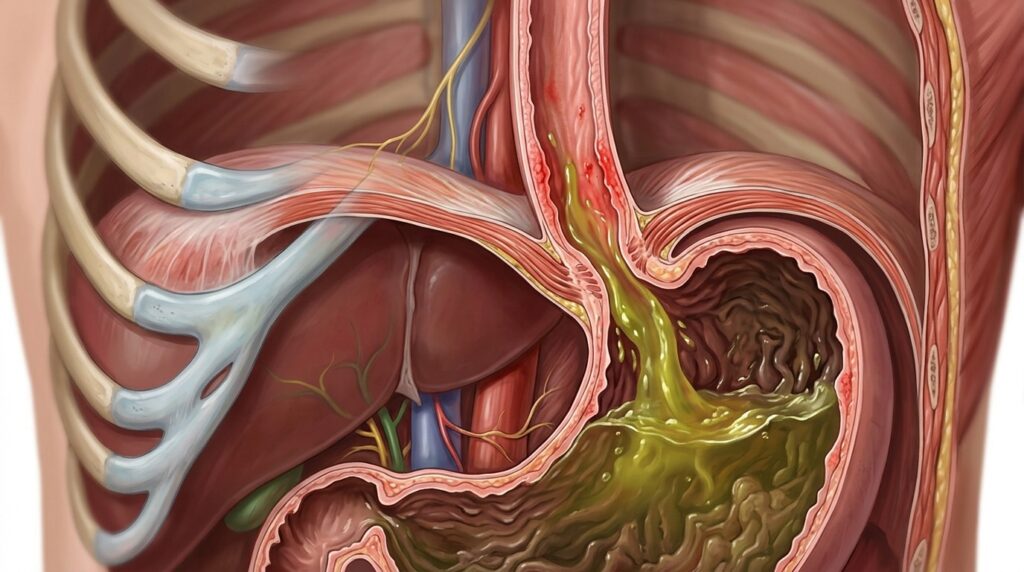
Surprisingly, stomach acid protects us from poisoning
Why Frequent Heartburn Is Dangerous for the Stomach and Esophagus
A single episode after a heavy dinner or, as in my case, after tea on an empty stomach is usually not a disaster. But if heartburn comes regularly and you start getting used to it, that’s a reason to be concerned.
Without treatment, heartburn can lead to serious consequences:
- inflammation of the esophagus;
- ulcers and bleeding;
- narrowing of the esophagus and swallowing problems;
- Barrett’s esophagus — a change in the lining that in a small percentage of patients can progress to esophageal adenocarcinoma;
There is another non-obvious danger: heartburn can mimic heart pain, and vice versa. Heartburn, angina, and even a heart attack can sometimes feel very similar. Even doctors can’t always tell them apart based on complaints alone. If chest pain is accompanied by shortness of breath, weakness, cold sweats, or radiates to the arm, back, neck, or jaw — this is not a situation for self-treatment. In such cases, you need to call an ambulance immediately.

Heartburn often appears after a late or heavy dinner
What to Do to Prevent Heartburn
The best approach is to prevent heartburn altogether. I searched the internet and compiled this list of recommendations that will help you forget about heartburn.
- Don’t eat 3–4 hours before bed. If you get burning at night or as soon as you lie down — start with this;
- Reduce portion sizes. A stuffed stomach stretches, pressure inside it rises, and it’s easier for acid to break through upward;
- Elevate the head of your bed by 10–20 cm. The bed itself, not pillows — extra pillows can increase pressure on the abdomen and make things worse;
- Find your food triggers. For a couple of weeks, eliminate the main suspects: fatty foods, alcohol, coffee, chocolate, mint, spicy foods, citrus, and tomatoes, then reintroduce them one by one and see what specifically affects you;
- Lose weight if you have excess. This isn’t moralizing — it’s pure mechanics: less pressure on the abdomen means less frequent acid reflux.
- Don’t wear tight clothing and belts. Online advice suggests avoiding things that compress the waist;
- Don’t smoke and limit alcohol. Smoking weakens the lower esophageal sphincter and contributes to GERD.
Each of these points sounds obvious, but they work best together. For me, for example, it was enough to stop drinking tea and coffee on an empty stomach, and the episodes practically stopped.
How to Get Rid of Heartburn Quickly
If heartburn has already started, you can get rid of it without pills:
- Sit up or stand straight. Don’t lie down or bend over: in an upright position, it’s harder for acid to splash back into the esophagus;
- Loosen your belt, pants, and tight clothing. Pressure on the abdomen worsens heartburn, so give your stomach room instead of putting it in a vice;
- Drink a little water in small sips. This can partially wash acid off the esophageal walls and reduce burning, but don’t pour a liter into yourself — your stomach is not a swimming pool;
- Chew sugar-free gum for 20–30 minutes. You’ll produce more saliva, swallow more often, and acid will leave the esophagus faster. Better without mint, because for some people it only makes reflux worse;
- If heartburn starts at night, you can elevate your upper body or lie on your left side. It’s better to raise your torso rather than just your head on pillows: this makes it harder for stomach contents to rise upward.
When You Should See a Doctor for Heartburn
Not all heartburn requires a doctor’s visit. But there are situations when you shouldn’t delay:
- heartburn occurs almost every day;
- lifestyle changes and over-the-counter remedies don’t help;
- food gets stuck in your throat or swallowing is painful;
- frequent nausea or vomiting;
- unexplained weight loss or loss of appetite;
- blood in vomit or black stool;
- persistent or unexplained chest pain.
Any of these signs is a reason for examination, not for internet advice.
The bottom line is quite simple. Occasional heartburn is just an everyday nuisance that can often be eliminated by changing a couple of habits: don’t eat before bed, don’t overeat, find your triggers. Frequent heartburn is already a possible sign of GERD, and that requires a doctor and proper treatment. Treating it with baking soda, patience, and hoping for the best are arguably the three worst strategies after forum advice.