Why do humans take so long to grow up? The answer overturns everything we knew about evolution
A human can live a hundred years, but the first twenty-five of those are essentially training before real life begins. We are the only species that spends a quarter of its allotted time learning to tie shoelaces, communicate, and navigate society. Anthropologists from the United Kingdom and New Zealand have explained why this seemingly strange wastefulness is actually the main secret of our evolutionary success.
Why a Long Childhood Is an Evolutionary Advantage
Two decades of helplessness don’t look like an advantage for a species that conquered an entire planet. But children require high-energy food for growth, round-the-clock protection, and constant adult attention. From an evolutionary standpoint, they are an expensive investment with a delayed return.
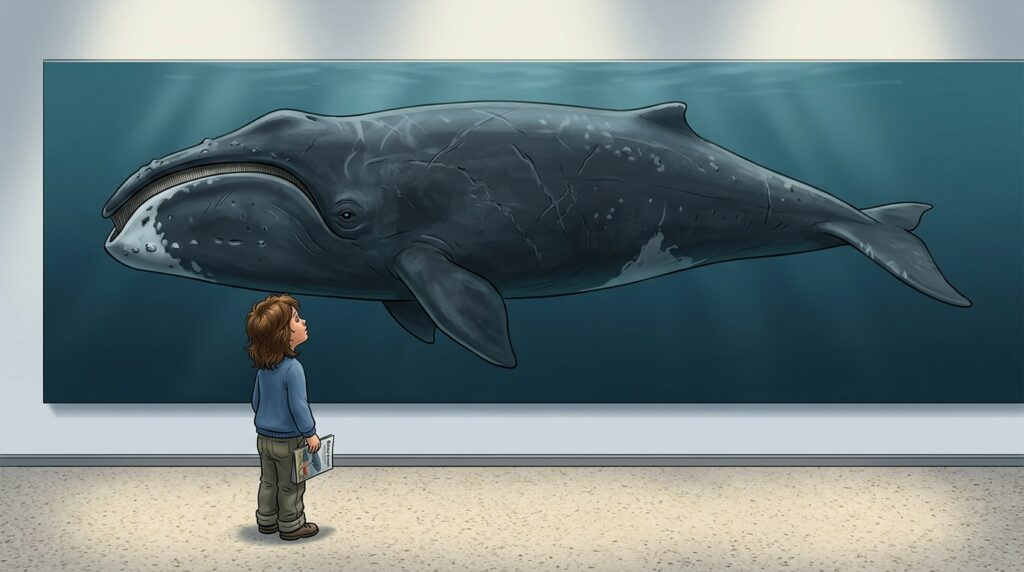
According to IFL Science, humans are very unusual — in terms of the time we spend in childhood relative to our overall lifespan, we are truly exceptional. For comparison, the bowhead whale can live 200–300 years, but its calves mature in roughly the same 25 years as we do, while growing significantly larger.
Typically, animals with long development periods have low fertility — many resources go into each offspring. In our species, a long childhood paradoxically leads to increased reproductive fitness.
Why Humans Stop Breastfeeding Early
To understand the paradox, we need to look at how exactly our childhood is structured. It’s not just longer than that of other primates — it’s organized entirely differently.
All primates enjoy long childhoods, but in humans the very first part — from birth to weaning — is disproportionately short. Orangutans, for example, breastfeed their young for six to eight years. Humans, on average, do so for significantly less; sometimes breastfeeding in humans accounts for only about 4% of the entire childhood.
This is a critically important difference. When a mother stops breastfeeding, the physiological costs that inhibit ovulation and a new pregnancy decrease. As a result, humans can give birth to and raise several children simultaneously, rather than waiting for each previous child to fully mature and leave the family.
For comparison, orangutans send their offspring into adult life just a couple of years after weaning — meaning their childhood, while including an enormous breastfeeding period, ends much sooner than ours. In humans, this “extra” period after weaning is filled with something no less important — learning.
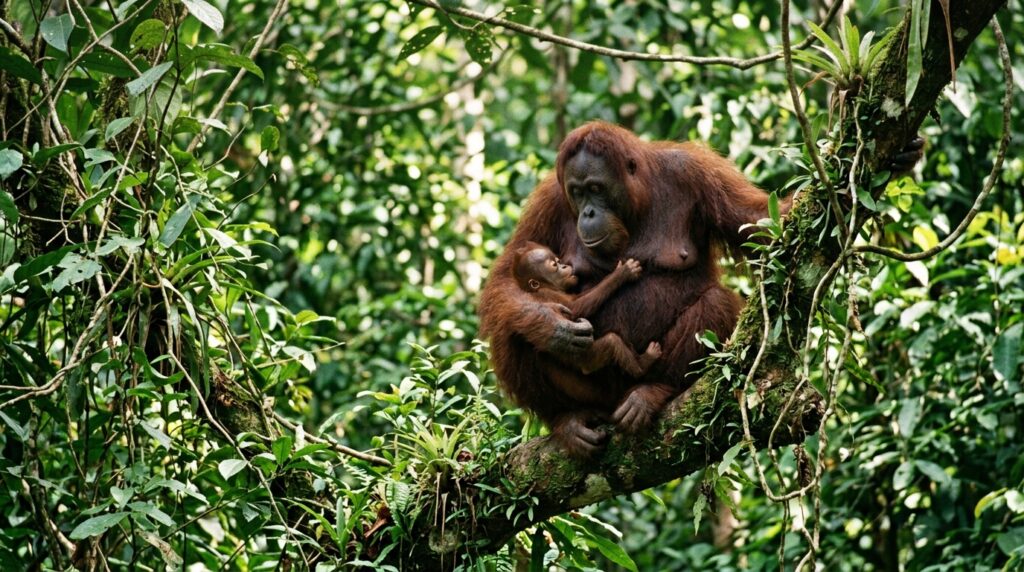
Orangutans breastfeed their young for up to eight years — longer than any other primate
How Sociality Is Connected to Childhood Length
Early weaning would have been impossible without another typically human trait — our tendency to live in communities and help each other raise children.
The shortening of the breastfeeding period became possible thanks to the development of cooperative parenting. In traditional societies, childcare is shared among many people — relatives, adolescents, and other adults in the community. This frees mothers and allows them to re-enter the reproductive cycle sooner.
But the connection works in reverse as well. Childhood length is directly linked to sociality: all social species spend more time in a juvenile state than solitary ones. Even crows, which are not our evolutionary relatives at all, take a long time to mature, precisely because they live in complex social groups.
The more complex the society, the more time is needed to learn how to exist within it. Humans have taken this principle to the maximum: we created such a multi-layered social world that it takes two decades of practice to master it.
When Did Humans Develop a Long Childhood
If a long childhood is so important, when exactly did it appear in our evolutionary history? Scientists look for answers in the bones and teeth of our ancestors, because the growth rate of fossil skeletons can help estimate how quickly ancient hominids matured.
It is believed that the lengthening of childhood began with Homo habilis — “handy man”, who lived more than 1.4 million years ago. It was in this species that the brain began to noticeably increase in size, and with it, the brain’s need for prolonged development. Homo habilis is a borderline figure between ape and human: when it was described in the 1960s, even assigning it the prefix Homo was controversial, and scientists had to reconsider the boundaries of the genus.
But despite its ape-like appearance, this species already walked on two legs, used stone tools, and possibly possessed rudimentary speech. Most importantly, it had a disproportionately large brain: about 610 cubic centimeters on average, which is significantly larger than that of australopithecines.
It was precisely the large brain, according to anthropologists, that required a long childhood. It is believed that prolonged maturation allows the brain to fully develop and provides time for social learning. Without this, it would be impossible to become a full participant in complex human society.
Why the Child’s Brain Learns Better Than an Adult’s
But if learning to live in society is a lifelong process, why is childhood specifically so important? The answer lies in the unique properties of the child’s brain.
A child’s brain possesses high neuroplasticity — the ability to restructure neural connections in response to new information. In adults, this ability is significantly weaker. A long childhood is an adaptive advantage because the brain during this period is maximally flexible.
Many primates play during childhood, but the nature of play is always related to skills needed in adult life. Human children play at the roles they will need to master in society. From the outside it looks like chaos, but behind the hyperactivity and imagination lies a powerful learning mechanism.
And here another evolutionary trump card comes into play: children are cute. This is not a joke. The proportions of a child’s body — a large head and small torso — trigger an instinctive caregiving response in adults. A child’s brain grows quickly while the body grows slowly, and these proportions look “cute,” prompting those around them to care for the helpless creature. Psychological studies confirm that such proportions trigger a nurturing response in people.
A Long Childhood Made Humans the Most Successful Primate
In the end, a beautiful and logical picture emerges. Humans stop breastfeeding early, which allows mothers to give birth more frequently. The entire community takes on childcare responsibilities, relieving the burden on parents. The freed-up childhood time is filled with intensive learning — the brain is maximally receptive during this period. And the “cute” appearance of the child guarantees that adults will tolerate its helplessness long enough.
Every element of this system supports the others. Sociality requires long learning. Long learning requires social support. Early weaning requires alternative food sources, which means hunting, gathering, and cooperation. All of this together created an evolutionary strategy that chose to trade expensive investments in brain size and long growth periods for reproductive speed.
Can our long childhood be considered a perfect solution? Hardly — ask any young parent when they last got a proper night’s sleep. But the advantages clearly outweigh the inconveniences. These advantages are sufficient, and they made us the most successful primate on the planet.
There are, however, questions that science has yet to answer. When exactly did early weaning become the norm? What role did the discovery of fire and cooked food play? How did childhood duration change among different human species? Fossil teeth and bones provide clues, but the complete picture is still far from finished. The evolution of childhood is one of the most intriguing and actively studied topics in modern anthropology.