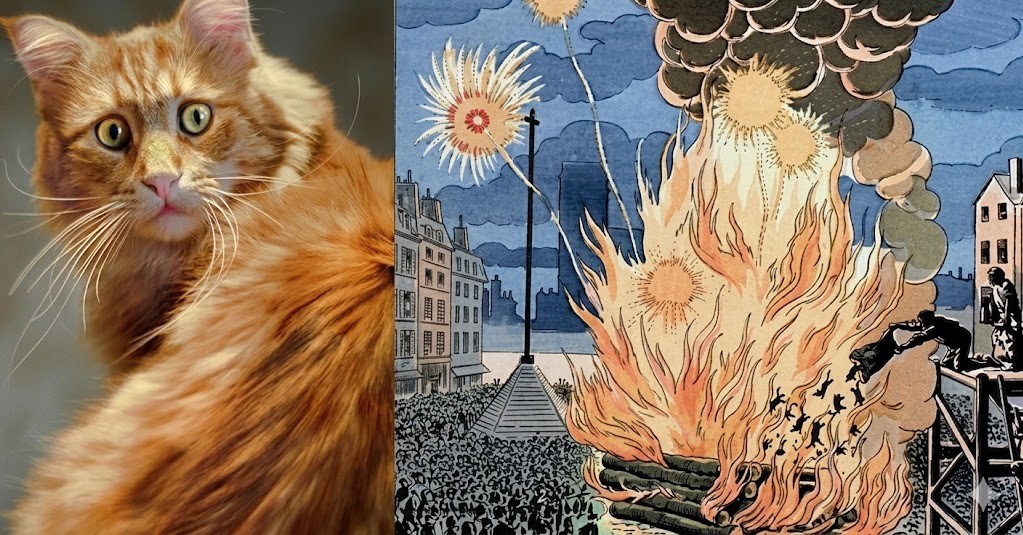
How were cats treated in the Middle Ages. Spoiler: it’s not all black and white. Image source: libraart.ru
It is commonly believed that cats had a tough time in the Middle Ages: superstitions, accusations of ties to dark forces, and other unpleasantries. Fears surrounding black cats persisted especially long. But if you look into medieval documents, paintings, and financial records, the picture turns out to be not so clear-cut. Cats lived with people under the same roof, warmed themselves by the fireplace, were given names, and even received blankets made from expensive fabrics — just like our beloved pets today.
Cats in Medieval Paintings: What Old Images Tell Us
Medieval artists didn’t hesitate to depict cats in the most ordinary, everyday scenes — even in quite serious works. For example, in the famous fresco “The Last Supper” by Italian artist Pietro Lorenzetti, painted around 1320 for the Basilica of San Francesco in Assisi, a cat and a dog can be seen in the corner of the scene. While the apostles share their meal, the cat calmly warms itself by the fire.
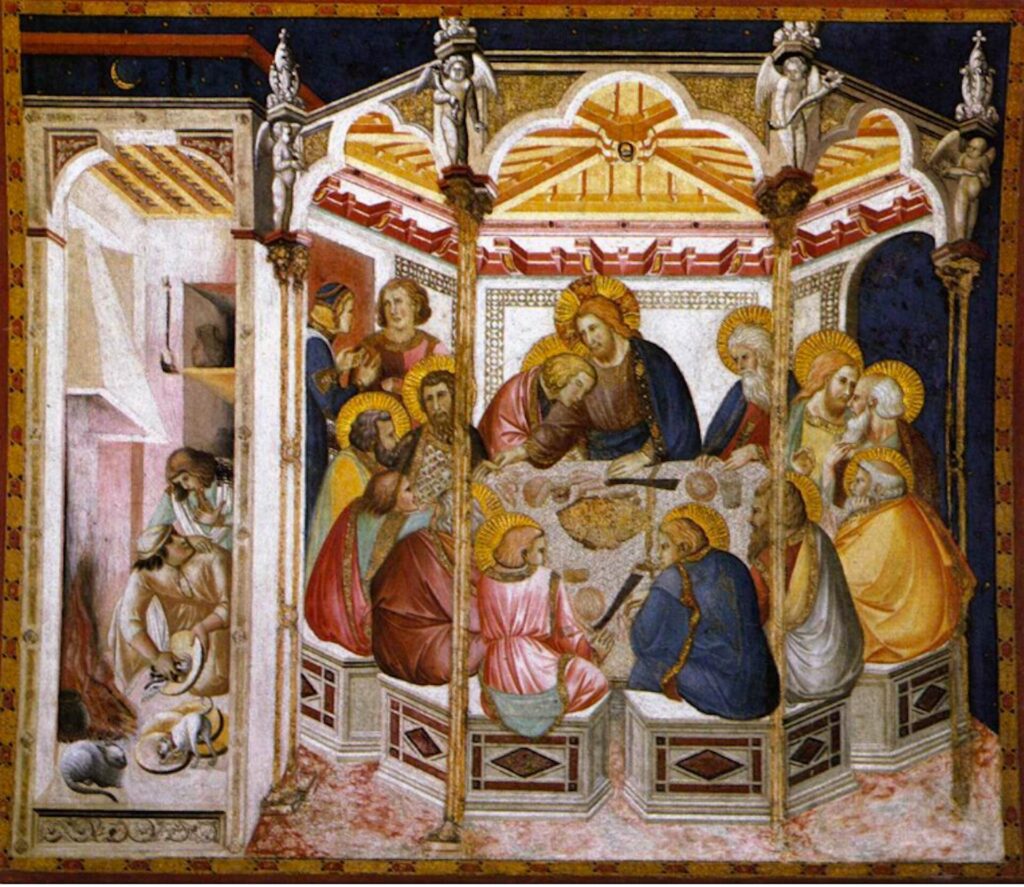
The Last Supper fresco. Pietro Lorenzetti, 1320.
Another example is an illustration from a “Book of Hours” (a medieval prayer book) by Flemish miniaturist Gerard Horenbout, dated around 1500. In it, a woman sets the table while a cat sits nearby on the floor, watching what’s happening. No mysticism — just a domestic scene familiar to every cat owner.
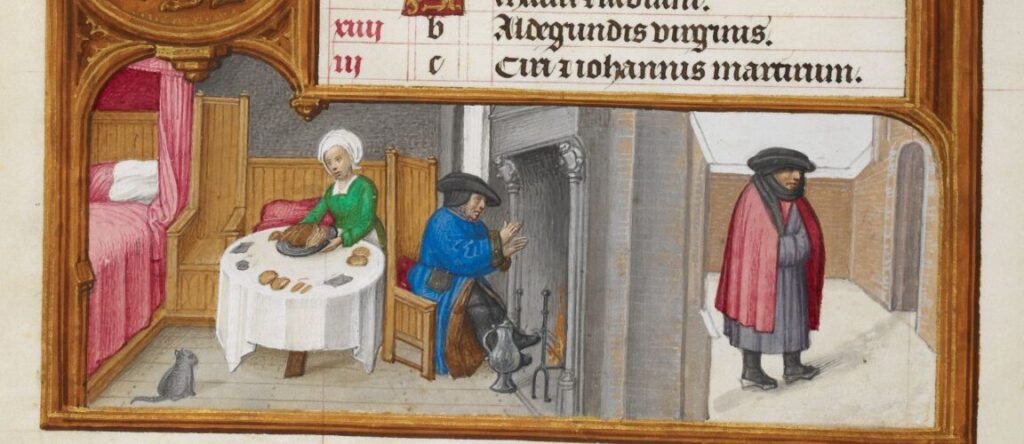
Illustration from the medieval prayer book Book of Hours. Gerard Horenbout, 1500.
And cats of that era, by the way, had their own names. One of the residents of Beaulieu Abbey bore the nickname Mite — “a little creature.” This is evidenced by an inscription above her drawing in the margins of a 13th-century manuscript. You’ll agree, it sounds very homely.
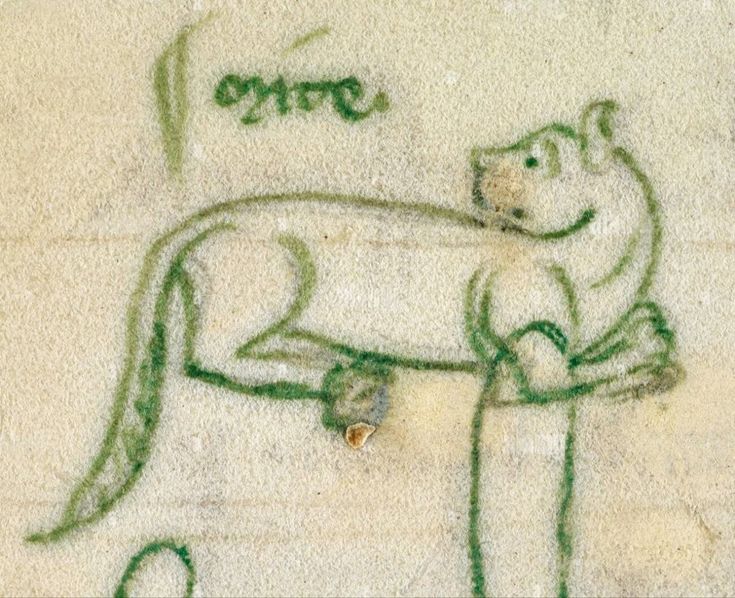
Pen drawing of a cat. Account book of the Cistercian Beaulieu Abbey, England, c. 1270.
Were Cats Actually Loved in the Middle Ages: Poetry and Prose
Medieval people didn’t just keep cats — they grew attached to them. Poems and panegyrics from the 16th century dedicated to cats speak directly about this. In one such work, a cat is described as a scholar’s faithful companion whom he cherishes dearly.
In essence, the cat served as emotional support — helping the owner unwind and relax after long hours with books. There were no anti-stress toys back then, but there was a fluffy creature purring on one’s lap. It turns out the idea of a “therapy cat” appeared long before our time, though cat memes hadn’t been invented yet (although that’s a rather debatable claim if you look at some medieval sketches).
How Kings and Nobility of the Middle Ages Kept Their Cats
For medieval nobility, keeping pets wasn’t just a whim — it was a sign of status. In portraits of that era, aristocrats can often be seen together with a beloved cat or dog. And the expenses on pets could be impressive. Financial records from one English estate, for example, include expenditures on exquisite treats for a cat. However, love for cats appeared long before palace favorites: people still debate why we adore cats so much.
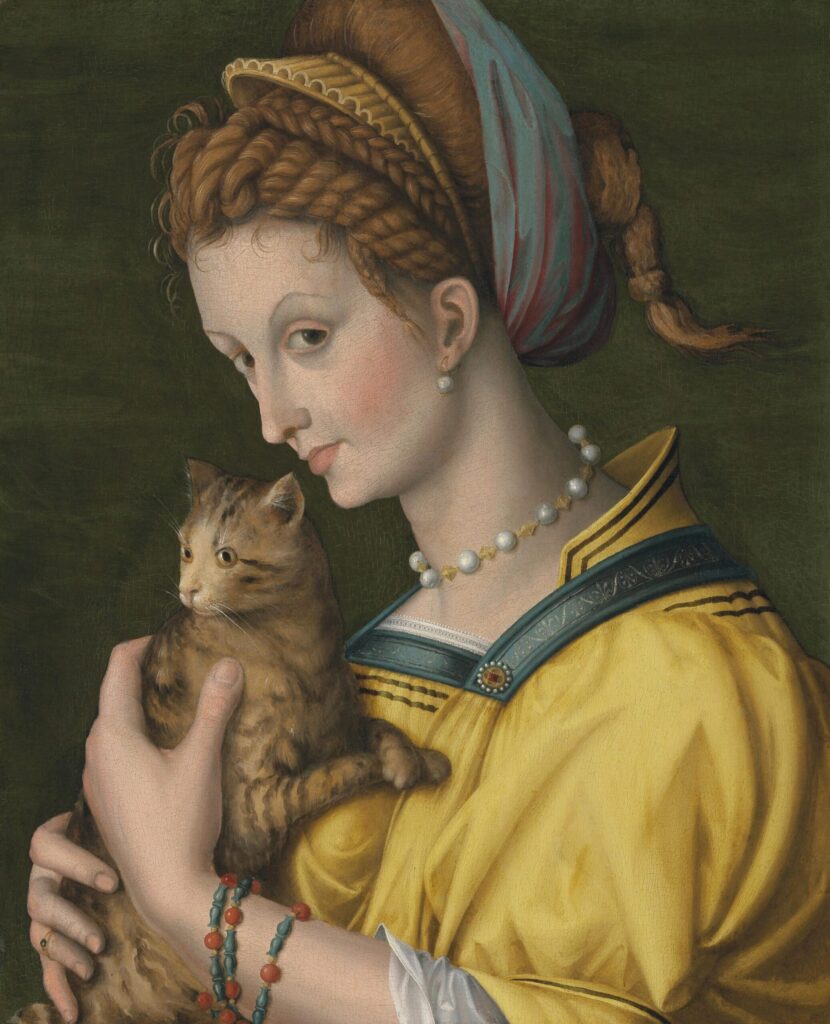
Portrait of a young girl with a cat in her arms. Francesco Bacchiacca, c. 1525-1530.
And French Queen Isabeau of Bavaria, known for her extravagance, even ordered items worthy of a royal court for her pets: her pet squirrel had a golden collar with pearls, and expensive fabrics were purchased for her cat to make a blanket. In short, cats at court lived no worse than today’s Instagram stars with their own accounts.
Medieval Superstitions and the Persecution of Cats
But of course, not everything was so rosy. Cats — agile, silent, with eyes glowing in the dark — were often suspected of ties to dark forces in the Middle Ages. Some preachers, like the Englishman John Bromyard, even called domestic pets a useless plaything of the rich, who spent entire fortunes on them while the poor starved.
And superstitions sometimes led to tragic consequences. These cunning and agile hunters were suspected of witchcraft, which once led to their mass extermination. The result was predictable: without cats, rats multiplied in the cities, and urban rats are dangerous for more than just their bites. During terrible epidemics, this only made the situation worse.

Without cats, medieval cities were overrun by rats
At the same time, no official bans on keeping cats ever existed. Even in monasteries, where superstitions were taken seriously, cats found care and affection.
Why Cats Stayed by Humans’ Side Despite Superstitions
If you gather everything that medieval sources tell us, a rather familiar picture emerges. Yes, there were superstitions and fears. But alongside them — names for pets, poems in their honor, expensive blankets, and a spot by the fireplace.
Attitudes toward cats in the Middle Ages were just as ambiguous as the era itself. Some saw them as servants of the devil, while others saw a loyal friend and companion. Even today, attitudes toward these animals depend on culture. But if we judge by medieval documents, drawings, and financial records, those who saw cats as beloved pets were clearly in the majority. In the end, the human bond with cats proved stronger than any prejudice. Seven centuries have passed — and we still buy them expensive beds and share our dinner. Some things never change.