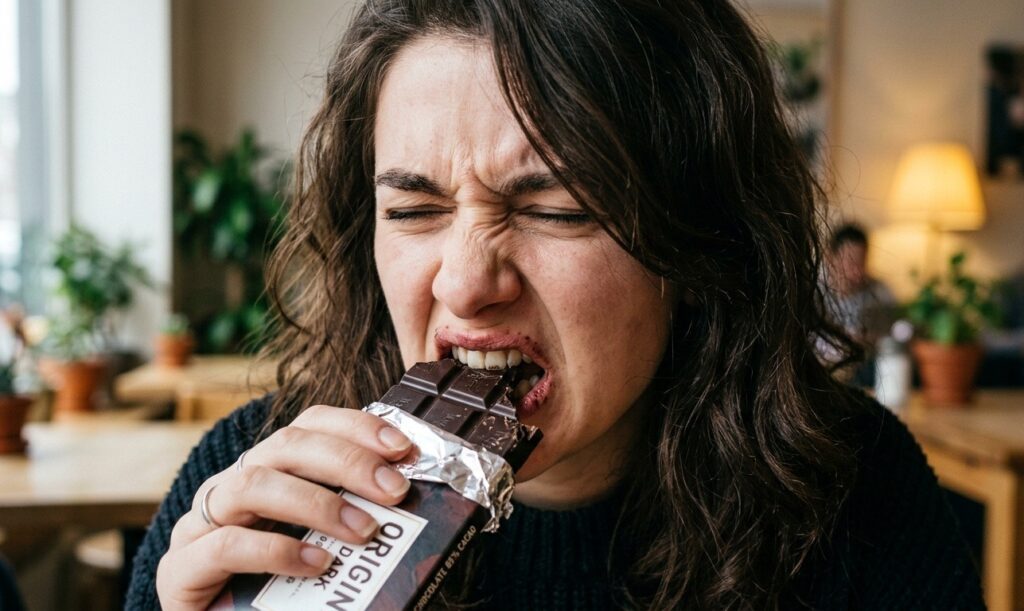
Real chocolate can be recognized by several signs
Real chocolate and a confectionery bar are two completely different products, even though they may sit next to each other on the store shelf and look almost identical. The difference lies in the composition, texture, taste, and even in how the bar breaks in your hands. I got tired of running into fakes, so let’s figure out the signs that can help you recognize quality chocolate without being an expert chocolatier.
What Real Chocolate Is Made Of
The first thing to pay attention to when choosing chocolate is the list of ingredients on the packaging. According to Dmitry Garanin, founder and CEO of Theobroma “Food of the Gods” company, in a conversation with Gazeta.ru, quality chocolate must contain cocoa butter. It is the main source of fat in real chocolate.
The second key component is natural cocoa mass, that is, ground cocoa beans. They are responsible for the rich chocolate flavor and aroma. Sugar should also be in the composition — the expert notes that coconut sugar is considered a more preferable option.
Here is the minimum set of components that indicates a quality product:
- Cocoa butter — natural fat from cocoa beans;
- Cocoa mass — ground whole cocoa beans;
- Sugar (preferably coconut).
If these three ingredients are listed first in the composition, you most likely have real chocolate in front of you.
How to Spot Fake Chocolate by Its Composition
Now about what should not be in real chocolate. Garanin warns that if the composition lists palm oil, coconut oil, or hydrogenated fats, then you’re looking at a confectionery bar, not chocolate. This is an entirely different product that only resembles chocolate on the outside.
Lecithin, whether soy or sunflower, deserves special attention. It is added as an emulsifier to reduce production costs. Essentially, lecithin allows manufacturers to reduce the amount of expensive cocoa butter in the recipe. Real chocolate contains only cocoa mass from whole beans and does not need such additives.
Simply put, if the ingredient list on the label is long and full of unfamiliar fat and emulsifier names, that’s a warning sign. The shorter and clearer the ingredient list, the better.
How to Test Chocolate by Its Snap and Melting
Even without reading the label, you can learn a lot by simply breaking a bar. Real chocolate always breaks with a dry, crisp snap. It doesn’t bend like plasticine, and the break point reveals a dry matte texture without shine.
There’s another reliable test — place a piece in your mouth. Real chocolate melts almost instantly because the melting point of cocoa butter starts at 32 degrees Celsius — slightly below body temperature. The flavor unfolds gradually, with depth and nuances.
Products with cocoa butter substitutes behave differently: they don’t melt but remain dense and sticky in the mouth. If a chocolate bar chews like toffee or takes a long time to dissolve on your tongue, it’s most likely a confectionery bar.
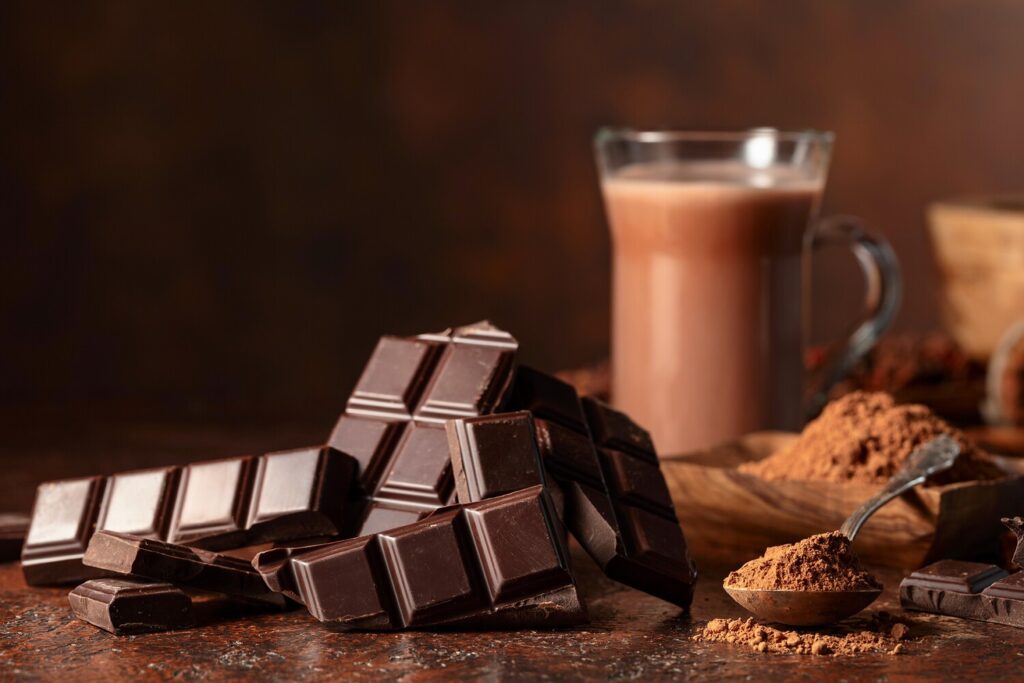
Real chocolate breaks with a characteristic crisp snap
What the Color of Chocolate Says About Its Quality
The color of a chocolate bar depends on the variety of cocoa beans and the degree of their processing, but there’s an important nuance here too. Many manufacturers use alkalized cocoa — cocoa treated with alkali. This processing makes the color brighter and enhances the “chocolate” flavor, but it destroys some of the beneficial substances.
Non-alkalized chocolate has a more complex natural shade — from terracotta to deep brown. Its flavor is richer, with natural acidity and fruity notes. If the bar is unnaturally dark and uniform in color, and the taste seems flat and one-dimensional, the cocoa may have been alkalized.
However, alkalization is not a forgery in the direct sense. It’s a legal technological process, but it reduces the product’s health benefits. If the antioxidant properties of cocoa are important to you, look for the label “non-alkalized” on the packaging.
What to Look for on Chocolate Packaging
Another non-obvious sign that Garanin points out: a conscientious manufacturer always indicates the full weight on the packaging without understatement — 100 grams. If the net weight is suspiciously small (for example, 80 or 90 grams for a standard-sized bar), that’s a reason to take a closer look at the product.
Here’s a quick checklist for checking chocolate in the store:
- Cocoa butter and cocoa mass are listed first in the ingredients;
- No palm oil, coconut oil, or hydrogenated fats;
- No lecithin (soy or sunflower), or it appears at the very end of the list;
- The bar breaks with a snap, not bends;
- The break point shows a matte, dry texture;
- Melts quickly in your mouth, flavor unfolds gradually;
- Natural color, from terracotta to brown, without unnatural blackness;
- Full weight of 100 grams is indicated on the packaging.
Telling real chocolate from a confectionery bar isn’t that difficult if you know where to look. Composition, texture, melting behavior, and even color — all these signs work together and give a fairly complete picture. Of course, quality chocolate usually costs more, but you get a product with genuine flavor and the benefits of cocoa beans, rather than an imitation made from cheap fats and emulsifiers.