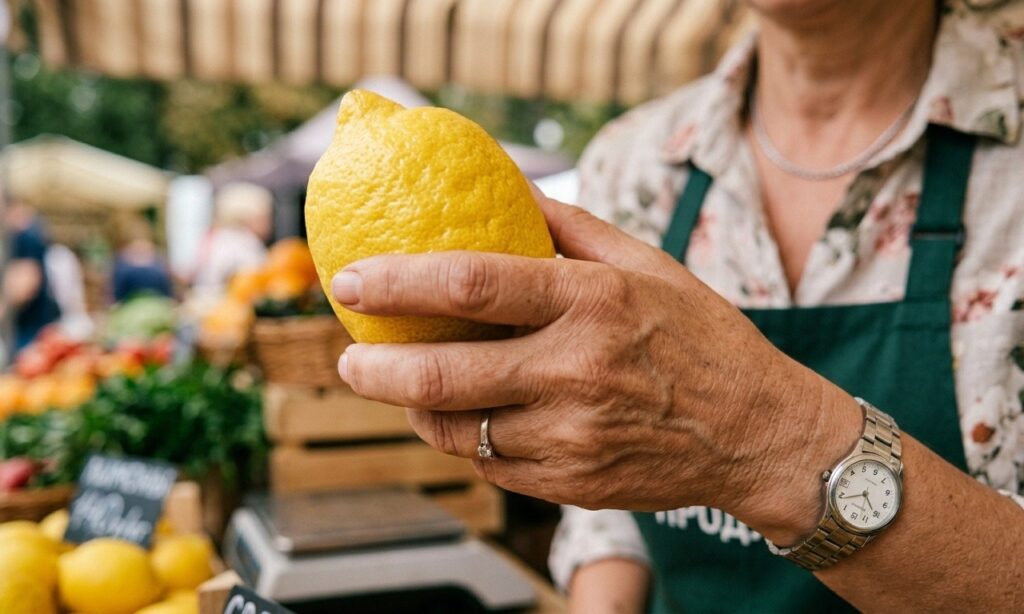
Buying a lemon without messing up is a whole science
The lemon is one of the most popular citrus fruits in any Russian store. People add it to tea, put it in morning water, use it in baking, and even in homemade cosmetics. But not every fruit on the supermarket shelf is equally good: some lemons arrive fresh and juicy, while others turn out to be frozen or overripe. To avoid making a bad choice, you just need to know a few simple rules.
What Lemon Varieties Are Sold in Russia
Before evaluating a specific fruit, it’s helpful to understand what exactly is on the shelf. The majority of the Russian market is dominated by the Eureka variety — a medium-sized citrus with an elongated shape, ranging from light yellow to deep yellow, with a moderately thin peel and sour, juicy flesh.
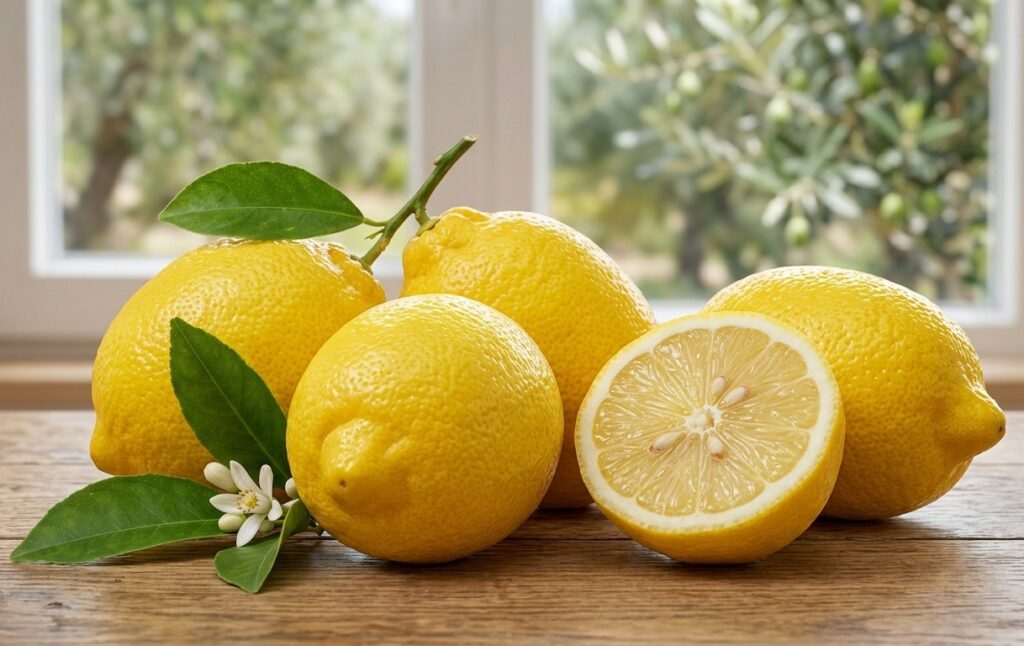
Eureka lemon variety
Less commonly, you’ll find lemons from Georgia and Uzbekistan. The most well-known among them is the “Tashkent” variety, often sold under the name “Uzbek lemon.” It’s easy to recognize by its orange-yellow color, thin peel, and mild, less sour taste. The variety affects peel thickness, acidity level, and aroma, but the criteria for freshness and quality are the same for all.

Uzbek lemons
How to Choose a Ripe Lemon
Many people believe that the brighter the lemon, the riper it is. That’s not entirely true. A deep yellow color indicates ripeness, but it’s much more reliable to assess not the color, but the shine. A ripe fruit has a slightly glossy peel, while an unripe one remains matte.
If you need the lemon right away, choose a shiny one. A matte, unripe specimen is better if you plan to store it for a while — it will ripen at home and last longer.
How to Determine Lemon Ripeness by Firmness
The second quick test is to press your finger against the peel. The fruit’s reaction will tell you more than its appearance:
- The dent disappears quickly — the lemon is ripe, firm, and just right;
- The peel barely gives under pressure — the fruit hasn’t ripened yet;
- The dent remains and doesn’t bounce back — the lemon is overripe, and inside it’s likely already mushy and has lost some of its nutrients.
Peel Thickness and Lemon Size
The size of the fruit depends on the variety and has virtually no impact on quality. A large lemon won’t necessarily be better than a small one — this is a common misconception.
However, peel thickness does matter, although it’s not easy to determine by eye. Here’s a hint: thick-skinned fruits have a bumpy, rough surface, while thin-skinned ones are smooth and delicate. Thick peel better preserves nutrients during long-term storage because it protects the flesh from oxidation and moisture loss. On the other hand, thin skin is a sign that the tree is young and the fruits may contain more vitamins.
Choose based on your situation: for long-term storage, go for bumpy thick-skinned ones; for immediate use, choose smooth thin-skinned ones.
Dark Spots and Defects — a Signal to Skip the Lemon
Any black specks or dark spots on the peel are a bad sign. Most often, they mean the lemon was frozen during transportation or storage. Such fruit is not only less tasty but also loses a significant portion of its vitamin C.
A separate issue is lemons in opaque individual packaging or in assortments with other fruits. Unscrupulous sellers sometimes use this presentation to hide poor-quality specimens. Try to select fruits individually so you can inspect each one from all sides.
It’s also worth paying attention not only to the expiration date but also to the harvest date. The longer the lemon was stored before reaching you, the less ascorbic acid remains in it. Vitamin C is an unstable substance: its content in fruits gradually decreases during storage.
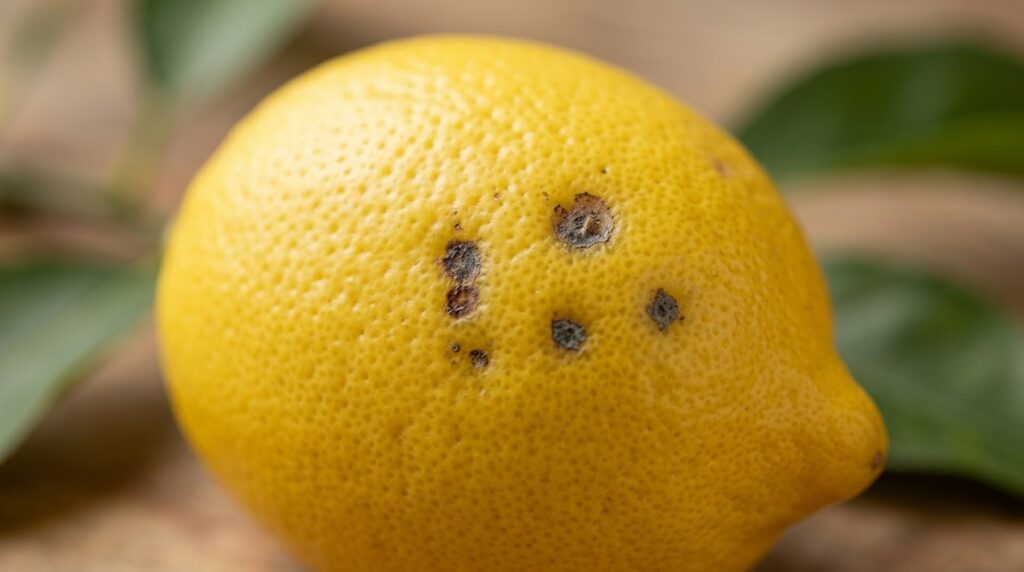
Dark spots on a lemon — a sign of freezing
Wax Coating on Lemons and How to Remove It
If a store-bought lemon looks suspiciously glossy, it’s no accident. The surface of citrus fruits is often treated with wax- or paraffin-based compounds — they prevent moisture from evaporating and extend shelf life. Sometimes preservatives and antifungal agents are added to the coating.
Food-grade wax itself is considered safe, but if you plan to use the zest (grate it into baked goods, add it to a drink), it’s better to remove the protective layer.
Here’s a simple method:
- Rinse the lemon with hot water — wax softens at high temperatures;
- Scrub the peel with a brush using soap or a special fruit wash;
- Rinse with clean water.
There’s also a folk method for checking: press a paper napkin against the peel. If oily traces remain, these are most likely natural essential oils, and the lemon wasn’t chemically treated. A “slippery” fruit that leaves no traces on the napkin is almost certainly coated with a paraffin compound.
How to Store Lemons After Buying Them at the Store
Even a perfectly chosen lemon will lose its benefits if stored improperly.
A few principles to help preserve vitamins and flavor:
- Don’t freeze whole lemons — freezing destroys cell walls, making the flesh mushy and causing vitamin C to be lost faster;
- The best place for fresh fruits is the bottom shelf or door of the refrigerator, at a temperature of about 6–8 degrees Celsius;
- Use a cut lemon within 24 hours — ascorbic acid actively oxidizes when exposed to air;
- If the lemon tastes bitter, pour boiling water over it before use, and the bitterness will go away.
Vitamin C breaks down during storage, heating, and exposure to light. Therefore, for maximum benefit, add lemon to tea that has already cooled to a comfortable temperature, rather than to boiling water.
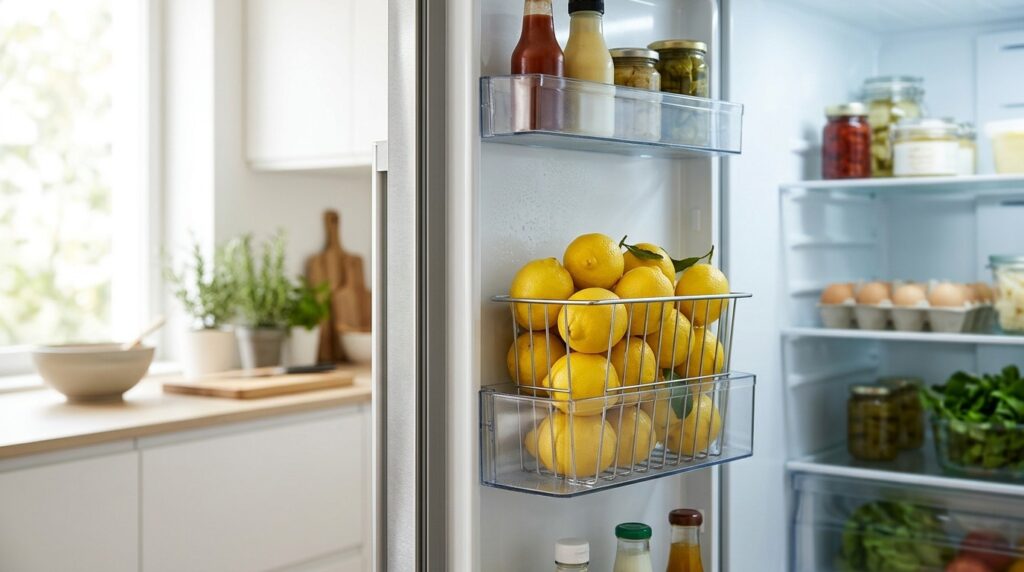
The refrigerator door is a suitable place for storing lemons
Choosing a good lemon at the store is a 30-second task if you know where to look. Peel shine, firmness when pressed, the absence of dark spots, and understanding what you need the fruit for — immediate use or storage — that’s the complete set of criteria. After that, all you need to do is store it properly so that not a single milligram of vitamin C goes to waste.