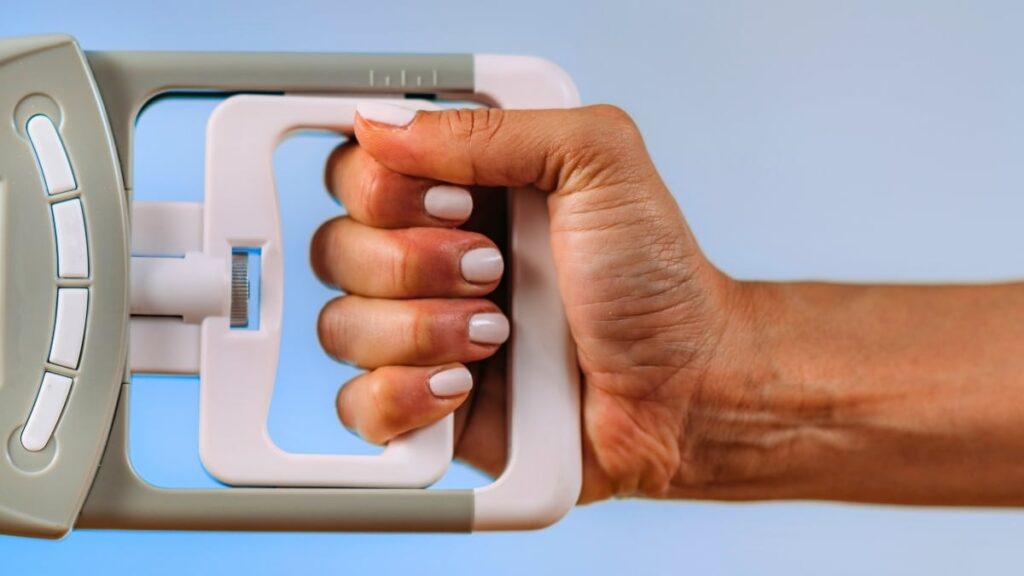
What grip strength says about your lifespan
Grip strength — that is, how firmly you can squeeze something with your hand — can reveal a lot about your health and even your lifespan. It sounds like yet another health video gimmick, but science backs it up. However, there’s an important caveat that bloggers usually forget: a strong handshake doesn’t extend your life on its own. Let’s break down what’s true here and what’s an overblown myth.
How to Test Grip Strength and Why It’s Considered a Health Indicator
To test the link between grip and health, scientists have people squeeze a device called a dynamometer — it simply measures how much force you apply with your palm. Then the participants are monitored for years: who got sick with what, who died and at what age.
And here’s what these observations show. In one large study involving about half a million Britons aged 40–69, it turned out that every 5 kg decrease in grip strength corresponded to roughly a 20% higher risk of dying during the observation period.
And markedly weak hands (below 26 kg for men and 16 kg for women) were associated with an increased risk of death from heart disease, stroke, lung disease, and several types of cancer.
What Grip Strength Can Tell You About Your Health
You might wonder — what do hands have to do with it? The thing is, grip isn’t about your hands. It’s a small window into the condition of your entire body — much like a person’s gait, which can also reveal a lot about health and aging.
To squeeze your palm firmly, several body systems must work in harmony:
- muscles — how strong and intact they are
- nerves — how well they transmit signals
- heart and blood vessels — how healthy they are
- metabolism — how the body manages energy
It turns out that grip strength works as an indicator of overall body resilience. If your hands are strong, the rest of your body is likely in decent shape too. That’s why some experts suggest treating grip as a kind of new “vital sign” — alongside temperature, pulse, and blood pressure.
How Grip Strength Helps Assess Health in Old Age
Here’s an interesting point: in elderly people, grip predicts health significantly more accurately than in younger individuals. This is especially evident for the risk of falls, fractures, heart attacks, and strokes.
The reason is simple. Young people are roughly equally strong — the variation in their health is small. But with age, the differences between people become enormous: some are vigorous, others can barely walk. Against this backdrop, hand weakness becomes particularly telling.
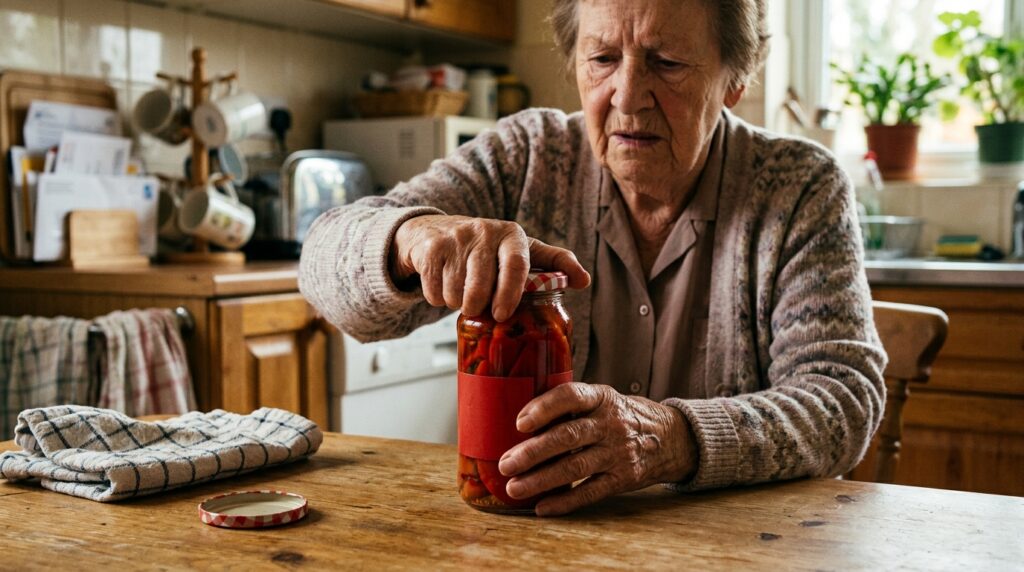
With age, hand strength says especially much about health
In older adults, grip also excellently reflects age-related muscle loss — known as sarcopenia. And muscles for a mature person mean stability, the ability to avoid falls, and overall reserves of resilience. That’s why it’s important to understand why muscles weaken with age.
Does Training Your Grip Actually Extend Your Life
On social media, the link between grip and longevity has been blown out of proportion. The bloggers’ logic goes like this: since strong hands = long life, then train your grip — and you’ll live longer.
This is a classic substitution. A correlation between two things doesn’t mean one causes the other. If people with a strong grip live longer, it’s not because their strong hands saved them. It’s simply that a strong grip is a sign that the entire body is in good shape. By itself, it doesn’t extend life.
You can train your hands as much as you want, but if the rest of your body is falling apart, no magic will happen. To put it simply: training only your grip for a longer life is like cooling a thermometer to bring down a fever — the number changes, but the illness remains.
Funnily enough, some videos honestly explain that grip is merely a marker, not a cause. And then in the same video, they start teaching how to improve it. Apparently, the creators feel that simply explaining the science isn’t enough — they absolutely must give advice on what to do. And in the end, they confuse the viewer themselves.
What Actually Extends Your Life
Grip strength is a convenient and accessible clue about health, especially for elderly people. But if you only train your hands, you won’t become healthier or longer-lived because of it.
The real things that genuinely affect longevity are boring and well known:
- staying physically active
- eating a balanced diet
- getting enough sleep
- maintaining social connections
- managing stress
Even just a few minutes of exercise a day can be more beneficial than trying to pump up only your hands. If you do all of these things, grip strength will improve on its own as a side effect of being in overall good shape. And if your grip is weakening — that’s a reason not to squeeze a hand gripper every evening, but to take an honest look at your lifestyle as a whole.