Google has unveiled a research technology called PhotoScan that aims to estimate body composition — the ratio of fat, muscle, and bone — from a standard smartphone camera photo, using an AI model rather than specialized hardware. The technology was announced alongside the Pixel 11 smartphones and Pixel Watch 5. However, PhotoScan remains a research project, not a shipping feature, and Google has provided no release date or list of supported devices.
What you need to know
- PhotoScan uses an AI algorithm trained on paired photographs and medical DXA scan results to estimate body fat percentage and other composition metrics from a single camera image.
- Google claims the model showed “high correspondence” with DXA results, but this describes research-stage correlation, not a confirmed consumer feature.
- The technology is part of a broader Health Guardian toolkit that also includes an Insulin Resistance Trends feature generating monthly reports on blood-sugar response.
- No release date, supported device list, or confirmed rollout plan has been announced — Google describes PhotoScan as demonstrating “the fundamental feasibility” of smartphone-based body composition assessment.
How PhotoScan compares to existing methods
The gold standard for measuring body composition is DXA (dual-energy X-ray absorptiometry), a medical scan that requires dedicated equipment and is impractical for everyday use. A more accessible alternative is bioelectrical impedance analysis (BIA), which sends a weak electrical current through the body to differentiate between fat, muscle, and bone tissue. BIA sensors appear in some consumer wearables, such as the Samsung Galaxy Watch Ultra 2.
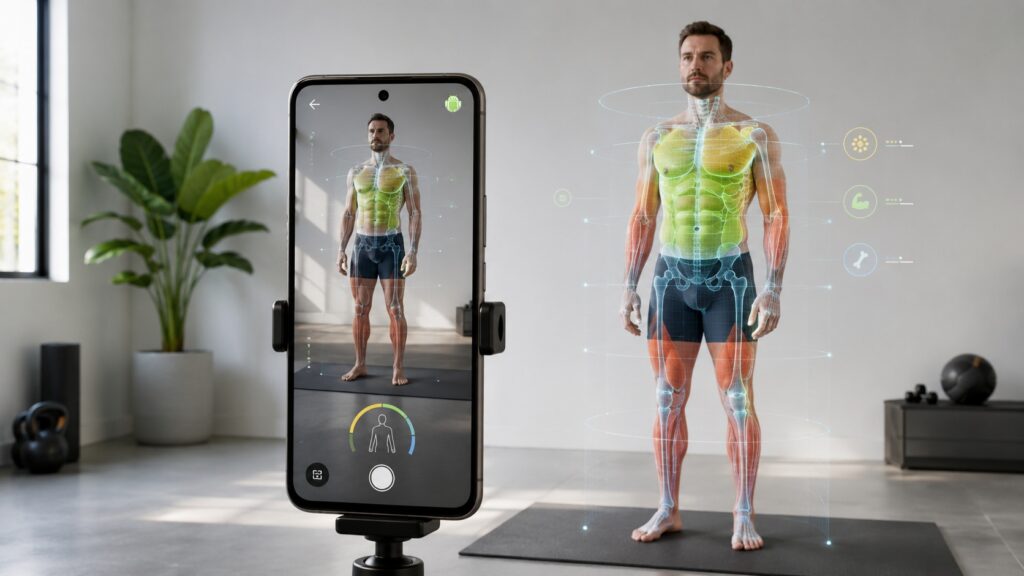
Google is developing a body-scanning technology for Android

Google’s approach differs from both. PhotoScan requires no special sensors and no electrical contact with the body — only a camera image and an AI model trained by matching photographs of people with their corresponding DXA scan data and other health information. The comparison to X-ray scanning is metaphorical: Google says the results correspond closely to DXA outcomes, but the phone is not literally performing any kind of X-ray imaging.
The Health Guardian context
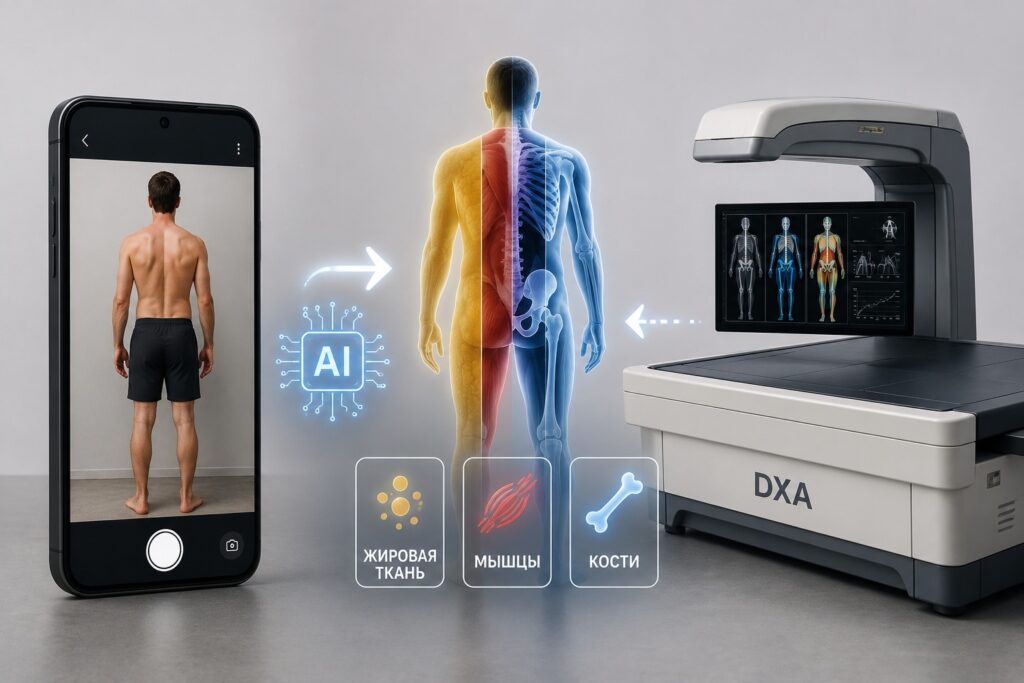
The AI model does the heavy lifting
PhotoScan is part of a new suite Google calls Health Guardian. That suite also includes an Insulin Resistance Trends feature, which is described as generating a monthly report on how the body responds to blood-sugar fluctuations — data relevant to weight management and type 2 diabetes prevention.
Body composition is a key indicator of metabolic health. According to Google, the photo-based assessment achieved accuracy in determining insulin resistance that was close to the classical DXA method. The underlying idea is to give people at least an approximate understanding of their metabolic status without a clinic visit.

Availability: nothing confirmed yet

The technology may appear in future generations of Google smartphones
Google has not committed to a launch date. The company’s own language describes PhotoScan as demonstrating “the fundamental feasibility of smartphone-based body composition assessment” — a deliberately cautious framing that stops well short of a product announcement.
Device compatibility is equally vague. Google has not ruled out bringing the feature to Pixel-series phones in the future, but no specific models or timelines have been named. In short, this is a research-stage demonstration, not a feature worth upgrading your phone for today.