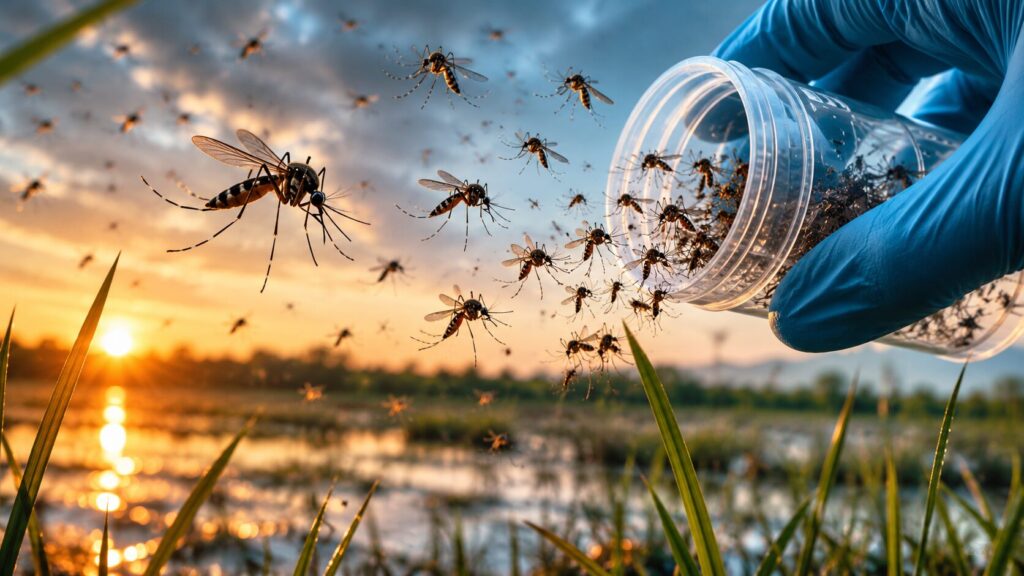
Google to Release 64 Million Mosquitoes. Why Scientists Are Thrilled About This Idea.
Google wants to release 64 million mosquitoes in California and Florida, and scientists don’t just approve of the idea — they’re eagerly awaiting it. The imagination conjures terrifying images, but in reality, this is an ingenious way to reduce the number of dangerous bloodsuckers without any chemicals or genetic engineering. The main secret of the new project is a bacterium that lives inside these mosquitoes.
Why Release Mosquitoes to Get Rid of Mosquitoes
It seems illogical: to have fewer mosquitoes, you need to release even more mosquitoes. But the trick is in the details. Only males will be released, and they don’t bite people at all. Blood is needed by females — the protein and nutrients from it go toward egg production. Males feed exclusively on nectar and fruit juice, so they are completely harmless to humans.
The idea is to flood an area with harmless males that will mate with wild females. The catch is that no offspring will come from these encounters. And it’s all thanks to the bacterium these males are infected with.
How the Wolbachia Bacterium Prevents Mosquitoes from Reproducing
The main hero of this story is the Wolbachia bacterium, a natural inhabitant of many insects. It doesn’t infect humans or other animals — it lives quietly inside mosquitoes and many other bugs. But it has a curious property that researchers decided to exploit: Wolbachia can alter insects in ways that directly affect their reproduction.
If a Wolbachia-infected male mates with a normal, uninfected female, her eggs simply don’t hatch — the embryos die. The bacterium essentially makes the sperm incompatible with a “clean” egg cell.
- Infected male + normal female — no offspring
- Infected female + any male — offspring will be produced, also carrying the bacterium
If millions of such males are released, wild females mate with them en masse — all for nothing. They lay eggs, but nothing hatches from them. The mosquito population declines on its own, without a single drop of insecticide.
Why This Method Is Safer Than Chemicals and GMOs
The main advantage is that Wolbachia is not genetic engineering. It’s an ordinary natural bacterium that already lives in a huge number of insects without any human intervention. No new toxins enter the environment, and the method targets precisely one species of mosquito without affecting others.
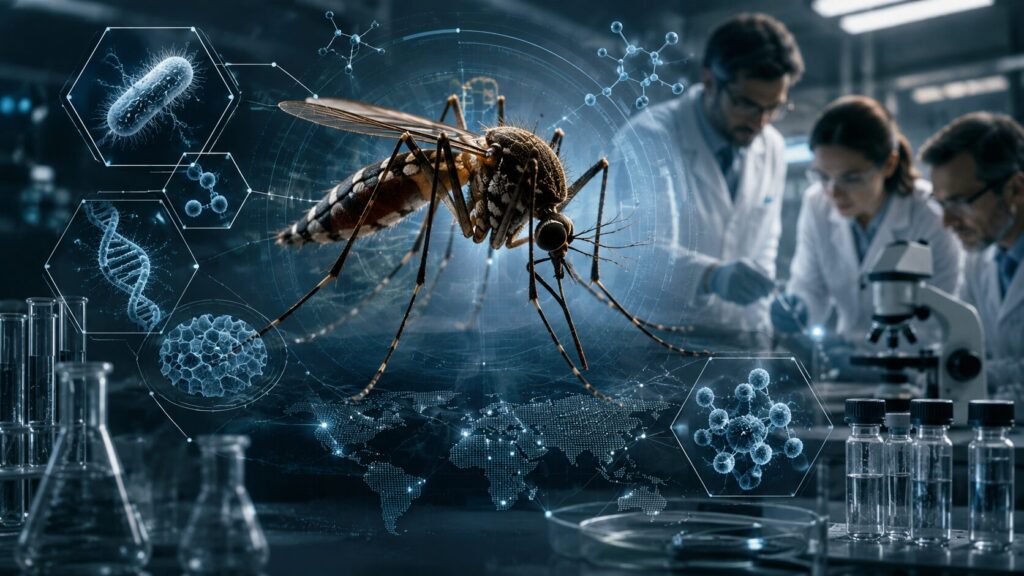
Scientists consider the bacterial method one of the most environmentally friendly approaches.
There’s another major problem this approach sidesteps. Mosquitoes are becoming increasingly resistant to chemical insecticides — they develop tolerance, much like bacteria do with antibiotics. The biological method simply skips this arms race. And to ensure only males are released and not a single female, Google is building automated farms where insects are bred by the millions and then sorted by sex using sensors and algorithms.
What Are Disease-Carrying Mosquitoes and Why Are They Dangerous to People
The project’s target is the southern house mosquito, a carrier of the West Nile virus (Culex quinquefasciatus). This virus is the leading cause of mosquito-borne illness. West Nile fever has long ceased to be something distant and exotic: every year it is diagnosed in roughly two thousand people, and those are only the official cases.
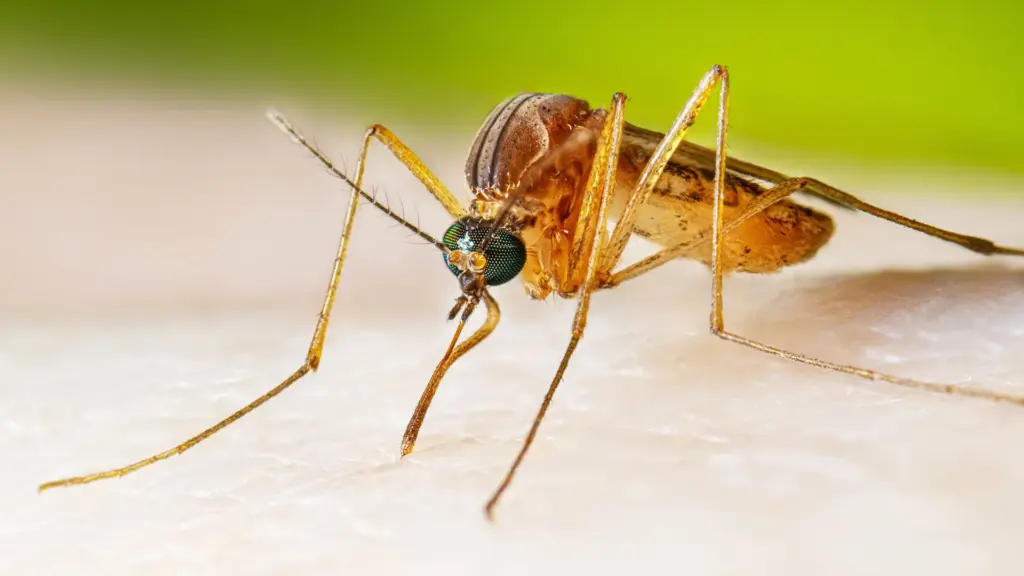
Southern house mosquito Culex quinquefasciatus.
Most infections are asymptomatic or present as a mild cold. But in severe cases, the disease leads to serious complications and even death. In California alone, more than 8,000 cases and over 400 deaths have been recorded since 2003. And in Asia, related mosquitoes spread Japanese encephalitis — a disease with a fatality rate of up to 30%.
Interestingly, a similar approach has already been tested in Singapore, though on different mosquitoes — Aedes aegypti — carriers of dengue fever. There, they managed to reduce the dangerous mosquito population by 90% and the risk of contracting dengue by 70%. A similar idea is being used in Brazil, where infected mosquitoes are already fighting dengue as part of a large government program. So the method isn’t being built from scratch: it has already proven itself in practice.
Will Releasing 64 Million Wolbachia-Infected Mosquitoes Harm Nature
A reasonable question: if you suddenly wipe out an entire mosquito species, won’t the animals that feed on them go hungry? Scientists believe there won’t be serious problems. Most animals that eat mosquitoes are not picky eaters and hunt a wide variety of insects. For example, bats consume mosquitoes but don’t depend on just one type of prey. Losing one “food item,” they’ll simply switch to another.
There is one nuance, however: another mosquito species could move into the vacated niche. That’s why the results will be carefully monitored. Nature is complex and sometimes unpredictable. But overall, scientists agree on one thing: the health benefits for people clearly outweigh the risks to the ecosystem.
For now, the project is awaiting final approval from the U.S. regulator. If granted, Google will release up to 32 million mosquitoes in California and the same number in Florida over two years. And if everything goes as well as it did in Singapore, there will be noticeably fewer dangerous bloodsuckers — all without poison, without GMOs, and without harm to anyone else.