A great camera on an Android flagship never saved users from blurry photos and videos on Instagram*. After the release of the Android 17 update, Google officially announced a partnership with Meta to fix how Instagram* handles photos and videos on top Android smartphones. The main camera problem wasn’t the hardware, but how the social network processed your content during upload.
The Android 17 update fixes Instagram* camera
Why Instagram* Ruins Photos on Android
Manufacturers have been putting 200-megapixel sensors into their flagships for years, and stock camera apps produce images with accurate color reproduction that look great in objective tests. The problem came next — at the upload stage to social networks.
Instead of adapting to each smartphone model, social networks often took the easy route. That’s exactly how Android users ended up with compressed photos and videos in Reels and Stories: it wasn’t the phone’s camera, but the app not utilizing its capabilities.
How Android 17 Will Change Instagram*
Google is taking on more responsibility for the entire journey of a photo from capture to publication. Android 17 gives Instagram* proper access to the camera and image processing system, but only on supported devices. An important caveat: this doesn’t work on just any Android smartphone, but on flagships from the list of compatible models.

The Android 17 update completely changes the approach to camera. Image: Android Police
This means Instagram’s* built-in camera stops being a simplified version and starts using the same technologies as the stock camera app.
Improving Photo Quality in Instagram*
Google says Android 17 develops integration with Night Sight, so Instagram’s* built-in camera will be able to take better photos in low light on supported devices. For evening stories, this means less noise and a more readable image.
Built-in video stabilization will also work with the camera inside Instagram* on compatible flagships. Video on the go will stop shaking, and shooting while moving and panoramas will look neater, rather than like amateur handheld footage.
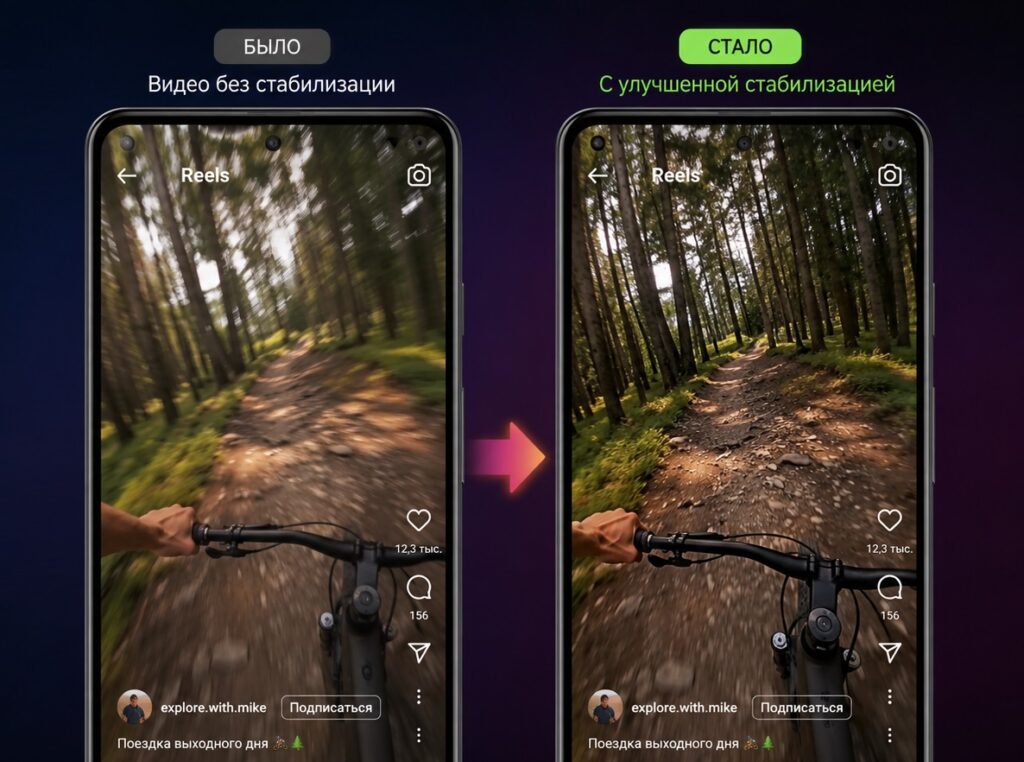
Reels quality will noticeably improve
Flagships on Android 17 get full Ultra HDR support — extended dynamic range that makes bright and dark areas of the frame more detailed right in Instagram*, both when shooting and viewing. This means HDR photos no longer get “flattened” when uploaded to the feed.
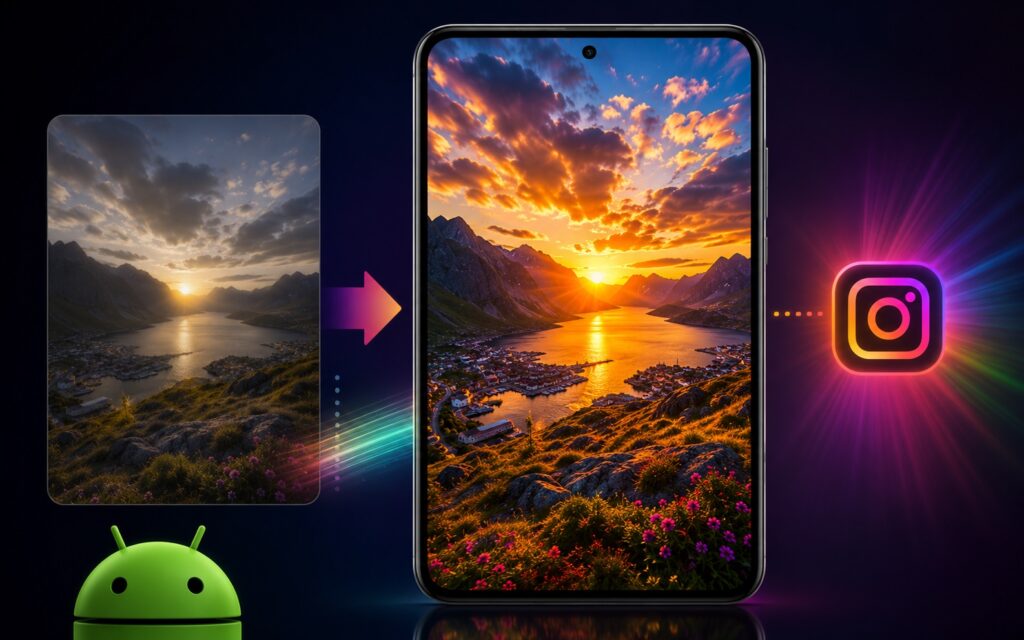
Images will become brighter and more vibrant
Google also optimized the path from capture to upload. According to its own video quality tests, videos from Instagram* on Android flagships are on par with or better than the main competitor — clearly referring to iPhone. This is the company’s own claim, and it can only be verified with real-world uploads.
Improvements affect not only shooting but also editing. The Edits app is Meta’s answer to CapCut, released in early 2025 — it gets a set of AI features exclusively for Android, and they work right on the device without sending video to servers:
- Smart Enhance — one-tap enhancement and sharpening.
- Sound Separation — separates the creator’s voice from wind and background noise. Shot a vlog on a windy street (no need to re-record audio or delete the take).
- Screen Reactions — a Pixel feature that simultaneously records the screen and front camera.
This is a case where Android gets something before iPhone, not the other way around.
What Happens After the Android 17 Update
For a long time, cameras were sold on megapixels, but now the real battle is over the entire journey of a shot — from the camera app to publication in the feed. Android 17 is currently in late beta: Pixel and several partners are already testing the update.
Instagram* will completely change on Android
The real benefits can only be assessed after the stable version is released, when it becomes clear whether Google’s polished tests match what you actually get with a regular upload. If you shoot a lot for social media on a flagship, the update is worth waiting for; if Instagram* is just a couple of photos a month for you, there’s no rush.
* — owned by Meta.