Having unveiled Android 17 the previous week, Google completely redesigned the Gemini app at the I/O 2026 conference — from the interface to models and user scenarios. The updates include a new Neural Expressive design, the Gemini 3.5 Flash model, the Omni generative model for video, a 24/7 agent called Spark, and a morning digest called Daily Brief. The app is already used by over 900 million people per month, and Google clearly wants to transform it from a chatbot into a full-fledged digital assistant. Below is a breakdown of each update from a real-world usage perspective.
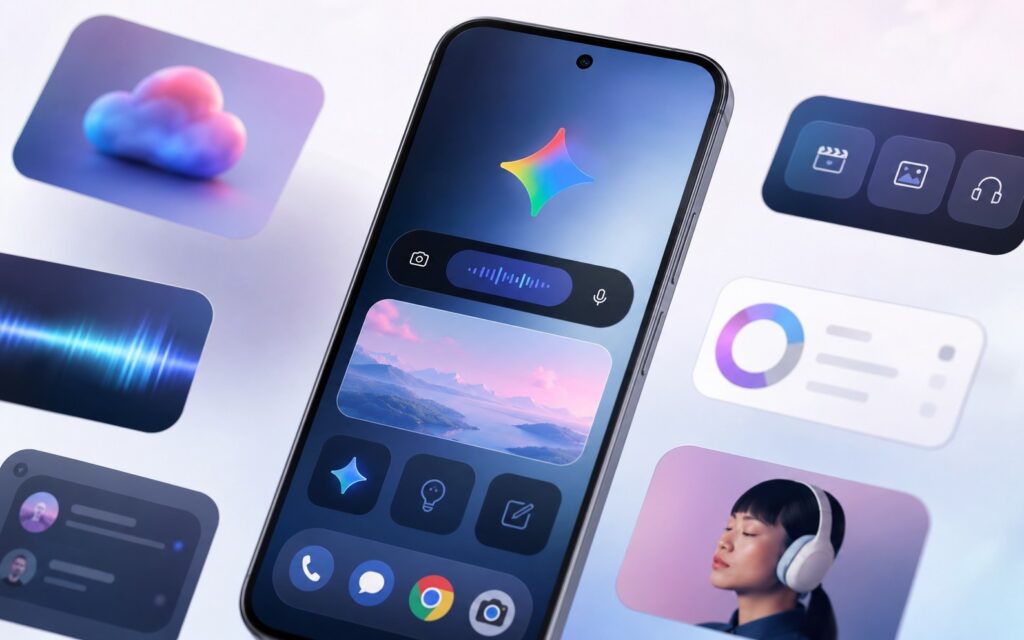
The Gemini app has changed beyond recognition
New Design in the Gemini App
The Gemini app on Android received an updated design language called Neural Expressive. It features smooth animations, vibrant colors, updated typography, and haptic feedback during interactions. The input field now has a “pill” shape, and the file upload menu opens from the bottom with a carousel: photos, camera, recent images, and below — files, Google Drive, notebooks.
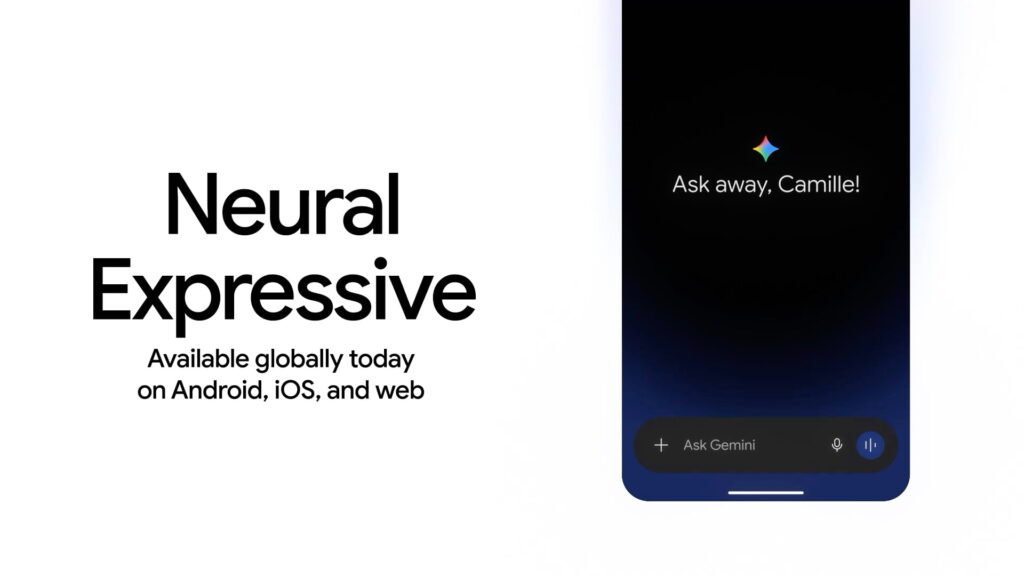
Gemini received major visual changes. Image: Google
Tools are highlighted separately: learning with prompts, deep research, canvas, music creation, video, and images. Gemini Live voice mode no longer opens in full-screen mode. It now works within the main interface, and you can switch between text and voice without losing context. The navigation bar has become full-screen: new chat, chat search, library (previously called “My Materials”), as well as notebooks and recent conversations. Model selection is in the top left corner, temporary chats are in the top right.
Most importantly, perhaps, is the change to the responses themselves. Gemini no longer produces “walls of text.” Key information is now displayed at the top and highlighted in bold, and when needed, responses are supplemented with embedded images, video narratives, timelines, and interactive visualizations. The design update is already rolling out on Android, iOS, and the web version.
What’s New in the Gemini 3.5 Flash Model for Android
Along with the redesign, Google launched Gemini 3.5 Flash — a new model that, according to the company, surpasses the previous flagship Gemini 3.1 Pro in coding tasks, agentic scenarios, and multimodal benchmarks. At the same time, Flash stays true to its lineup: it runs four times faster than other cutting-edge models in terms of generated tokens per second and costs less (roughly one-third to one-half less).
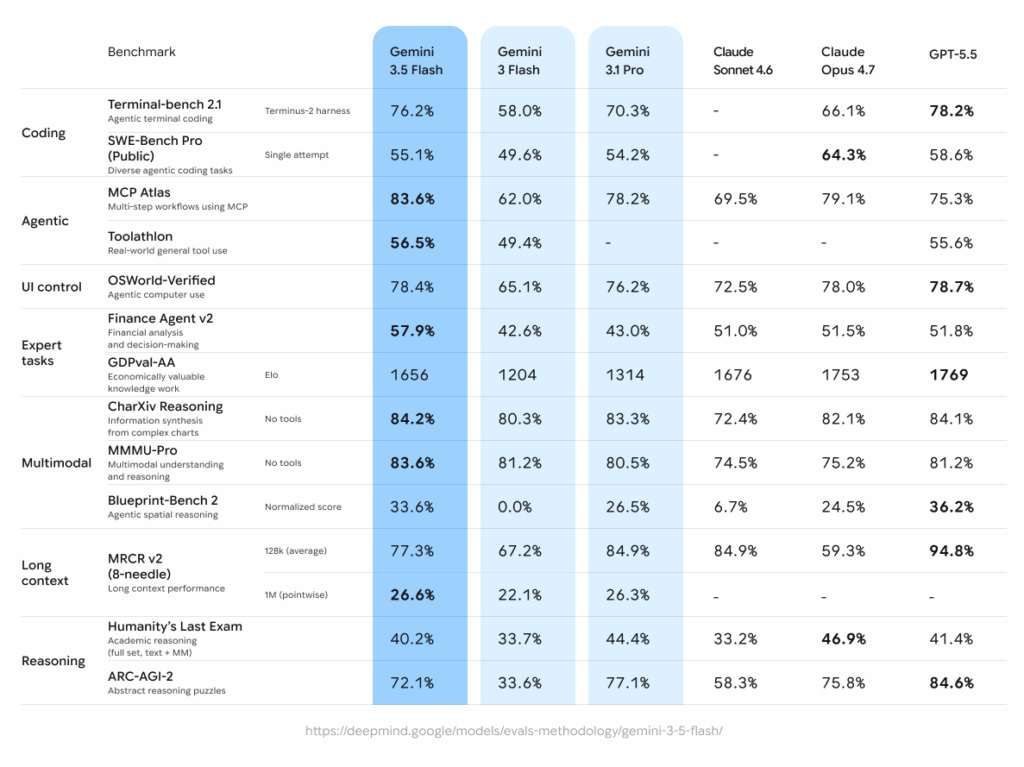
The new language model has become much more efficient. Image: Google
As a result, responses arrive faster, and complex tasks (such as document analysis, long conversations, or working with multiple sources) are processed more accurately. The model is already available in the Gemini app, in Google Search, and via API. Google also announced Gemini 3.5 Pro, but this model will only be released next month. Currently, all new features in the app run on Flash.
What Is Gemini Spark and Why You Need a 24/7 Agent
Gemini Spark is the most ambitious of the announcements. Google describes it as a “personal agent” that acts on your behalf and works around the clock, even when your phone is locked or your laptop is closed. Spark runs on dedicated Google Cloud servers, so it doesn’t depend on your device.
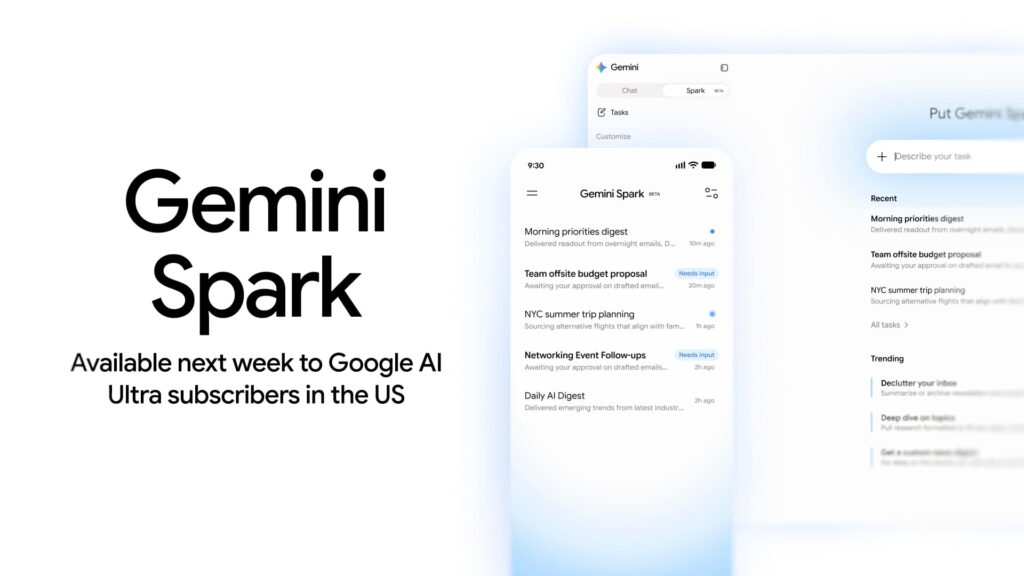
Gemini Spark — another new feature of the app. Image: Google
In practice, it works like this: you give Spark a task, and it completes it in the background, connecting to Gmail, Google Docs, and other Workspace apps. Here are some examples from the announcement:
- Automatic analysis of monthly credit card statements to identify hidden subscriptions
- Monitoring incoming mail for school newsletters, collecting important dates, and sending a summary to you and your partner
- Synthesizing meeting notes from email and chats into a ready-made Google Docs document with a draft cover letter
Before any serious action (sending emails or spending money), Spark requests confirmation. On Android, a dedicated Android Halo interface will appear, showing task progress and statuses in real time. In the future, you’ll be able to reach Spark via email, SMS, and from Chrome. Third-party services will be added this summer. Spark will also appear in the Gemini app for Mac with the ability to work with local files and automate workflows on your computer. Limitations: Spark launches next week in beta testing and only for Google AI Ultra subscribers in the US. For everyone else, it’s just an announcement for now.
What Gemini Omni Can Do
Omni is a new model that combines Gemini’s reasoning capabilities with content generation. The main idea: create anything from any input material. For now, this primarily concerns video. You can input images, audio, video, and text, and get an edited clip based on the model’s real knowledge as output.
In the Gemini app, you can upload any photo or video and edit it using built-in templates. One of the demonstrated capabilities is creating a custom AI avatar that looks and sounds like you and embedding it in an action scene. Gemini Omni (in the Flash version) has already started rolling out to Google AI Plus, Pro, and Ultra subscribers worldwide.
New Daily Brief Feature in Gemini
The Daily Brief feature is an agent that compiles a personalized daily summary for you every morning. Overnight, Gemini analyzes your Gmail, Google Calendar, and Tasks, and in the morning delivers a structured digest with priorities. The summary is divided into two parts. The “Top Priority Right Now” section shows actions that require immediate attention. Under each item are quick buttons: create a reminder, view the message, draft a reply. Then comes the “On the Horizon” section — tasks and events for the near future.
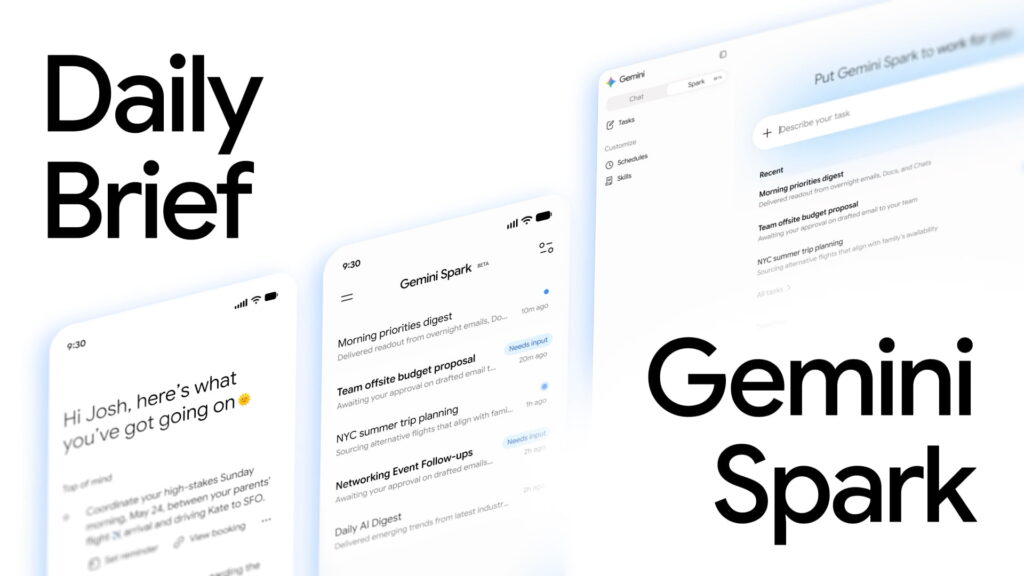
Now the neural network creates daily summaries. Image: Google
Daily Brief is available in the sidebar of the Gemini app and is already rolling out to Google AI Plus, Pro, and Ultra subscribers. Currently only in the US. The feature grew out of an experimental Google Labs project that had been tested since late 2025.
Paid and Free Gemini Features
Google restructured its subscription tiers. There are now three main levels, plus an enhanced variant:
- Google AI Plus — $7.99/month: doubled limits compared to the free version, 200 GB of storage, access to Gemini Omni and Daily Brief
- Google AI Pro — $19.99/month: quadrupled limits, 5 TB of storage, access to the Pro model, YouTube Premium Lite included
- Google AI Ultra ($100) — $99.99/month: increased limits compared to Pro, 20 TB of storage, Gemini Spark, YouTube Premium, priority access to new features
- Google AI Ultra ($200) — $199.99/month: 20x limits compared to Pro, Project Genie, and maximum capabilities
Previously, the maximum subscription cost $250 per month. Now Google has lowered it to $200, and the new $100 tier bridges the gap between Pro at $20 and the top level. Google is also transitioning from daily query limits to a model based on consumed computing resources: simple text questions use less quota than video generation or programming.
The free version of Gemini still exists — with basic access.