British startup DEEP has installed a permanently moored underwater habitat called Vanguard in the Florida Keys, at a depth of 17 meters. The steel cylinder — roughly 10.5 meters long and 2.4 meters wide — is designed to house up to four people and functions as both a living space and a working laboratory. Selected two-person science teams will be able to spend five days on the seafloor without surfacing, focusing on coral reef restoration and testing underwater robots. The project is described as the first private underwater habitat of this scale deployed in U.S. waters in forty years.
What you need to know
- Vanguard is permanently moored to the seabed near Tennessee Reef in the Florida Keys, eliminating the need to raise and lower the module for each crew rotation.
- A semi-autonomous surface buoy continuously supplies oxygen, electricity, and communications to the station, replacing shore-based cable infrastructure.
- Applicant science teams must demonstrate that living underwater is essential to their research; accepted teams receive up to $50,000 in funding and undergo two weeks of mandatory training before a five-day mission.
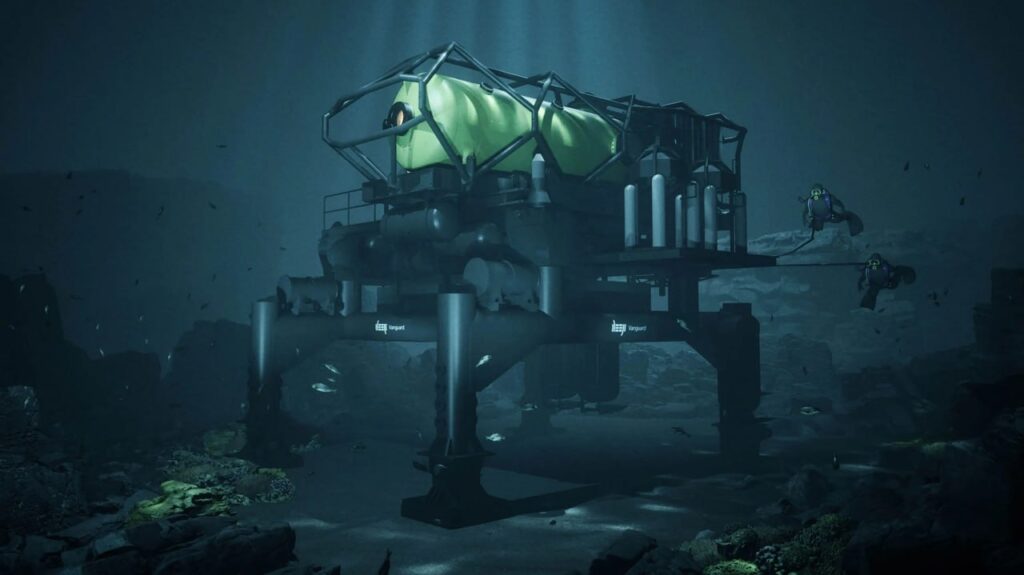
The Vanguard underwater module. Image source: deep.com
How the Vanguard module is designed
Its creators jokingly call Vanguard an underwater mobile home, because every centimeter of interior space is optimized. The internal layout is divided into several functional zones:
- A living compartment with four sleeping berths, a small sofa, and a kitchen.
- A combined bathroom that doubles as a mini-laboratory.
- An airlock chamber for safe entry into and exit from the water.
- A semi-autonomous surface buoy.
The surface buoy is the key enabler. It continuously delivers oxygen and electrical power to the station while also providing a communications link to the outside world. This approach eliminates the need for bulky cables running to shore, giving aquanauts a fully autonomous base of operations right on the reef.
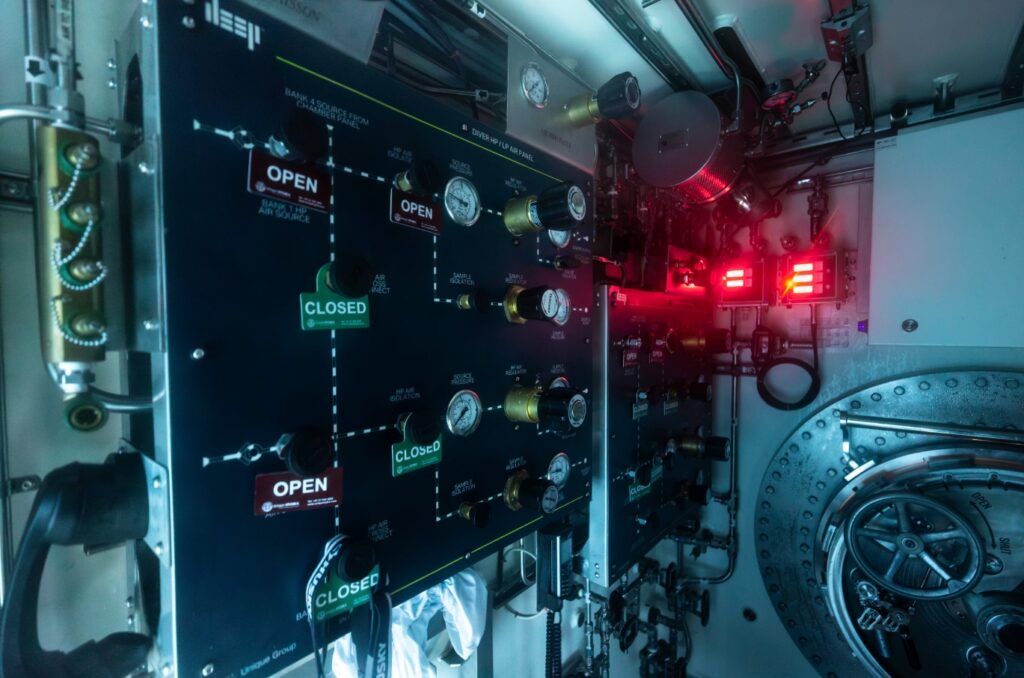
Control console of the underwater laboratory. Image source: deep.com
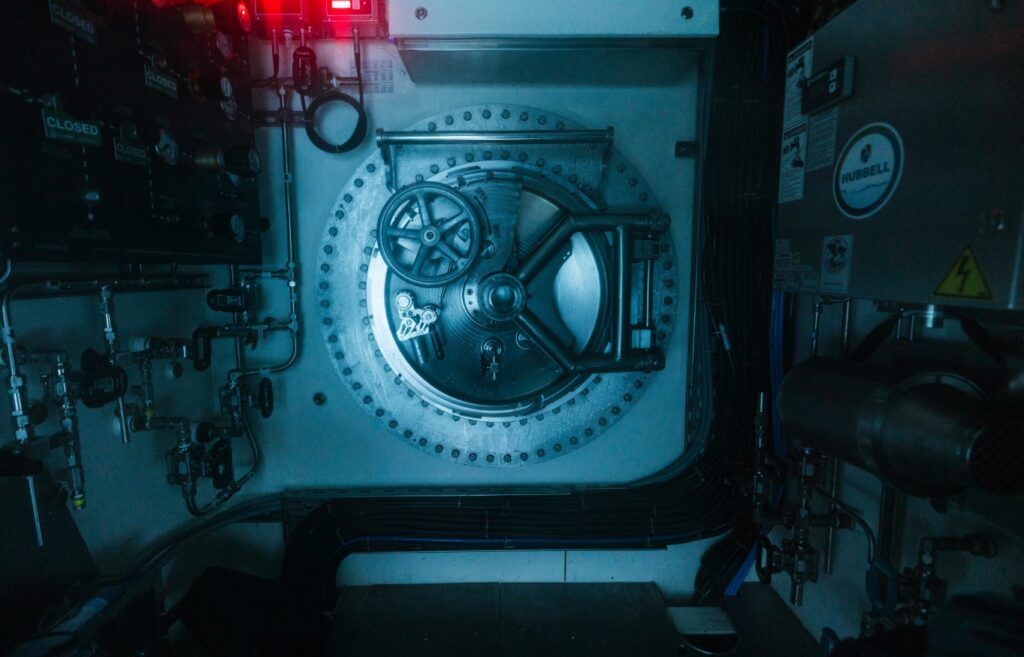
Exit from the underwater laboratory. Image source: deep.com
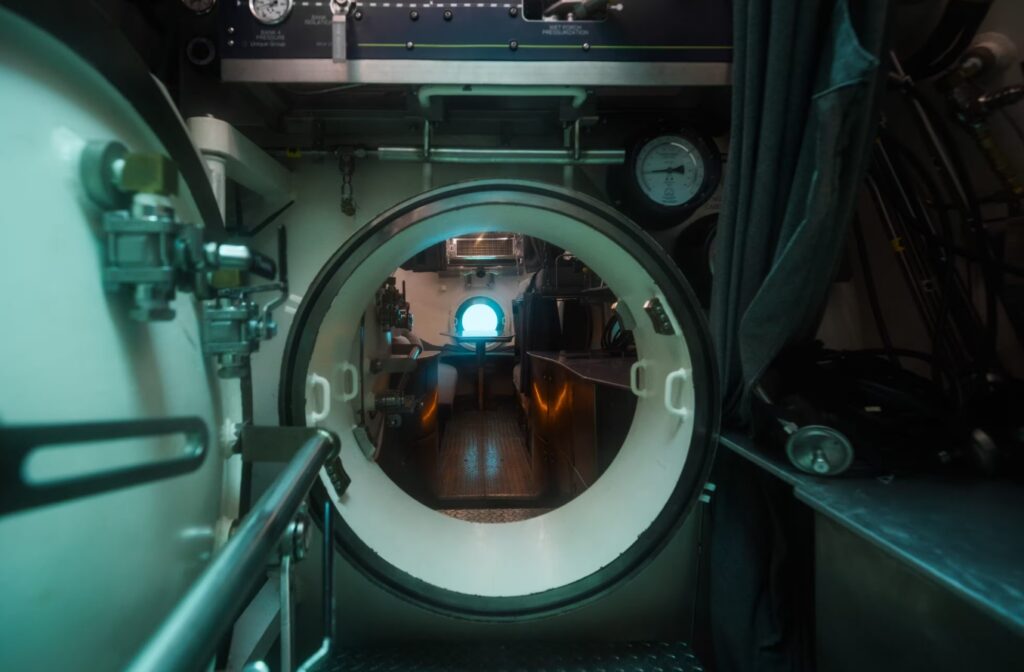
The underwater laboratory maintains a comfortable pressure for humans. Image source: deep.com
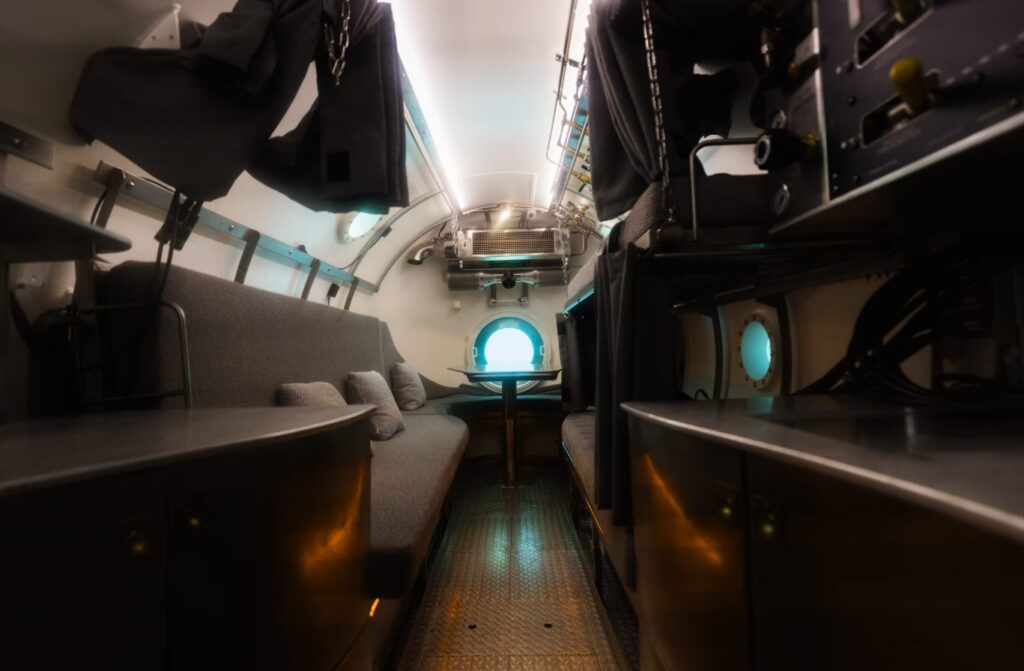
Living quarters for scientists. Image source: deep.com
What sets Vanguard apart from earlier underwater habitats
The idea of living underwater is not new. The well-known Aquarius laboratory has been in operation since 1986, and Italian researchers tested their own underwater habitat in the mid-2000s. However, DEEP’s project is described as the first privately developed habitat of this scale to be deployed in U.S. waters in four decades.
The key technical distinction is how Vanguard is stationed. Most comparable habitats must be raised and lowered each time the crew changes. Vanguard, by contrast, is permanently moored to the seabed near Tennessee Reef. DEEP plans to keep it in place for extended periods, avoiding the cost and logistical burden of repeatedly transporting the module.
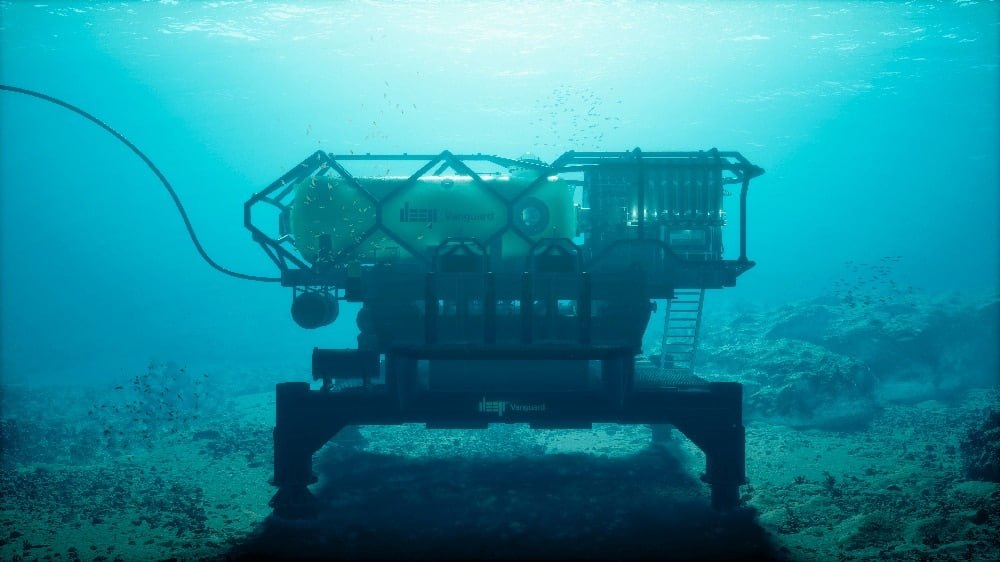
The underwater laboratory remains permanently on the seabed
Why living on the seafloor matters for science
It might seem simpler for researchers to arrive by boat and dive with scuba gear. But for serious scientific work, continuous presence at depth fundamentally changes what is possible. When a researcher lives underwater, hours that would otherwise be lost to daily decompression and ascent are freed up for data collection. Constant proximity to the ecosystem allows scientists to observe changes in real time and respond immediately to environmental shifts — advantages that are particularly valuable for coral reef restoration work and underwater robotics testing.
How scientists can apply
Access to Vanguard is not open to the general public. DEEP is seeking two-person science teams that can demonstrate a compelling need for underwater residency. As Futurism reports, candidates must explain why conventional surface-based dives would not yield equivalent results. Approved teams undergo a mandatory two-week training program before beginning a five-day mission on the seafloor. DEEP offers up to $50,000 in financial support per approved research project.
If Vanguard demonstrates its effectiveness in practice, similar scientific outposts could eventually help researchers better understand and protect marine ecosystems worldwide.