Remember how Apple spent almost two years promising a “new Siri,” delaying the release, and running ads for features that didn’t yet exist? At WWDC 2026, Apple finally showed the new AI-based Siri in its entirety. And the next day, a team led by Craig Federighi gathered journalists and broke down in detail what’s inside the assistant. And most importantly — how much of that Gemini from Google is in there, for which Apple pays around a billion dollars a year. The answer was unexpected. In short: Gemini is in Siri, but not at all where you’d think.
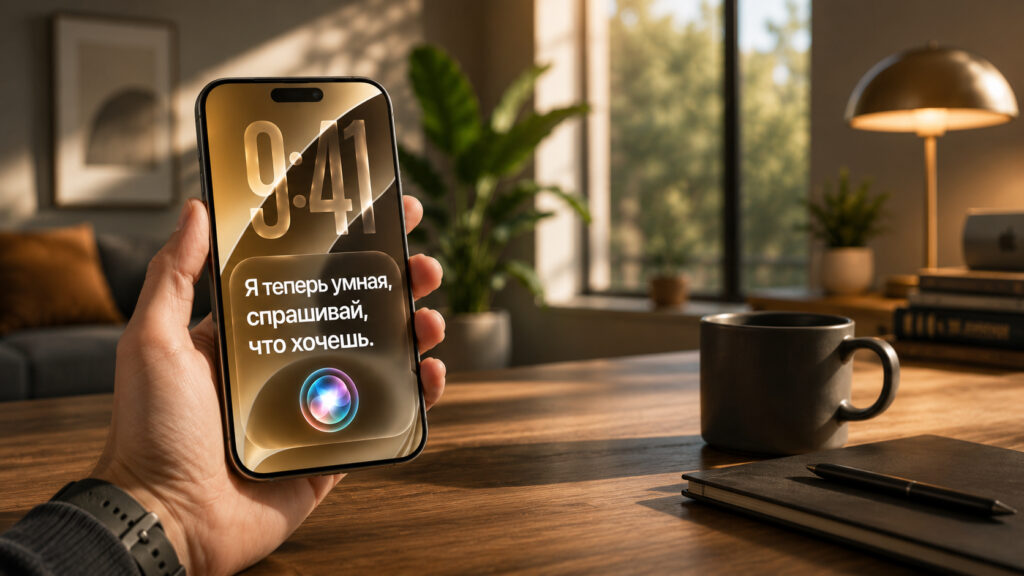
Siri has gotten noticeably smarter
Let me remind you of the situation. According to Bloomberg, Apple chose Google after testing models from OpenAI and Anthropic — and the decisive factor wasn’t performance, but price. In January 2026, the companies officially confirmed a multi-year partnership. Google built a custom model for Apple with 1.2 trillion parameters — that’s eight times more than the previous cloud-based Apple Intelligence. In words, it sounds like there’s now someone else’s brain living inside the iPhone. At the tech talk, Federighi tried to dismantle that picture.
How Apple Uses Google Gemini in the New Siri
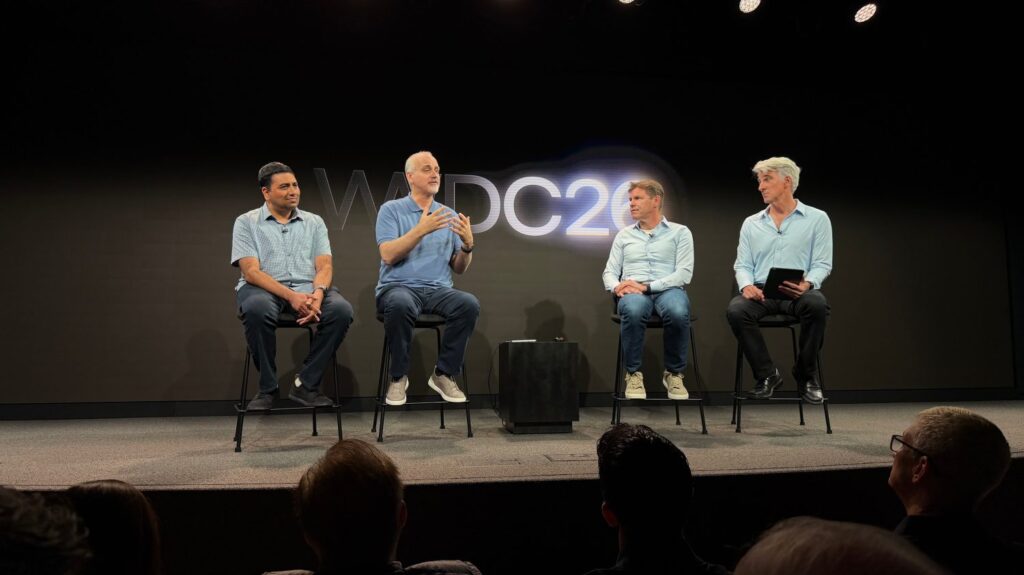
Apple executives gave a detailed overview of the new voice assistant
Federighi started from a distance and ended with a phrase that was quoted everywhere. According to him, Apple does not use the Gemini app, does not run models that Google deploys for its clients, and does not operate on Google’s infrastructure. Google Search is not at the foundation of the system either. And then came the knockout statement. The amount of Google Assistant that Apple uses, according to Federighi, is zero.
It sounds almost like a denial of the deal. But it’s not. The subtlety is that Apple licensed not a service, but a technology. Apple’s base models were trained on its own data for its own Apple Silicon, and then refined with the help of Gemini. In other words, Google’s frontier models were used as a “teacher” during training, not as a live engine that Siri pings in real time. For you, this is fundamental: your requests don’t go to Google’s cloud and don’t turn into queries to Google Assistant.
There is one nuance, however, and Apple doesn’t hide it. The company runs its heaviest model on NVIDIA GPUs in Google’s cloud — but within its own Private Cloud Compute system. The hardware is rented, but the rules of the game remain Apple’s.
New Siri in iOS 27: How It Works
Siri also got a new logo
Now for the most interesting part — the architecture. Federighi broke it down layer by layer, and here you can see why Apple holds on so tightly to privacy.
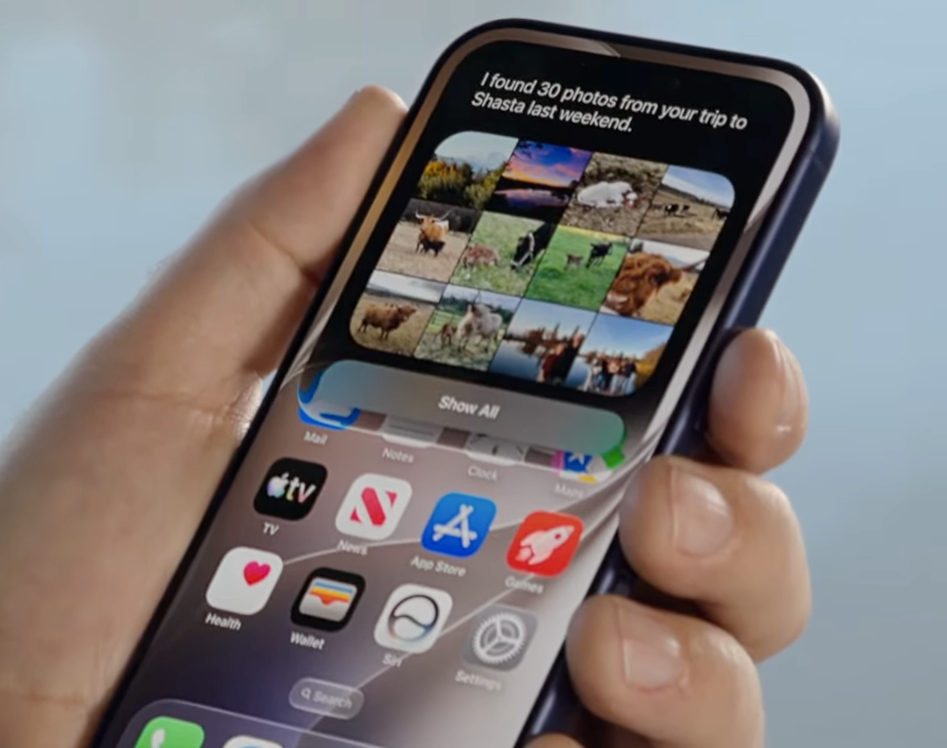
The entry point is the Assistant experience itself, built into iOS, iPadOS, and macOS. On iPhone, Siri now “grows” out of the Dynamic Island in a Liquid Glass style, can be activated by button or voice, and is accessible right in writing tools and the context menu. There’s also a separate Siri app — you can return to it to continue a previously started conversation or open a new one.
Beneath this interface runs the system orchestrator — the heart of the privacy architecture. It’s the one that decides how to fulfill your request: whether to dig into the App Toolbox for in-app actions, whether to consult Spotlight’s semantic index for your personal content, whether to factor in what’s currently on the screen.
Next come the on-device models. They handle speech recognition, voice synthesis, understanding images from the camera, and text on the screen. Some requests are processed entirely on the device, without going online. But if the orchestrator determines the question is complex, it turns to models in Private Cloud Compute.
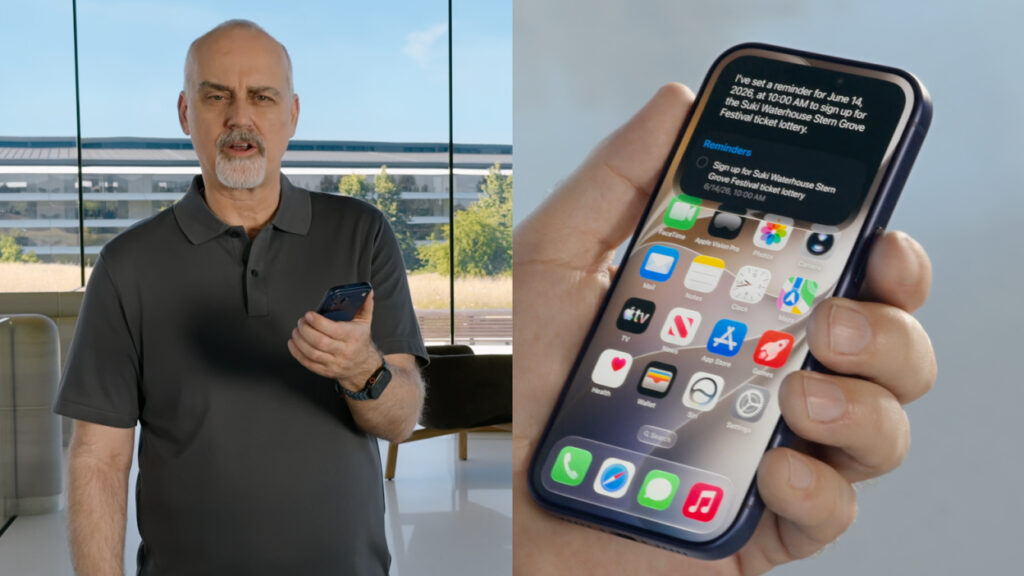
Some requests take longer to process due to the need to connect to the cloud
And here is Apple’s key promise. Private Cloud Compute brings iPhone-level privacy to the cloud: requests are accessible only to you, are stored nowhere, are inaccessible to anyone including Apple itself, and exist only for the duration of processing. Apple emphasizes that these properties can be verified by an independent researcher. Meanwhile, world knowledge and current events are pulled through a separate World Knowledge Service that the company has been building for years.
Apple Models That Power the New Siri
The technical portion of the tech talk was handled by Amar Subramanya, VP of AI. He introduced the third generation of Apple Foundation Models. The main thesis: every model has significantly improved in both quality and capabilities compared to the previous generation.
Let’s break down the family.
AFM Core — the base on-device model of the new generation, dense architecture. The one already running on your devices today.
AFM Core Advanced — now this is interesting. Sparse architecture, multimodality out of the box, and it all runs locally. This is the one that powers on-device features like the expressive voices shown during the main presentation.
AFM Cloud — the server workhorse, optimized for low latency and cost efficiency. Lives in Private Cloud Compute.
AFM Cloud Image — the new generation of image generation and editing. Responsible for spatial reframing, among other things, which also appeared in the keynote.
AFM Cloud Pro — the most powerful model for agentic tasks and complex reasoning. According to Subramanya, its quality is comparable to Gemini’s frontier models. To bring it to production, Apple worked with Google and NVIDIA, expanding Private Cloud Compute to NVIDIA GPUs in Google’s cloud.
All four “working” models — Core, Core Advanced, Cloud, and Cloud Image — are custom builds for Apple Silicon, trained on proprietary data and polished using Gemini outputs. The logic of the entire system is simple: match each request with the model that will give the best answer with minimal latency.
Key Features of Siri in iOS 27
If you strip away the marketing, the picture is an honest one. Apple couldn’t catch up in the large model race on its own and rented someone else’s brains — but wrapped them in a way that surrenders neither privacy nor control over the experience. Gemini works behind the scenes, at the training stage, while in production it’s Apple’s models on Apple’s hardware under Apple’s rules.