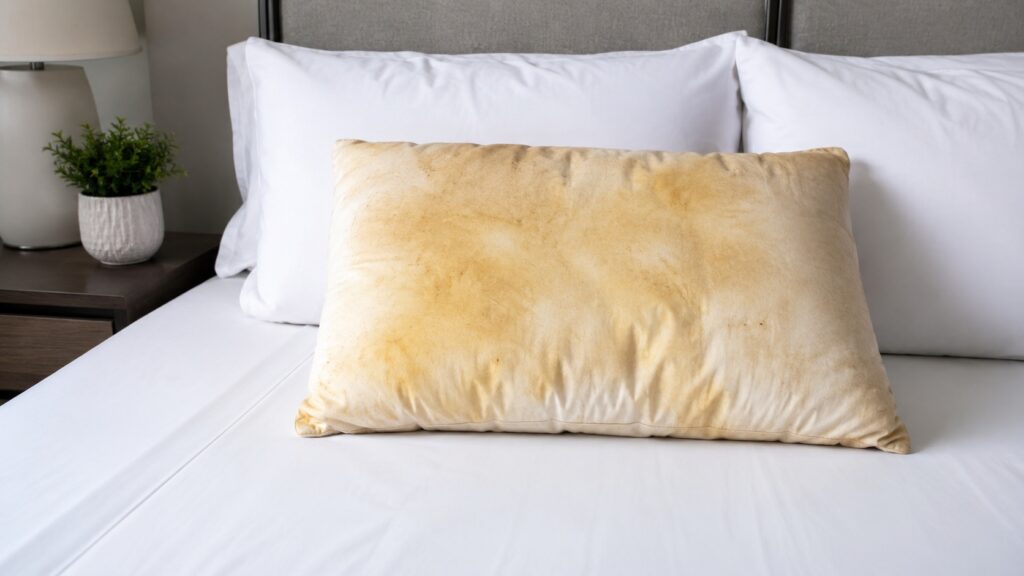
Your pillow turns yellow not just from sweat — there are other gross reasons too
We all regularly take out the trash, mop the floors, vacuum the carpets, and do everything we can to keep our homes clean. But at the same time, we often sleep on the same pillow for years without noticing that it has turned yellow. And yellow stains on a pillow are not something harmless — they’re a mixture of substances potentially harmful to our health. If you think your pillow turns yellow from sweat, you’re partly right. But sweat that we produce during sleep is not the only contaminant. Sometimes it’s easier to throw a pillow away than to try to wash it.
Where Do Yellow Stains on a Pillow Come From
The story gained attention after a social media user named Cam posted a photo of a yellowed pillow. In the comments, thousands of people admitted they sleep on similar ones, with some not having washed their pillows in over ten years. The issue turned out to be much more serious than it appears at first glance.
According to allergist Zachary Rubin, the main reason why pillows turn yellow is sweat, which night after night seeps through the pillowcase directly into the pillow filling. The fabric absorbs moisture, it dries, and where the water evaporated, those yellowish stains remain. The longer this continues, the more noticeable the color change becomes.
Why a Pillow Gets Dirty
The thing is, sweat is far from pure water. It contains dissolved salts, proteins, and metabolic byproducts, and these are what remain on the fabric fibers after drying. Added to this is sebum — the natural oil that the skin produces constantly, even during sleep.
But sweat and sebum aren’t where it ends. A pillow turns yellow for a number of other reasons as well:
- saliva, which inevitably gets on the fabric during sleep;
- dead skin cells;
- moisture from undried hair;
- skincare and haircare products.
It’s worth separately mentioning those who take care of their skin. Creams, lotions, and oils applied at night also soak into the pillow. As the expert explained, nighttime skincare routines often give the fabric a yellowish tint — the products simply transfer from the face into the filling.
Why a Pillow Smells Bad
If your pillow has an unpleasant smell, that’s an even more alarming sign. Sweat and skin oils penetrate through the pillowcase and gradually accumulate inside, creating strange odors. The warm and moist environment inside the filling creates nearly ideal conditions for microbial growth.
Is It Dangerous to Sleep on a Yellowed Pillow
Not only does a yellow pillow look repulsive, but it can also harm your health. Over time, mold and dust mites can develop in the filling. These are microscopic creatures that feed on dead skin cells and are a common cause of allergies.
The main problem is that accumulated contaminants increase the amount of allergens right where you spend a third of your life. This can worsen allergy symptoms and potentially eczema. In other words, this isn’t about squeamishness — it’s about a very real burden on your respiratory system and skin.
It’s important to understand that this is an explanation from an allergist, not the result of a large-scale study. But the logic is sound: a dirty, moist environment always attracts mites and mold, and their waste products intensify allergic reactions. If you wake up with a stuffy nose or itchy eyes in the morning, sometimes the cause may be hiding literally under your head. Although, of course, feeling unwell after sleep can have entirely different causes as well.
How Often Should You Wash Your Pillow and Change the Pillowcase
The good news is that dealing with this problem isn’t difficult if you don’t let it get out of hand. Experts recommend following a few simple rules:
- Wash your pillowcase regularly — it’s the first barrier between your skin and the filling;
- Use dust-proof zippered covers to protect the pillow from contaminants and dust;
- Wash the pillow itself at home or take it to a dry cleaner at least once every three months, or at the very least every six months.
These measures prevent sweat and oils from accumulating inside, which means your pillow stays clean longer and doesn’t turn into a breeding ground for allergens. Essentially, it all comes down to one principle: don’t let contaminants penetrate deep into the filling.
When It’s Time to Throw Out Your Pillow and Buy a New One
Sometimes washing no longer helps. If a pillow has turned yellow and lost its shape, doctors don’t recommend trying to revive it. This is especially true for old pillows that have been passed down. Contaminants and potential mites accumulated over the years won’t go away even after washing.
In such cases, it’s wiser not to fight for a hopeless item but simply buy a new pillow and take proper care of it from the start. Put on a cover, regularly change the pillowcase, and don’t forget about periodic washing. It’s cheaper and safer than sleeping on stains of unknown origin for years.
In the end, it turns out that a pillow doesn’t turn yellow due to a single cause but from a mixture of sweat, skin oils, saliva, and cosmetics that slowly accumulate in the filling. The pillow itself isn’t dangerous, but a neglected and dirty one can indeed worsen allergies. So it’s worth periodically checking under the pillowcase, and if you can’t remember when you last washed your pillow, that’s a good reason to take care of it right now.