Over the weekend, Pavel Durov and WhatsApp got into an interesting public spat on social media. The Telegram founder even explained how WhatsApp deceives its users. And right after that, X (formerly Twitter) released a standalone messaging app — XChat. The messenger promises end-to-end encryption, no ads, and a built-in AI assistant called Grok. But there are questions about these bold promises, and here’s why.

How XChat works: a new messenger in the App Store and why it’s needed
When Will XChat Be Released on iPhone
XChat has already appeared in the App Store, with a listed release date of April 17. Essentially, it’s not an entirely new service but rather an expanded version of X’s existing direct messages, spun off into a separate app. To use XChat, you need an X account.

The black icon looks promising
The app weighs 175.8 MB and requires iOS 16 or later — meaning it will work on iPhone 8 and newer models. Initially, XChat is available only on iPhone and iPad, supports 46 languages, and doesn’t require a phone number to register — an X account is sufficient.
You can currently pre-order it in the App Store so the app downloads automatically on release day. There’s no release date for the Android version yet. Interestingly, the app is available in the Russian App Store, but the likelihood of it working without changing your IP is very low.
XChat Features: Calls, Groups, and Disappearing Messages
The feature set is fairly standard for a modern messenger, but with several emphases on user privacy.
- End-to-end encryption for all conversations
- Audio and video calls, including group calls — up to 481 participants
- Ability to block screenshot creation and enable disappearing messages with a five-minute timer
- Editing and deleting sent messages
- File sharing and integration with the Grok neural network for completing tasks directly in chat
Grok is an AI assistant from xAI (Musk’s company) that can answer questions, generate images, and work with real-time data from X. It’s built right into the chat interface so you can, for example, ask the AI to find information or process a request without leaving the conversation.
X promises that XChat will have no ads and no user tracking.
How Secure Is XChat
This is where things get really interesting. Musk called XChat’s security system “Bitcoin-style encryption.” Sounds impressive, but according to experts, it’s more of a marketing slogan: XChat likely uses the same math as Bitcoin (elliptic curve cryptography) for key generation, but messages are not stored on a blockchain. Bitcoin technologies solve different problems — transaction verification, not message protection.
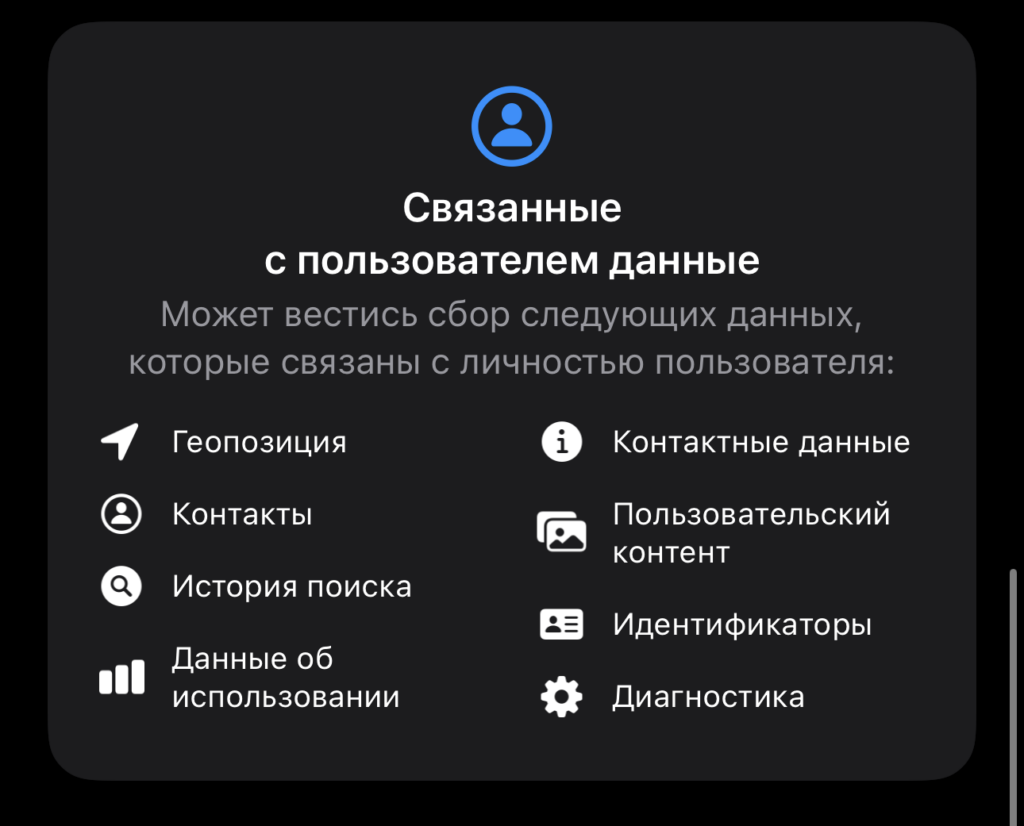
Here’s what data XChat will request
An independent cryptographic audit of XChat has not yet been conducted. Until one exists, all privacy guarantees are based solely on X’s word.
There’s another nuance as well. Musk positions XChat as a private messenger, but the privacy card in the App Store indicates that the app requests access to a large volume of user data, including geolocation. In addition to geolocation, the list includes contact information, search history, and device identifiers, which contradicts the marketing claims of “zero tracking.”
Unlike Signal, where encryption keys are stored on the device, XChat uses its own Juicebox protocol: private keys are encrypted and stored on X’s servers, and are recovered using a PIN code. This is convenient — you can transfer chats to a new phone simply by entering a PIN. But the keys are technically located on the company’s servers, and under pressure from government agencies or in the event of a breach, they could theoretically be recovered.
Why the XChat Messenger Exists
The launch of XChat is part of Musk’s large-scale strategy to turn X into a “super app” that combines multiple services on a single platform. The company has already announced plans to launch financial services, including peer-to-peer transfers, which would put XChat in competition not only with messengers like WhatsApp, Signal, and Telegram, but also with payment platforms.
XChat is an attempt to create a Western equivalent of WeChat, the Chinese app where you can message, pay for purchases, and order a taxi. The idea is simple: you see a post on X, immediately discuss it in an encrypted chat, and then make a payment — all without switching between apps.
However, messengers are one of the few product categories where the network effect decides almost everything: if the app doesn’t have the people you want to talk to, no interface can fix that. X’s advantage is its existing base of hundreds of millions of users, which gives XChat a much stronger start than any messenger built from scratch.
How XChat Differs from WhatsApp and Telegram

XChat, WhatsApp, and Telegram — three messengers with different approaches to privacy
For iPhone owners, the arrival of XChat means yet another messenger in an already overcrowded space. Here’s what sets it apart from the main competitors:
- No phone number required — an X account is enough, which is useful for those who don’t want to share their number
- Built-in Grok AI — neither WhatsApp nor Telegram offer a full-fledged AI assistant directly in chat
- Telegram encrypts only “secret chats” by default, while XChat claims to encrypt all conversations
- The main limitation — a mandatory X account is required, which could slow adoption
XChat’s success will depend on converting existing X users and on whether it can earn trust regarding its privacy claims.
Should You Install XChat on Your iPhone
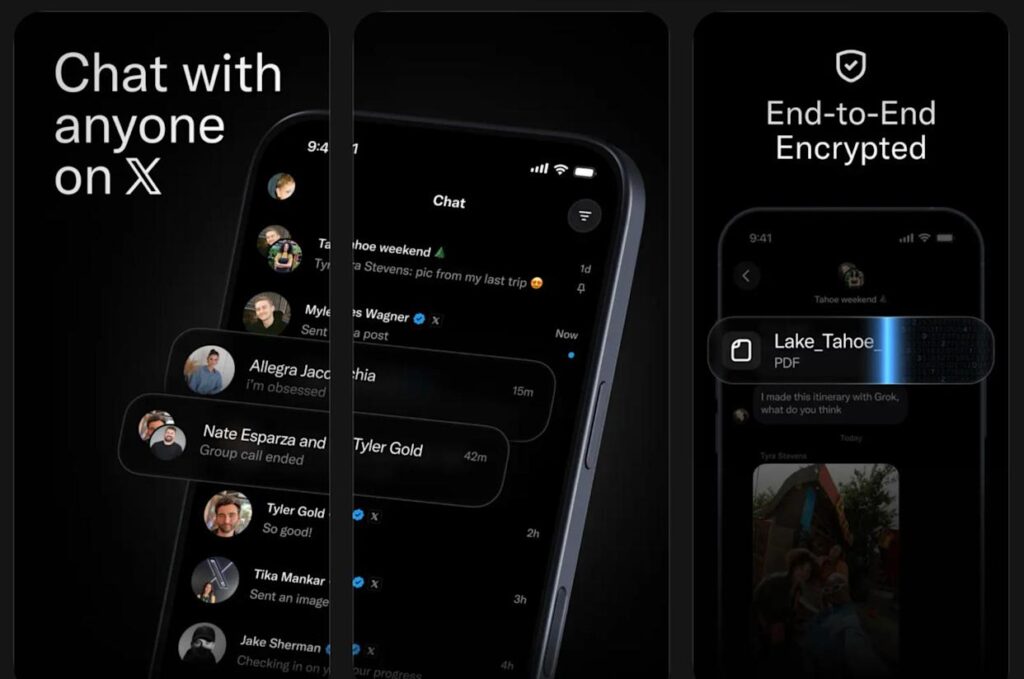
We’re promised encryption and lots of useful features, but we’ll only find out on April 17
XChat is a free app, and there’s nothing stopping you from trying it. But it’s too early to migrate from your current messenger. End-to-end encryption hasn’t undergone independent verification, the privacy card in the App Store contradicts marketing promises, and you need an X account to use it.
XChat may be interesting for those who already actively use X and want to communicate with other platform users in a separate app with AI features. For everyone else, it’s more of a curious experiment for now than a real alternative to iMessage, WhatsApp, or Telegram. We’re waiting for an independent security audit and an Android version before making any final judgments.