There can be many reasons for a stinky sink, but you can get rid of the smell
An unpleasant smell from the sink can ruin your day at any time. Sometimes this problem persists for weeks and months, spoiling the entire atmosphere in your home. And yet few people realize that a stench from the sink means the invisible water barrier between the sewer pipes and your kitchen or bathroom has disappeared. The good news is that in most cases the problem can be solved in a couple of minutes without calling a plumber. The key is not to pour just anything down the drain, as this can make the situation worse.
What Is a Water Trap and Why You Need One
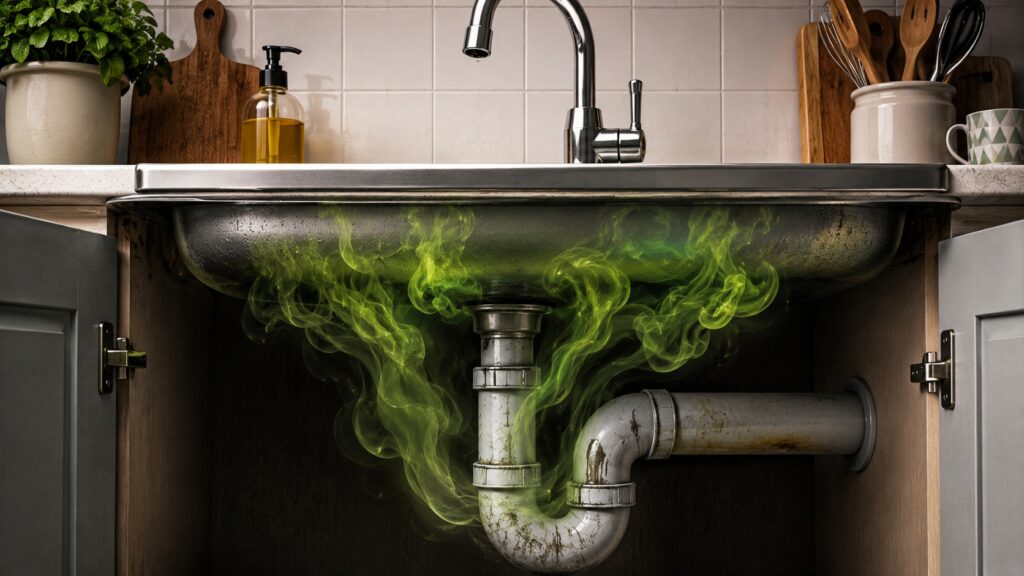
If you look under the sink, you’ll see a curved pipe called a siphon or water trap. A small amount of water constantly remains in this bend, and it’s this water plug that blocks sewer odors from rising up. Smells from below literally hit the water and can’t rise any higher.
As long as there’s water in the bend, the apartment stays clean and odor-free. But once this plug disappears, the pipe turns into an open passage for sewer gases. That’s why, when your sink suddenly starts smelling bad, the first thing to check is the siphon.
Why Sink Odor Appears After Being Away From Home for a Long Time
This is the most common and also the most harmless cause. If you’ve been away on vacation for a couple of weeks, no one uses the water, and the water in the siphon gradually evaporates. The water plug dries out, the protection disappears, and gases freely rise into the apartment. That’s exactly why we sometimes come home to an unpleasant surprise right at the doorstep.
To get rid of the sink smell, simply run water down the drain so the bend fills up again. If the apartment stands empty for long periods, it makes sense to install a dry water trap — it seals the pipe without water and doesn’t depend on evaporation.
How a Clogged Pipe Causes Bad Odor
The second common cause is sink clogs. Over time, grease, food residue, and other grime settle on the pipe walls, and this buildup starts to rot and smell. Unlike a dried-out siphon, the water is still there, but the layer of deposits inside the pipe is what stinks.
A regular plunger can handle a minor clog — it mechanically pushes the blockage through. If the buildup is serious, chemical drain cleaners like “Krot” or Domestos can be used strictly according to instructions. For a truly dense clog that nothing can break through, it’s better to call professionals for hydrodynamic pipe flushing, where the pipes are cleaned with high-pressure water.
The Dangers of Leaks and Damaged Pipes
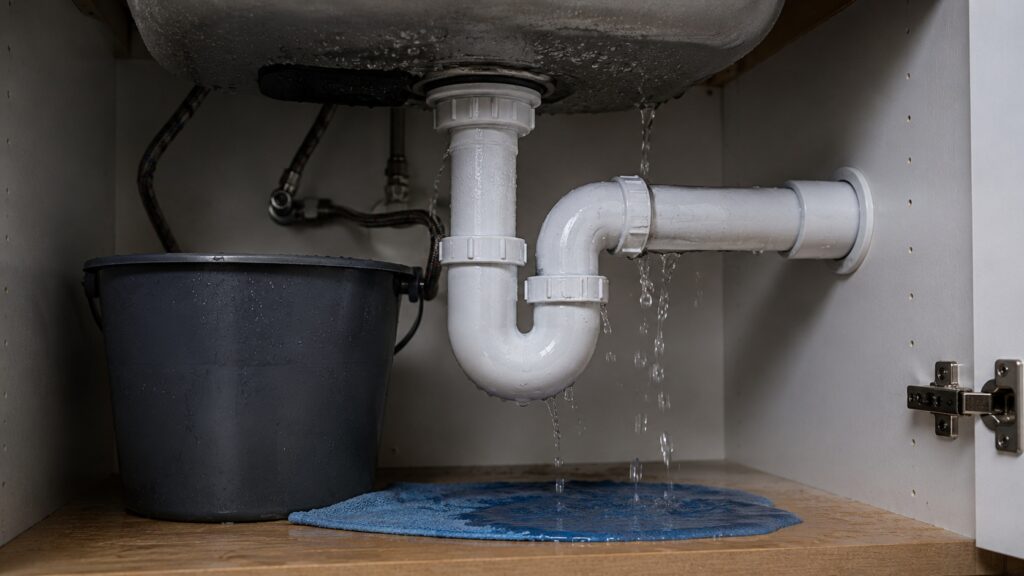
The third scenario is more complex and unpleasant. Cracks in pipes also become a source of odor because gases escape not through the drain but directly through a gap at a joint or a damaged section. In this case, a baking soda rinse won’t cut it.
Start by inspecting the pipes under the sink — sometimes it’s enough to replace a dried-out gasket or tighten a connection. If the pipe section itself is damaged, replacement is unavoidable, and it’s wiser to trust a plumber. Leaks should never be ignored, because besides the smell, they can lead to dampness, mold, and problems with downstairs neighbors.
In case of plumbing problems, it’s better to call a specialist
How to Remove Sink Odor Using Home Remedies
If the cause is buildup and a minor clog, simple household remedies can help. For example, baking soda, vinegar, and boiling water dissolve grease well and remove odor without harming the pipes. This method also works for prevention about once a week.
Here’s how to do it step by step:
- Pour 3–4 tablespoons of baking soda into the drain;
- Add 100 ml of vinegar (9%);
- Cover the opening with a plug for 30–60 minutes;
- Then slowly pour in 1–2 liters of boiling water.
There are also other ways to get rid of sink stench:
- Boiling water with salt. Dissolve 2–3 tablespoons of salt in a liter of boiling water, pour it down the drain, wait 10–15 minutes, then flush with hot water. Salt absorbs odors and disinfects;
- Citric acid. Dissolve 2–3 tablespoons in 500 ml of hot water, pour it in for 30–40 minutes, then flush with boiling water. It effectively removes buildup from pipe walls;
- Siphon tablets. Ready-made products that remove grease and odor and work for up to several weeks, making them convenient for prevention.
What You Should Never Pour Down the Drain to Avoid Odor
The urge to pour something stronger down the drain is understandable, but some products do more harm than good. Remember a couple of rules:
- Don’t pour bleach in large quantities down the drain — it won’t eliminate the cause of the smell but can damage pipes and harm your health.
- Don’t use undiluted vinegar essence (70%) — it’s too aggressive, especially for plastic pipes.
In short, a smell from the sink drain is a symptom, not the problem itself. By pouring everything you can find down there, you risk destroying the pipes without removing the source.
How to Prevent Sewer Odor in Your Apartment
The best remedy for sink stench is preventing it in the first place. A few simple habits significantly reduce the risk.
- Periodically clean the drain and pipes — for example, with baking soda and vinegar once a week;
- Don’t pour grease and food scraps down the drain — they’re what form the smelly buildup;
- Make sure all siphons have water in them, especially after returning from a trip;
- Occasionally inspect ventilation ducts and clean them if necessary.
If you’ve checked the siphon, cleaned the pipes, inspected the connections, and the smell still persists, it’s time to call a plumber for a full diagnostic. In most cases, however, it’s enough to understand how the water trap works and refill the pipe bend with water in time — and the sewer stench in your apartment will disappear on its own.