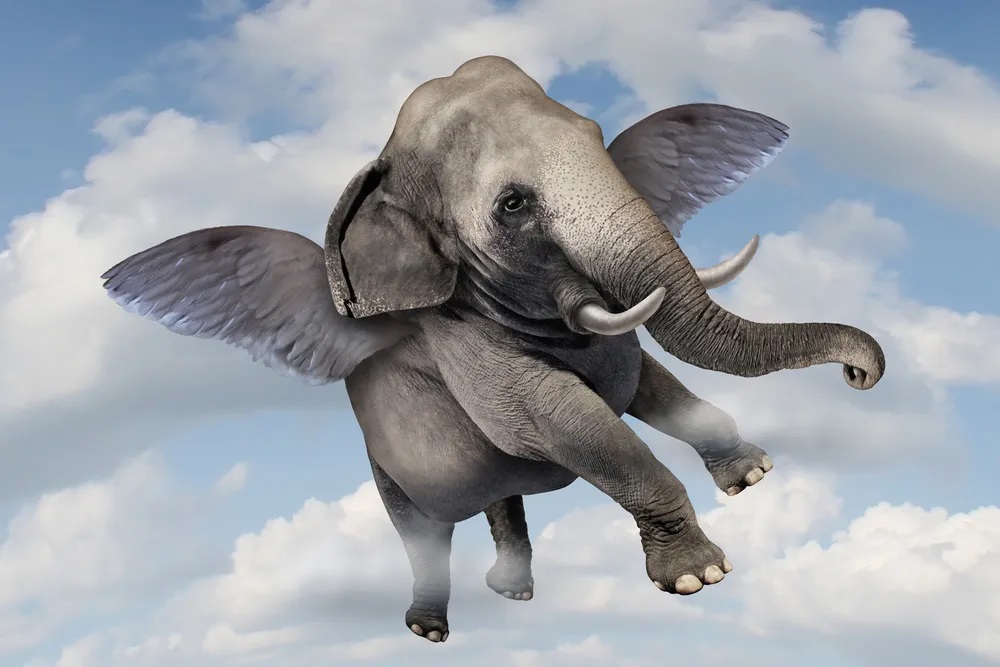
Why nature never created elephant-sized birds
Birds are living dinosaurs, and that’s not a metaphor. They’re part of the same family tree as the Tyrannosaurus rex. But if their ancestors were giants, why has no flying bird ever grown to the size of an elephant? The answer lies in the fact that physics, evolution, and chance created a world in which the largest flyer is the albatross with a wingspan of 3.5 meters.
Why birds are considered descendants of dinosaurs
People are used to thinking of dinosaurs as giant reptiles. Stegosaurs, brontosaurs, tyrannosaurs — they all shaped the stereotype of monsters from the distant past. But alongside these giants lived many small bipedal dinosaurs — theropods. Many of them had feathers and wings, and it was from this group that modern birds descended.
The first to notice the connection was Thomas Henry Huxley, a student of Darwin, back in the 1860s. He noted the similarity between the skeletons of certain European dinosaurs and modern birds — long before the discovery of DNA. Darwin even added this idea to later editions of “On the Origin of Species.” But then it fell into the background: new discoveries of stegosaurs and brontosaurs in North America cemented the image of the dinosaur as a giant.
The scientific consensus was finally established only in recent decades, after fossils of dinosaurs with clearly preserved feathers were found in China in the 1990s. Today, paleontologists don’t argue about whether birds descended from dinosaurs. They argue about the details: which dinosaurs were the closest relatives of birds and how they began to fly.
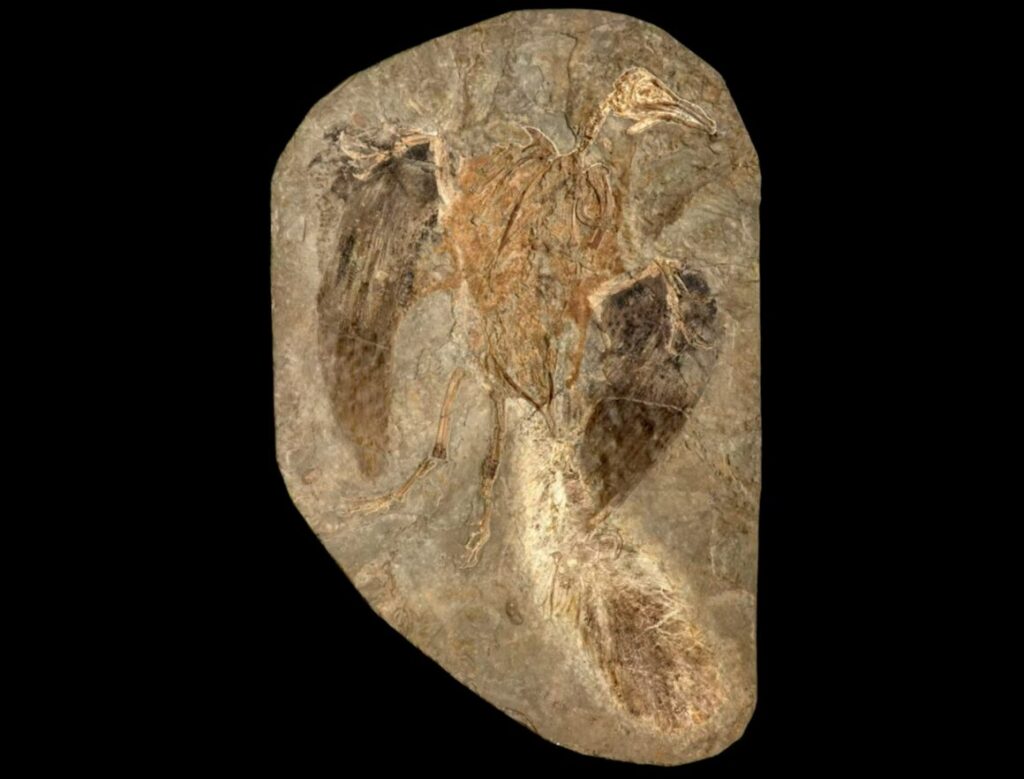
A primitive bird from China named Confuciusornis, known from hundreds of fossils.
Bird feathers did not evolve for flight
One of the most paradoxical facts in bird evolution: feathers appeared long before any creature took to the air. Many dinosaurs had simple feathers resembling hairs. They don’t preserve well in fossils because they decompose quickly, but in places where animals were buried by volcanic ash — for example, in Liaoning Province in northeastern China — paleontologists find them in abundance.
The best hypothesis states that the first feathers served as thermal insulation — much like fur in mammals. Later, in some dinosaurs, feathers transformed into wings. But the first wings belonged to creatures ranging in size from a sheep to a horse, and the wings themselves were no bigger than a laptop screen. According to the laws of physics, such wings could not have kept a body of that size airborne.
This means wings also did not initially appear for flight. Many early feathers had bright colors and patterns, so the leading idea is this: wings were first used for display — attracting mates and intimidating rivals. This still works today: think of a peacock’s tail. Over time, wings grew larger and more elaborate, and at some point physics took over — aerodynamic forces began to work on their own.
Why body size reduction helped birds fly
Some dinosaurs, such as tyrannosaurs, kept getting larger. But the lineage that led to birds moved in the opposite direction for tens of millions of years — toward smaller size. The exact reasons are unknown, but small size offers many ecological advantages: it’s easier to hide, faster to grow, and simpler to occupy a niche unavailable to giants.
Two processes were happening simultaneously: the body was shrinking and the wings were growing. At some point, the ratio reached a level where the wing was large enough to keep a sufficiently small body airborne. After that, natural selection kicked in and began refining the design. According to paleontologist Steve Brusatte from the University of Edinburgh, the first true flyer was most likely a raptor dinosaur the size of a crow or a small dog, not an albatross.
Why enormous birds cannot fly
And now we come to the main question: why are there no flying birds the size of an elephant? The answer lies in physics. An animal that needs to flap its wings cannot be too large. Today, the largest flapping flyer is the wandering albatross with a wingspan of about 3.5 meters.
In the past, even larger birds existed. Pelagornithids — giant seabirds that went extinct shortly before the Ice Age — had a wingspan of about 6–7 meters, twice that of an albatross. But they apparently mostly soared, using rising air currents rather than flapping their wings. Their bones were hollow and very light, so these birds could grow much larger than modern ones without gaining too much mass.
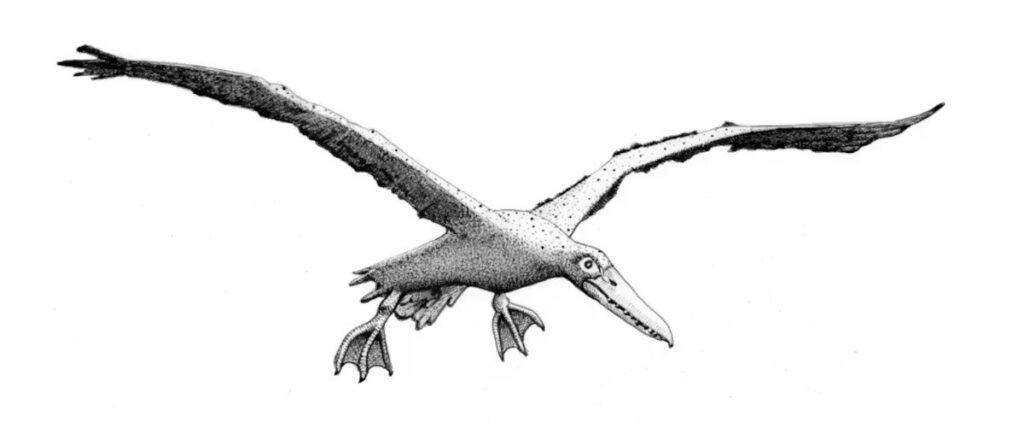
Pelagornithids had a wingspan twice that of the modern wandering albatross.
But you can’t increase size indefinitely. Beyond roughly 5–6 meters of wingspan, problems begin: the aerodynamics of soaring become increasingly complex, it becomes harder for the bird to stay aloft and control its flight, as muscles can no longer generate enough energy.
An elephant weighs 4–6 tons — lifting such mass would require wings of utterly unimaginable size and muscles that biology simply cannot produce. That’s why truly enormous birds (those weighing hundreds of kilograms) took a different path: they gave up flight.
The largest flightless birds in history
After the asteroid impact 66 million years ago that wiped out all non-avian dinosaurs, birds filled the vacated ecological niches. Some of them essentially became the new tyrannosaurs and triceratops — the top predators and primary herbivores of entire ecosystems.
In South America, phorusrhacids, also known as “terror birds” (Phorusrhacidae), rose to the top of the food chain. They grew taller than a human, and their heads were the size of a horse’s, with a powerful hooked beak. These flightless predators dominated the continent for tens of millions of years — as long as South America remained an island, isolated from predatory mammals.
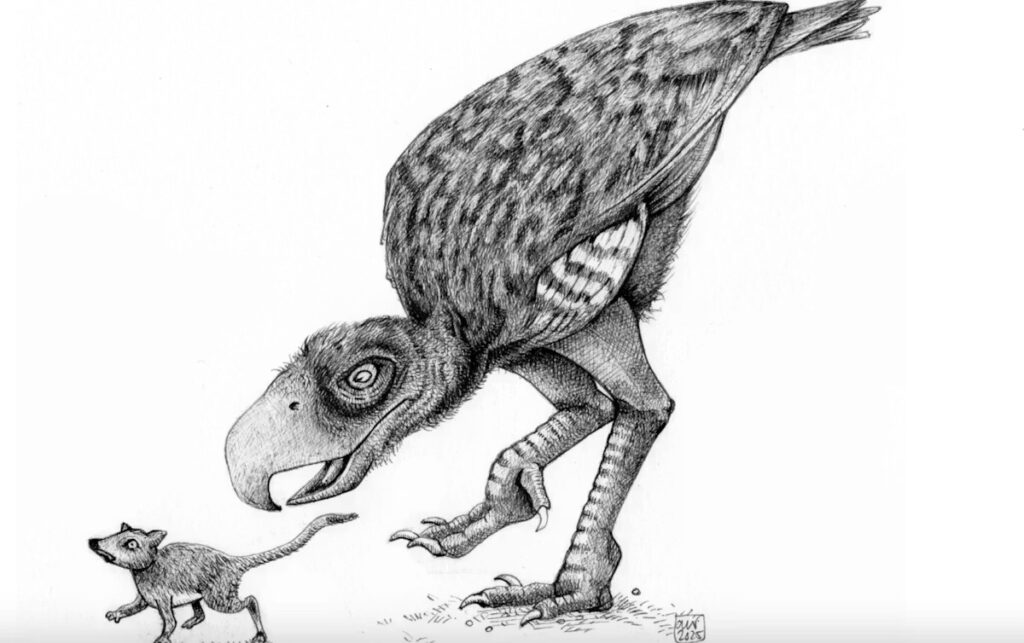
Phorusrhacid (Phorusrhacidae) — once the largest predator in South America. They were taller than a human, with a horse-sized head and a massive hooked beak.
In Australia lived dromornithids — the so-called “demon ducks” (Dromornithidae). Despite being related to ducks and geese, the largest species, Dromornis stirtoni, reached three meters in height and weighed over 500 kilograms. On Madagascar lived elephant birds (Aepyornithidae) — possibly the heaviest birds in history, laying eggs the size of watermelons. In New Zealand lived moa, reaching up to 3.7 meters in height.
All these birds made the same “deal” with evolution: they gave up the ability to fly in exchange for the opportunity to become truly large. But even they never reached the size of an elephant — limitations of the skeleton, metabolism, and ecology wouldn’t allow it.
Why birds survived the dinosaur extinction
About 66 million years ago, an asteroid roughly 10 kilometers in diameter struck Earth. The consequences were catastrophic: earthquakes, tsunamis, wildfires, and then a dust winter lasting several years. All land animals larger than a husky perished.
Only those survived that possessed the right set of traits: small size, a beak instead of teeth, developed wings, large pectoral muscles, and the ability to quickly reach adult size.