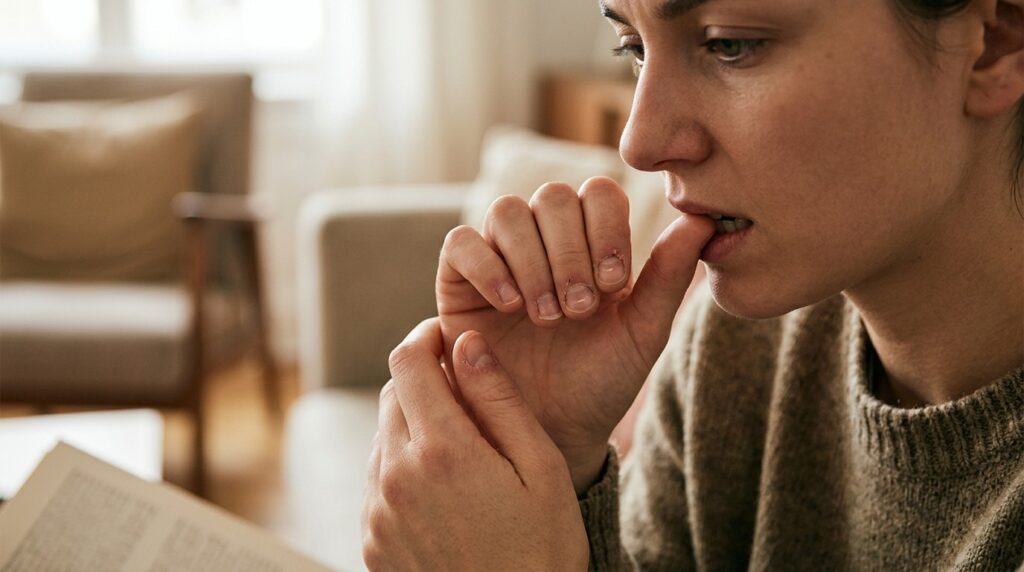
The habit of biting nails is an even bigger problem than we think
Approximately one in four adults bites their nails, and it’s not about bad manners. Behind this habit often lie stress, anxiety, and boredom. Essentially, by biting our nails, we calm ourselves down or keep ourselves entertained. Some people even bite their toenails! And the consequences of nail biting vary widely, from finger inflammation to chipped teeth.
Why People Bite Their Nails
When we bite our nails, the nails aren’t to blame. They simply happen to be the nearest target when the brain is looking for a quick way to relieve tension. According to Cleveland Clinic, chronic nail biting occurs in 20–30% of people and belongs to so-called body-focused repetitive behaviors. This category also includes lip biting, hair pulling, and skin picking.
The most common culprits behind nail biting are stress, anxiety, boredom, intense concentration, waiting, and even just an uneven nail edge. Sometimes a person notices a hangnail, decides to “even it out” with their teeth, feels brief relief, and the brain records this as a working way to deal with discomfort. Next time, the hands reach for the mouth automatically, and we don’t even notice it.
It’s important to understand that this is not a matter of weak willpower. If it were enough to simply decide to stop, the nail-biting habit wouldn’t persist in millions of people for years. The mechanism is closer to an automatism, like scratching or tapping your foot. Sometimes the habit intensifies when a person binge-watches TV shows or endlessly scrolls through their feed. In those moments, our hands are free and attention is scattered — ideal conditions for nail biting.
Why Nail Biting Is Dangerous
The first and most common consequence of the nail-biting habit is inflammation of the skin around the nail. When teeth damage the cuticle and skin, bacteria enter through microscopic wounds. Paronychia develops — the finger turns red, swells, becomes hot and painful. In serious cases, pus appears, and then antibiotics or even drainage become necessary.
The second consequence is dirt and germs under the nails. The Centers for Disease Control and Prevention (CDC) remind us that bacteria and dirt accumulate under the nails, especially if nails aren’t trimmed short. Biting your nails means literally putting into your mouth everything your hands have collected throughout the day: from door handles, handrails, keyboards, and phones. The body usually tries to wash all this away during handwashing, but nail biting bypasses this defense.
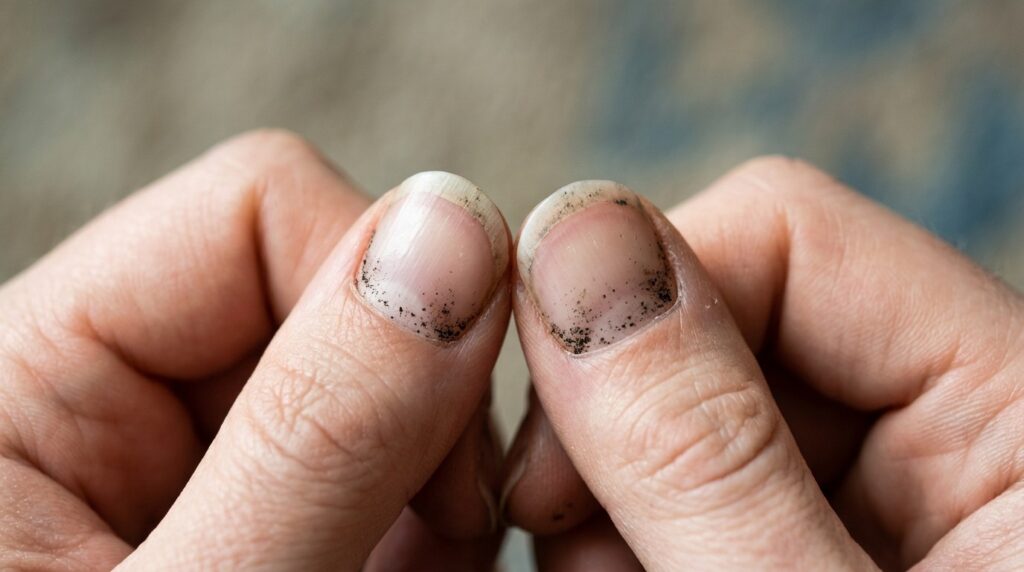
Dirt and bacteria accumulate under the nails, which go straight into the mouth when biting
People with diabetes, weakened immune systems, poor circulation, and those who already bite their nails until they bleed are especially at risk. For them, even a small wound can lead to a serious infection.
How Nail Biting Damages Teeth
Teeth also suffer, by the way. The American Dental Association warns that nail biting can chip tooth enamel and put stress on the jaw joint. When the lower jaw regularly moves forward into an unnatural position, it eventually leads to temporomandibular joint dysfunction. This, in turn, causes clicking, pain, and limited mobility.
How to Stop Biting Your Nails
The advice to simply stop biting your nails works about as well as the advice to “just don’t be nervous.” A real approach requires four steps: find the trigger, remove easy access to the nails, replace the action, and reinforce the result.
Step one — observation. For three to five days, write down exactly when your hand reaches for your mouth. Usually this happens at the computer, on the phone, during calls, before bed, or when a nail gets caught. Without this, you’re fighting blind.
Step two — remove the temptation. Trim your nails short, file uneven edges, carefully cut hangnails with a clean tool. Carry a small nail file or clippers with you. If the nail edge is smooth, the urge to even it out with your teeth won’t kick in.
Step three — barriers. Bitter anti-nail-biting polish is a basic but effective thing. Band-aids on fingers, clear nail coating, or gloves at home also help.
Step four — action replacement. Instead of just enduring, give your hands an alternative. A stress ball, ring, hand gripper, pen, or spinner work well. The point is not to suppress the urge but to redirect it.
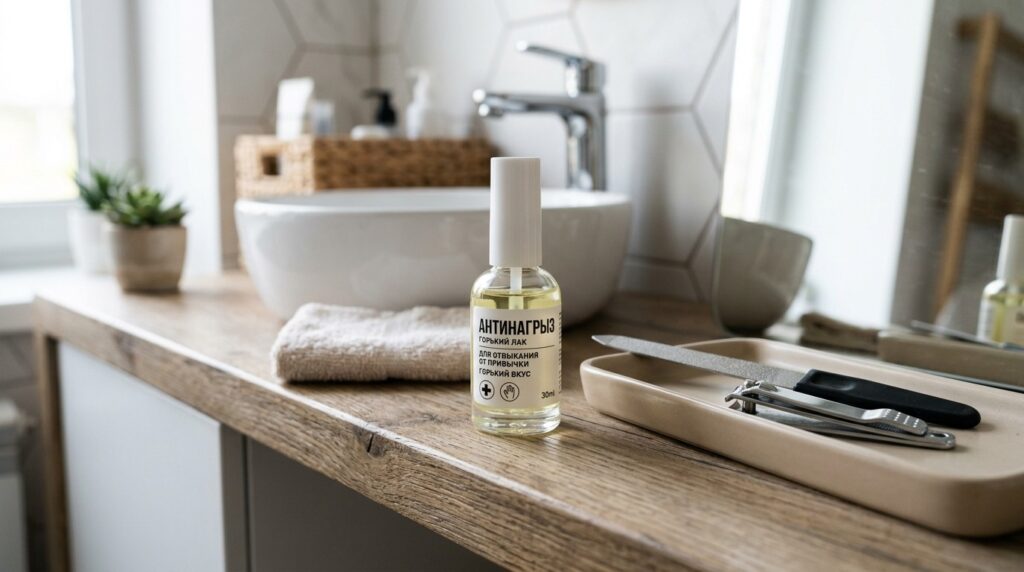
Bitter polish is a simple barrier that helps break the automatic habit
The most effective method, confirmed by research, is called habit reversal training. If you notice the urge, you need to stop your hand and perform an incompatible movement — clench your fist, place your palms on the table, pick up any object. In a clinical study with children and adolescents, this method showed very good results.
Don’t try to quit all at once — start with one finger or one hand. Gradually expand the restriction. It’s less heroic but works better than yet another “starting Monday — new life.” Breaking other habits works in roughly the same way — gradually and through replacement, not through willpower.
What to Do If a Child Bites Their Nails
Children bite their nails even more often than adults, and scolding them for it is considered the worst strategy. Shame doesn’t eliminate the habit — it drives it deeper. The child starts biting secretly and worries even more.
The approach is the same as for adults, but gentler. Help the child notice when they’re biting. Most often it’s boredom, anxiety before school, watching cartoons, or doing homework. Offer a hand replacement: a soft ball, a stretchy toy, a ring. Bitter polish also works, but it’s better if the child agrees to it themselves — otherwise it will be perceived as punishment.
If the habit is severe, nails are bitten until they bleed, the child is embarrassed about their hands, or they can’t stop, this is a reason to see a child psychologist.
When to See a Doctor About Nail Biting
You should see a dermatologist if your finger is swollen, red, hot, if pus has appeared, if the nail has changed color or shape, if pain is increasing, or if inflammation doesn’t go away for several days.
You should see a psychotherapist if you can’t stop for months, are ashamed to show your hands, bite until you feel pain and bleed, avoid people because of how your nails look, or the habit sharply intensifies during periods of anxiety.
If you only bite your nails occasionally, it’s not a catastrophe. But biting nails constantly is a real medical problem with concrete consequences. The good news is that you can break this habit without great effort — through short nails, barriers, action replacement, and working with triggers.