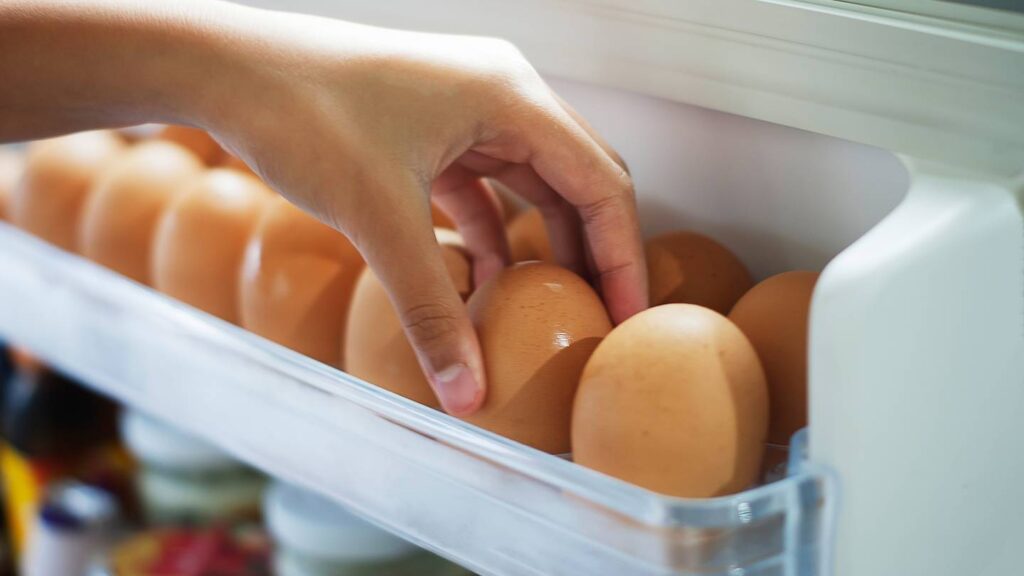
The US and Europe fight salmonella differently, and this affects how eggs are stored
Americans are surely surprised that in European and Russian stores, eggs sit on shelves rather than in the refrigerator. That’s because in American supermarkets, chicken eggs are stored exclusively in cold conditions. This isn’t just a habit — it reflects different approaches to fighting salmonella, a bacterium that causes food poisoning.
Why Are Eggs Washed Before Sale in the US
First, it’s worth noting that in the US, chicken eggs are required to be washed before sale. The government mandates that every egg be treated with warm water and then a mild disinfecting solution. Often this is food-grade chlorine.
This is done to combat the bacterium Salmonella enteritidis, which can cause food poisoning. Contamination can happen in different ways. Sometimes salmonella gets inside the egg during its formation if the hen itself is infected. But just as often, the egg picks up the bacterium on the outside when it exits the bird or comes into contact with dirt and droppings in the henhouse.
In the US, the thinking is that if the egg is washed, the dirt and bacteria are removed from the shell. But this is exactly where the main complication of this whole story lies.
What Is the Protective Film on an Eggshell
A fresh egg has a thin natural layer on its shell called the cuticle or bloom. This film naturally protects the egg from bacterial penetration while remaining thin and porous enough to allow oxygen to pass through the shell to the developing chick.
Simply put, nature equipped the egg with a protective “varnish.” As long as the cuticle is intact, the egg defends itself from infection quite well on its own and doesn’t need refrigeration.
And here’s where the trap springs. The mandated egg washing in the US inevitably strips away this protective film as well. On one hand, the egg is sterilized on the outside, which is good. But Americans simultaneously strip it of its natural armor, leaving it open to future contamination — and that’s bad.
Why Washed Eggs Need to Be Stored in the Cold
Since the natural protection is gone, another way to protect eggs from bacteria is needed. And that becomes the cold. The only way to safeguard a washed egg is to keep it cold enough to inhibit salmonella growth.
That’s why in the US, eggs are kept below room temperature at every stage: during packaging, transportation, in store display cases, and at home in the refrigerator.
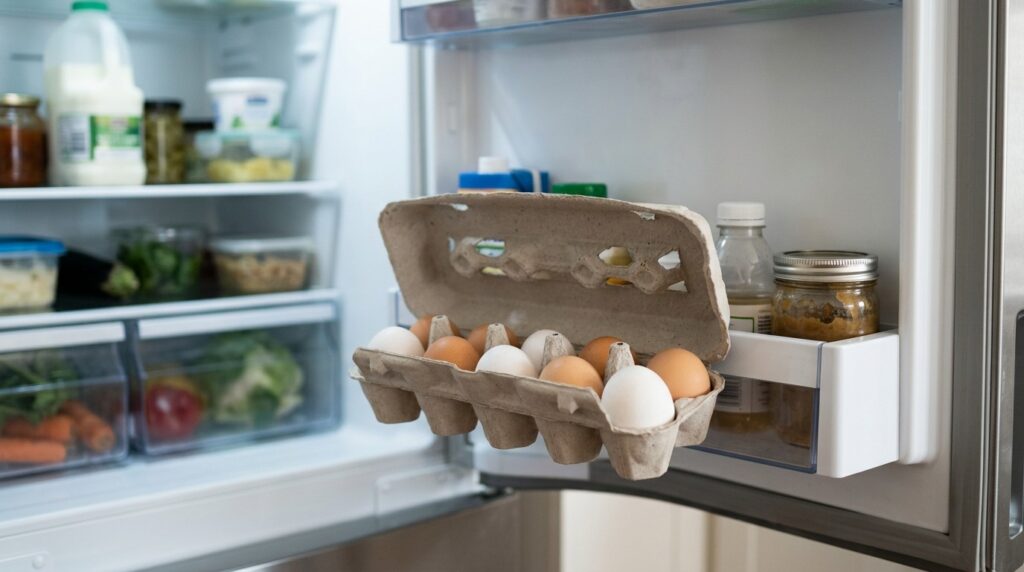
In the US, eggs are kept cold at every stage, from packaging to the home refrigerator
There’s also an important rule for the home. Eggs that have been refrigerated even once should not be left at room temperature for more than two hours. This is because condensation forms on a cold egg placed in warmth, and moisture plus heat create ideal conditions for bacterial growth. That’s why you can’t first keep eggs in the refrigerator and then leave them out on the counter for a long time.
How Europe Protects Eggs from Salmonella
Europeans also try to protect themselves from salmonella, but they take a different approach. Instead of washing chicken eggs, they carefully monitor the health of the hens themselves.
Chickens on farms are regularly tested for salmonella, and strict hygiene and safety requirements are imposed on poultry keeping. The idea is that hens live in clean conditions and eggs simply don’t have a chance to become contaminated after being laid.
If salmonella is still found, those eggs are banned from being sold as regular table eggs. In some countries, they’re allowed to be sent for processing, because the bacterium can easily be destroyed through pasteurization, after which products made from those eggs become completely safe.
Since European eggs aren’t washed, they retain their natural protective film. The cuticle continues to work after the egg is laid, so refrigeration isn’t needed, and eggs can safely sit at room temperature.
Can Chicken Eggs Be Stored at Room Temperature After Washing
The correct way to store eggs depends on whether the egg was washed or not.
- If the egg was washed and sold from a refrigerator, keep it cold and don’t leave it in warmth for long;
- If the egg wasn’t washed and was sold at room temperature with its cuticle intact, it can be stored without refrigeration;
- An egg that has been refrigerated even once is best kept in the cold from that point on.
For Russian shoppers, this is especially useful to know because both options can be found here. Pay attention to how the eggs were displayed in the store. If they were in a refrigerated display case, take them home and store them in the refrigerator as well.
In the end, it turns out that Americans and Europeans arrived at different egg storage rules not because someone is wrong, but because they chose different ways to fight salmonella.