
Which foods help reduce fatigue? You can find them in any store.
When your energy runs out by midday, you feel drained and sleepy, the first thought is to grab a coffee. But the cause of low energy often lies in your diet, not in a lack of caffeine. Experts have explained which foods truly help maintain alertness, and why some meals give you energy for hours while others last only half an hour.
Complex Carbohydrates — The Main Fuel Against Fatigue
It’s simple: when you eat sweets or white bread, your blood glucose level spikes and then drops sharply. Hence the familiar feeling — alertness for 20 minutes, then wanting to lie down again. Complex carbohydrates work differently: they break down slowly and nourish the body evenly, without sugar spikes.
Which foods contain the “right” carbohydrates:
- buckwheat,
- oatmeal,
- quinoa,
- pumpkin, sweet potato, beets,
- whole grain bread.
In addition to slow carbohydrates, these foods are rich in micronutrients that support the nervous system. Essentially, it’s both energy and brain care on one plate.
Why the Body Needs Protein During Chronic Fatigue
It might seem like protein is only for athletes. But during periods of increased fatigue, the need for it rises — it participates in thermoregulation, maintains muscle tone, and strengthens the immune system. If there isn’t enough protein, the body starts coping poorly even with routine tasks.
Good sources of protein:
- eggs,
- fish,
- cottage cheese,
- legumes,
- chicken.
The key is that protein should enter the body regularly, not once a day in a huge portion.
Healthy Fats: An Underestimated Source of Energy
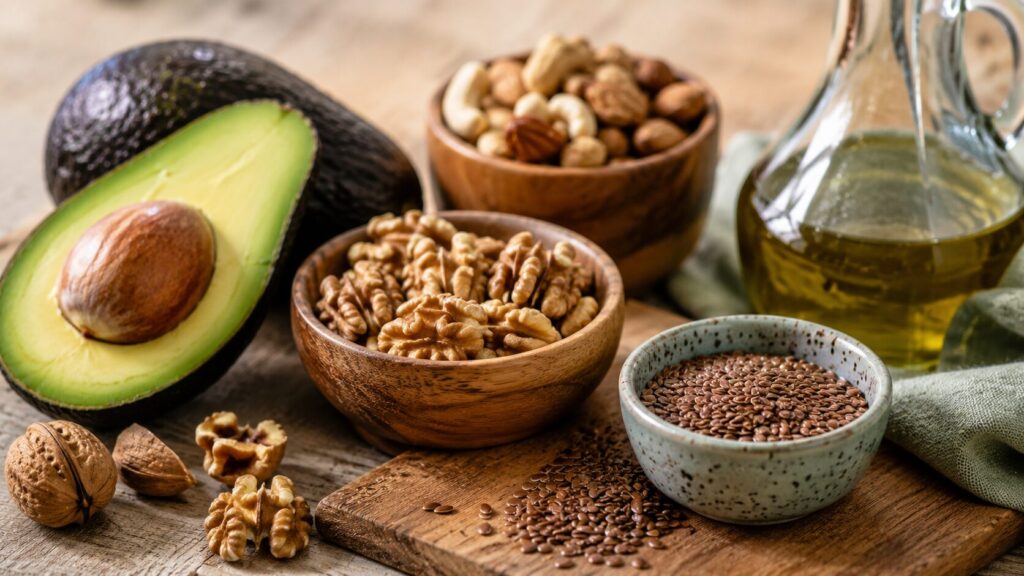
Avocado, nuts, flax seeds — sources of healthy fats that help fight fatigue.
Fats are often unfairly excluded from the diet, even though they help absorb vitamins A, D, E, and K, support hormonal balance, and provide a lasting feeling of fullness. Without them, the body simply cannot properly use the beneficial substances from food.
How to add healthy fats to your diet:
- avocado,
- nuts (walnuts, almonds),
- flax and chia seeds,
- unrefined cold-pressed vegetable oils.
A small handful of nuts or half an avocado per day is enough to notice a difference in how you feel. Fats are not the enemy if you choose the right ones.
Functional Foods and Vitamins Against Fatigue
When fatigue becomes chronic, regular “healthy eating” may not be enough. Experts recommend paying attention to functional foods — these are foods in which the concentration of beneficial substances is significantly higher than in regular counterparts, and without artificial additives.
For example, you can replace regular bread with functional bread — one with a higher content of dietary fiber. Such bread aids digestion, maintains a feeling of fullness longer, and prevents overeating.
If you’re constantly low on energy, pay attention to the following vitamins:
- B vitamins — participate in energy metabolism
- iron — without it, oxygen is delivered to cells less efficiently
- magnesium — supports the nervous system and muscles
- vitamin D — affects overall tone and mood
All of these elements can be obtained from regular food if your diet is varied. But if fatigue persists for weeks — that’s a reason to get blood tests done, not just change the menu.
Water and Herbal Tea: How Dehydration Affects Fatigue and Productivity
Even mild dehydration noticeably reduces concentration and energy levels. Sometimes it’s enough to simply drink a glass of water for the “brain fog” to clear. In addition to plain water, herbal teas with ginger, cinnamon, or rosehip are beneficial — they not only replenish fluids but also contain phytonutrients (biologically active plant substances) that support the immune system.

Herbal tea with ginger and cinnamon — a tasty way to maintain water balance
The main rule here is consistency. Don’t wait until you feel thirsty: by that point, your body has already started losing energy.
Fatigue isn’t always about sleep and stress. Often the body simply isn’t getting the fuel it needs. Complex carbohydrates provide steady energy without sugar spikes, protein supports muscles and the immune system, healthy fats help absorb vitamins, and sufficient water keeps the brain from “slowing down.” None of these require expensive supplements or exotic superfoods — these are all ordinary products that are easy to find in any store.