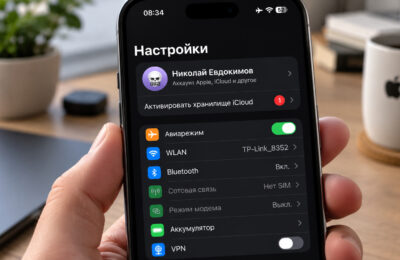
Against the backdrop of ongoing restrictions on Telegram in Russia, which have caused it to work extremely poorly, users are looking for alternative messengers for calls and messaging and categorically refuse to switch to MAX. As a result, the audience of Asian messengers grew by an average of 60% in March 2026, which is hardly surprising. However, Telegram continues to maintain its lead, but is increasingly used only for reading channels — calls and files are sent through other apps.
Three alternatives to Telegram, WhatsApp, and MAX in Russia
BiP: What Is This Messenger and Does It Work in Russia
BiP is a free messenger from Turkish operator Turkcell, which has existed since 2013. Until 2026, it remained a local product for the Middle East, but it has now taken second place in the App Store in the “Social Networking” category, behind only the Max messenger.
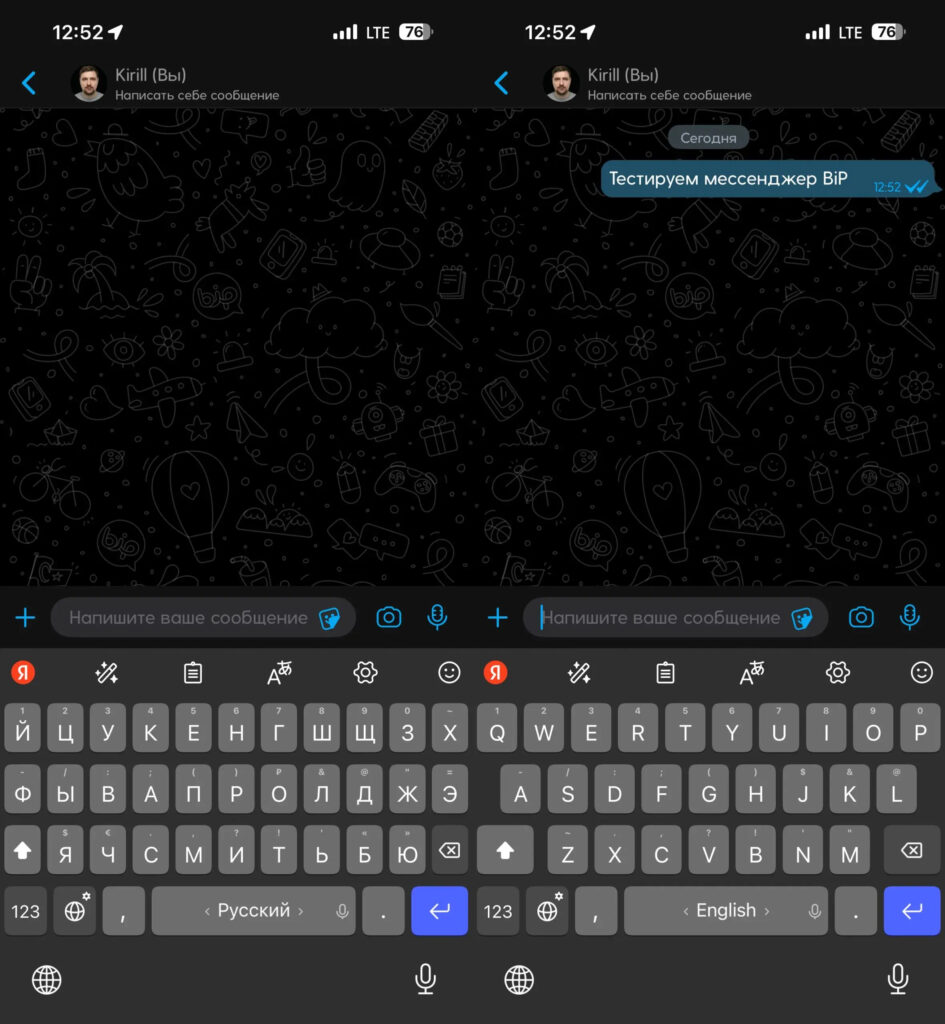
BiP looks most like Telegram, but the fonts in chats give it away
BiP has all the basics: messaging, voice and video calls, group chats, stickers, and file sharing. Registration is by phone number, and Russian numbers are supported.
Pros: end-to-end encryption by default, data is stored on servers in Turkey. BiP is not listed in Russia’s registry of information dissemination organizers (ORI), meaning it is not obligated to store and share user data upon request.
Cons: the app requires full access to contacts — without it, you can’t message anyone. There are no usernames, channel search works poorly, and content navigation leaves much to be desired.
KakaoTalk: How to Register and Is It Worth Using
KakaoTalk has existed since 2010, and in South Korea, more than 90% of smartphone owners use it. For Russians, it’s interesting because the interface is almost fully localized in Russian, it has calls, group chats, channels — and everything works without a VPN.
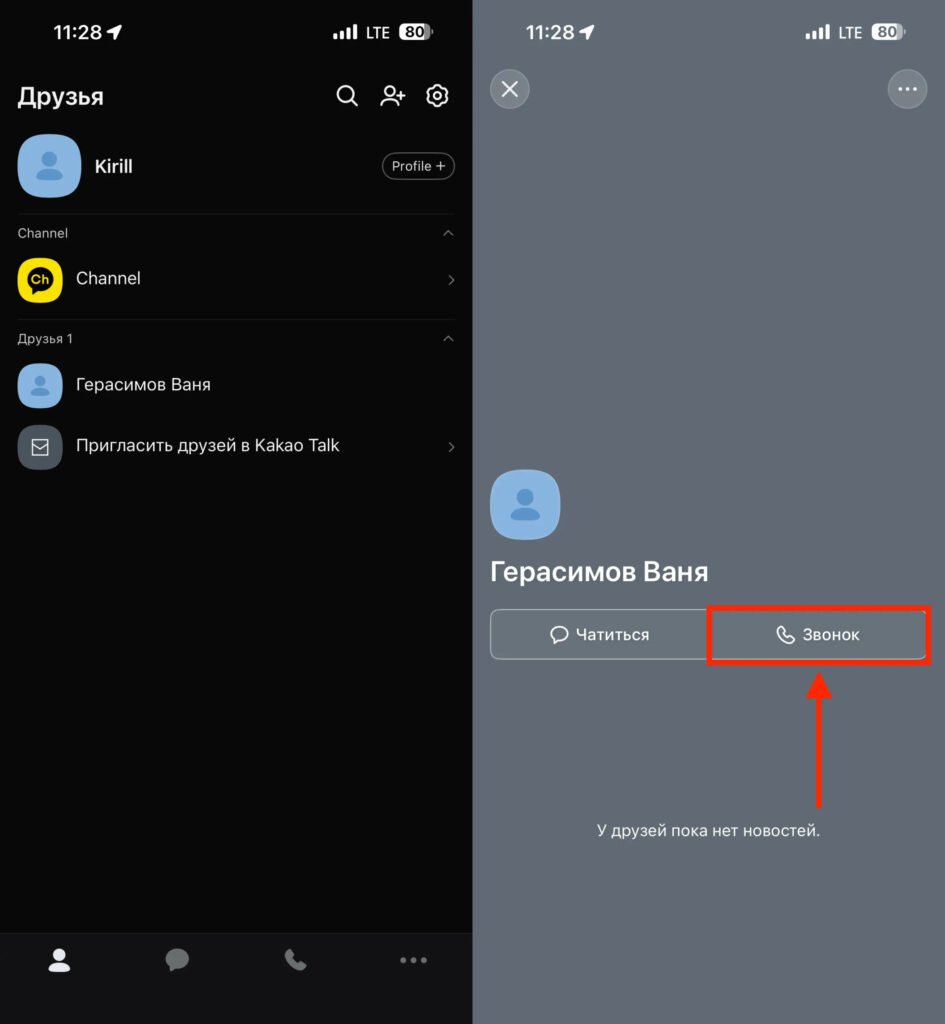
Calls work well in KakaoTalk, but there are very few contacts
The app is available on the App Store, Google Play, and RuStore, with versions for Windows and macOS. However, when registering with a Russian number, there’s a catch: you need to send the confirmation code via SMS yourself to a number in Sweden. This is a paid SMS, and the process sometimes takes up to half an hour.
The main drawback of KakaoTalk for Russians is the small user base. Even with 82% growth, the monthly audience is only 436 thousand. If your contacts haven’t installed the app, there’s nobody to talk to.
WeChat: Can It Be Used in Russia and What Are Its Downsides
WeChat (or Weixin) is Tencent’s flagship messenger, used by over a billion people in China. It’s not just messaging and calls: inside the app there are payments, mini-apps, delivery services, ride-hailing, and the social network “Moments.” Essentially, it’s a full-fledged ecosystem, comparable in functionality to a combination of Telegram, Apple Pay, and a marketplace all in one.
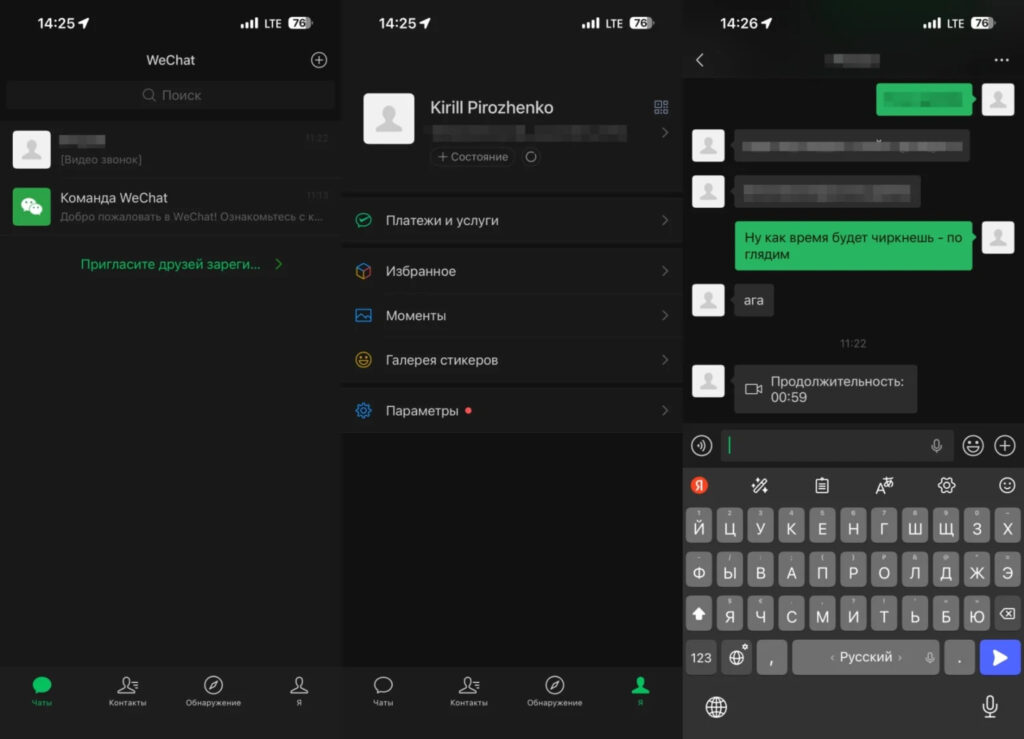
WeChat’s design is an acquired taste after Telegram, WhatsApp, and even MAX
The app is available on the App Store, Google Play, and RuStore, and the interface is translated into Russian. Registration works with a Russian phone number, and a VPN is not required for basic functions — messaging and calls work without restrictions.
The main problem with WeChat for Russians is its tight ties to China. When registering a new account, the app often requires verification by an existing WeChat user with a “clean” account history. Without a Chinese acquaintance, passing verification is nearly impossible, and unverified accounts get blocked within a few days.
The second downside is the lack of end-to-end encryption. Tencent officially confirms that messages are analyzed for compliance with Chinese law, and foreign users’ data may be shared with PRC authorities. For private messaging, WeChat is a poor choice: in terms of privacy, it falls short of even Max, let alone BiP or Telegram.
WeChat Pay’s payment features are unavailable for Russian cards, mini-apps mostly work only within China, and “Moments” is filled with Chinese-language content. As a result, for a Russian user, WeChat turns into an ordinary messenger without ecosystem benefits — and with privacy risks.
Why You Shouldn’t Install Third-Party Telegram Clients on iPhone
The domestic client Telega was positioned as “Telegram without restrictions” — it bypassed blocks thanks to a built-in proxy. The app became the fastest-growing messenger with a 160% audience increase.
However, on April 9, Telega was removed from the App Store. Before that, Cloudflare’s security service flagged the app’s domains as spyware, and independent researchers claimed that Telega’s developers were replacing Telegram’s servers with their own and could intercept users’ messages.
At the same time, Telegram began flagging unofficial clients. Contacts of such users now see a warning about potential security threats. Experts predict that Telega will lose up to 35% of its audience due to these events.
For iPhone owners, the app is no longer available — it cannot be downloaded from the App Store or the developers’ website. It remains on Google Play and RuStore for now.
Which Messenger to Choose in 2026
Despite all the migrations, Telegram remains the largest messenger in Russia — 102 million users, a decline of only 1.5% per quarter. But usage patterns are changing: Telegram is turning into an information hub for reading channels and news, while for everyday calls and file sharing, people increasingly choose backup communication channels due to their stability.

Telegram is increasingly used for reading channels rather than for calls
All the alternative messengers listed above work on iPhone without restrictions and are available in the App Store — except for Telega. But none of them can fully replace Telegram yet: BiP and KakaoTalk have too small a Russian audience, there are virtually no content channels, and WeChat is built around the Chinese ecosystem.