What did Marilyn Monroe read?
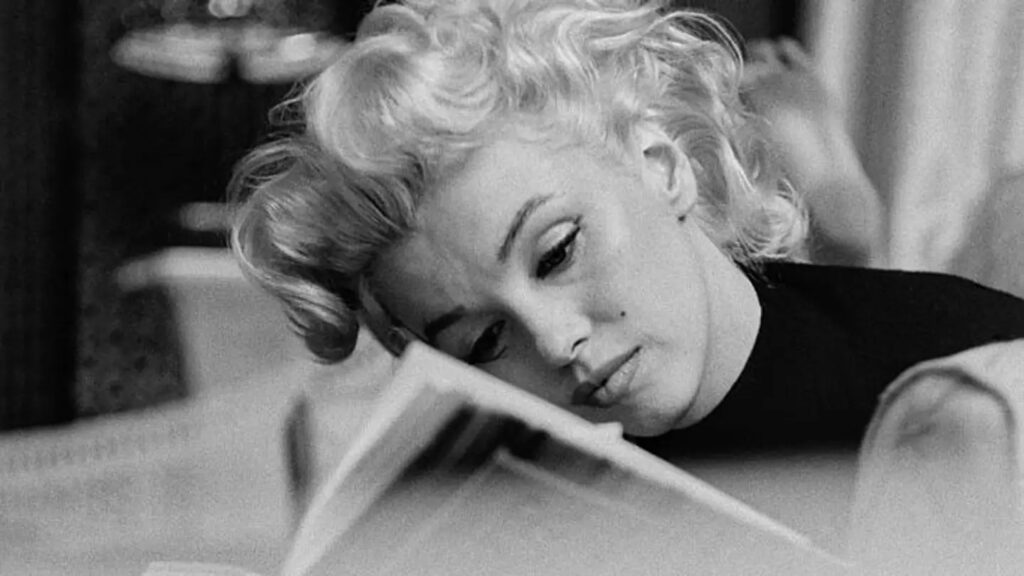
Marilyn Monroe is remembered as a beautiful blonde with a captivating smile, but few people know her other side. The actress was a true bookworm, and today we know how profoundly reading books affects us. She was often spotted with a book in her hands on set, on the road, and at home. By the time of her death, her personal library contained more than 400 volumes: from poetry to Karl Marx’s “Capital” and biographies of Einstein and Oppenheimer. Interviewers almost never asked her about books, so no exact list of her favorites has survived. But some things have been pieced together — from her own words, photographs, and the recollections of those who knew her.
How Marilyn Monroe chose books at the store at random
Once, a director noticed the actress holding “Letters to a Young Poet” by Rainer Maria Rilke and asked why that particular book. Monroe’s answer reveals a lot about her attitude toward reading:
“On those evenings when I have nothing to do, I go to the Pickwick bookstore on Hollywood Boulevard and open books at random,” she said. “When I come across a page or paragraph that I like, I buy that book. That’s how I bought this one yesterday. Is that wrong?“
It turns out she trusted not bestseller lists, but her own instinct. A simple but honest method: if one paragraph hooks you, chances are you’ll enjoy the rest too. By the way, it’s an excellent lifehack for those who have long wanted to get back to reading but don’t know where to start.
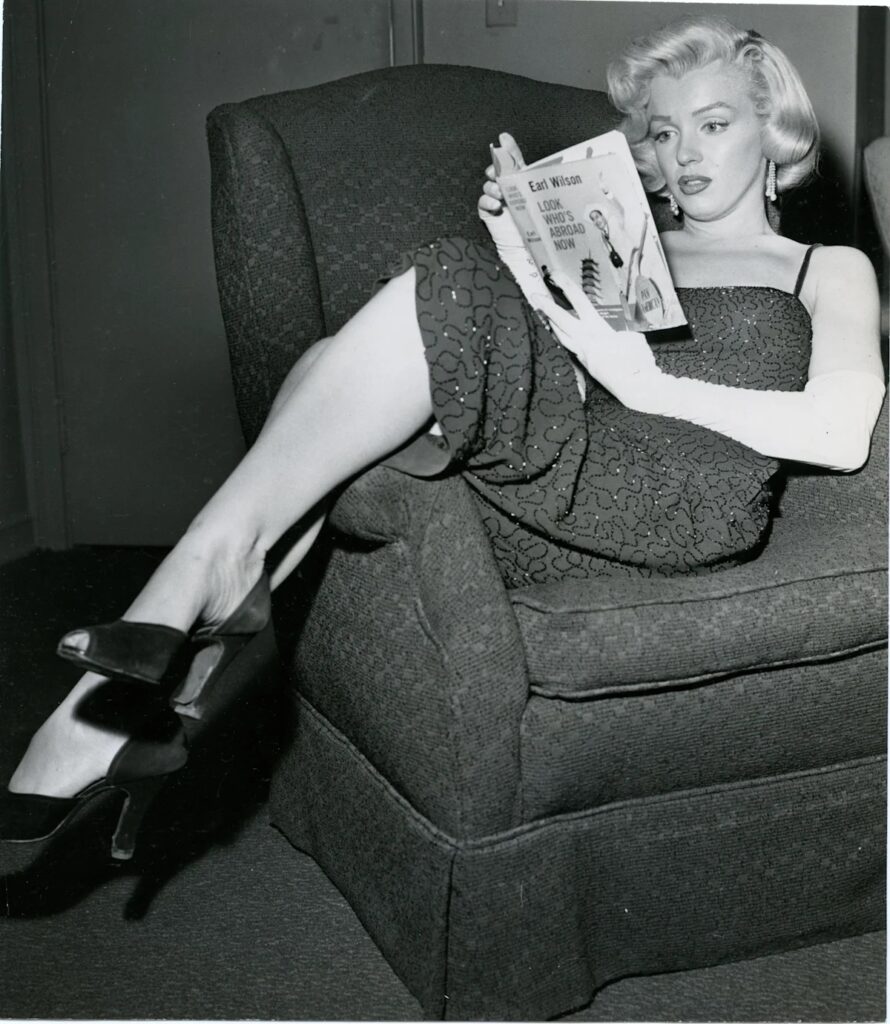
Marilyn Monroe was an avid reader. She was often seen with a book in her hands on set, while traveling, or at home.
“The Prophet” by Kahlil Gibran — the book she gave to friends
The book most strongly associated with Monroe is “The Prophet” by Lebanese-American poet Kahlil Gibran. The actress owned four copies, read it on film sets, and sometimes gave it as a gift to friends.
During the filming of “Gentlemen Prefer Blondes,” Monroe read aloud to her co-star Jane Russell a passage about marriage: “…and stand together yet not too near together: For the pillars of the temple stand apart, And the oak tree and the cypress grow not in each other’s shadow.”
Then she mused aloud. At the time, she was married to baseball player Joe DiMaggio and asked: is it true that in love one must maintain distance? Should a woman, having fallen in love with a man, give up her own individuality? This question was clearly anything but abstract for her.
Monroe called the book itself “inspirational” and said it was “a kind of model for everyday life.” “The Prophet” was published in 1923 and is a collection of poetic reflections on life’s biggest questions that remains one of the most popular spiritual texts of the 20th century to this day.
“Ulysses” by James Joyce and the famous beach photograph
In 1955, photographer Eve Arnold took a picture that went on to travel the world: Monroe reading “Ulysses” by James Joyce — one of the most complex novels in literary history. They were shooting on a beach; the actress pulled out the book herself and read passages aloud during the session.
Many later assumed the shot was staged — surely a beauty like her couldn’t actually be reading such a convoluted book. But the photographer insisted: Monroe carried “Ulysses” with her in her car and had been reading it for “a long time.” She even admitted the text was difficult for her, so she read it not in order but in fragments — which, incidentally, is what many literary scholars do as well. With such books, it becomes especially apparent how reading trains the imagination: the brain doesn’t receive a ready-made picture but assembles meaning on its own.
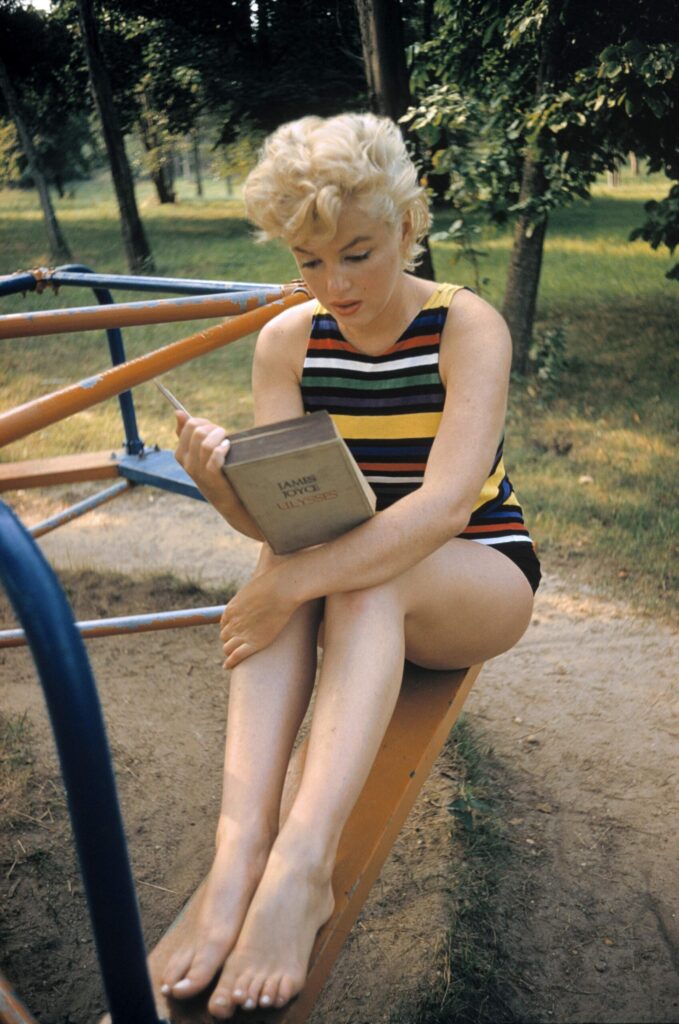
Eve Arnold, Marilyn Monroe reading “Ulysses,” 1955. Many considered the famous shot to be staged.
Defending Arnold, researcher of her work Brigitte Lardinois noted: if it had been staged, Monroe would have been seated in a prim dress on an antique chair. Instead — a beach, simple clothes, and genuine interest. Many fans still consider “Ulysses” the actress’s favorite book, though no one knows for certain.
The novel itself was published in 1922 and is considered one of the peaks of modernism. It is a retelling of Homer’s “Odyssey,” with the action compressed into a single day — June 16, 1904, in Dublin. What exactly the book is about, critics have been debating for over a century.
Walt Whitman and “Leaves of Grass” — poetry for relaxation
Monroe loved poetry and wrote poems herself. According to one account, her favorite poet was Walt Whitman, with his collection “Leaves of Grass.” A biographer recalled that she often read Whitman to relax: the rhythm of his long, free-flowing lines was simultaneously calming and stirring.
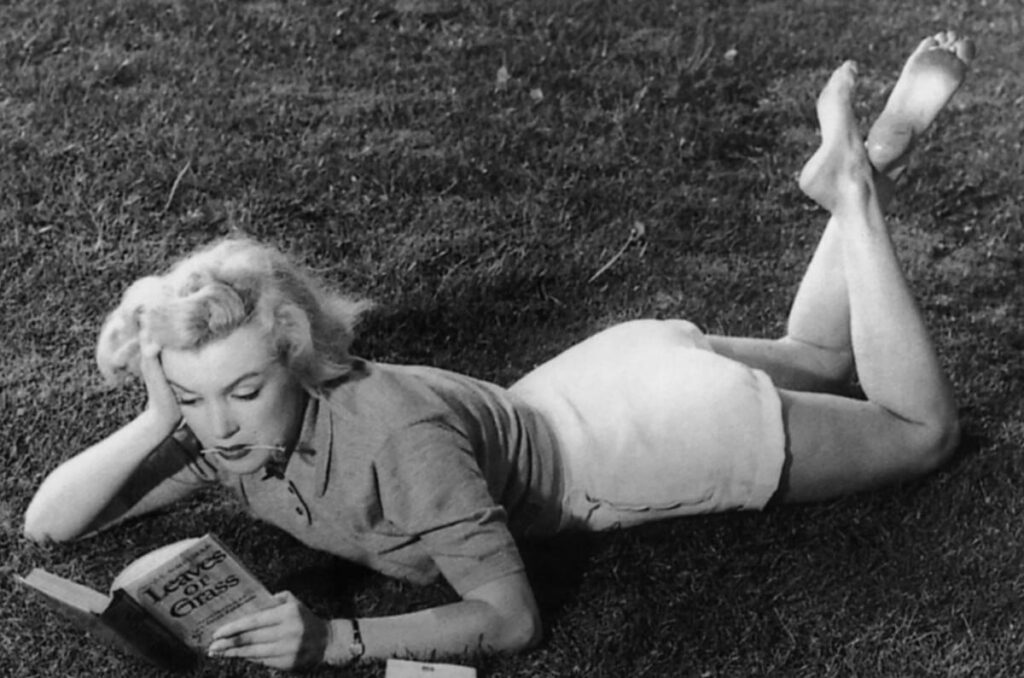
Dave Cicero, Marilyn Monroe reading “Leaves of Grass,” 1951.
The actress was photographed twice with “Leaves of Grass,” and one editor of her writings spoke of a genuine “enchantment” with the poet. There is, however, also an amusing story from the other side. Supposedly, at a party, Monroe overheard men discussing Whitman, walked over, and said: “Oh! Whitman! I love his chocolate candies!”
Whether this was a joke in which she deliberately played the role of the naive blonde, or she truly didn’t know the poet — it’s impossible to tell now. Whether the scene even happened at all is also a question.
“Leaves of Grass” is Whitman’s first collection, known for its reverence for the body and nature, and the idea that the divine can be felt through personal, direct experience. It’s easy to imagine why these poems about inner freedom and peace could comfort a woman who spent her whole life fighting for the right to control her own destiny.
Why Marilyn Monroe’s reading tastes remain a mystery to this day
The paradox is that Monroe was one of the most photographed women of her era, yet also one of the most private. We judge her inner world from fragments: interviews, other people’s recollections that may have been embellished, and rare photographs.
Today, when many people read less and less, it is especially fascinating to look at a person who literally surrounded herself with books.
If the actress had lived longer (incidentally, her centennial would have fallen on June 1, 2026), we might have learned more about her literary tastes and perhaps even read what she wrote herself. But things turned out differently.
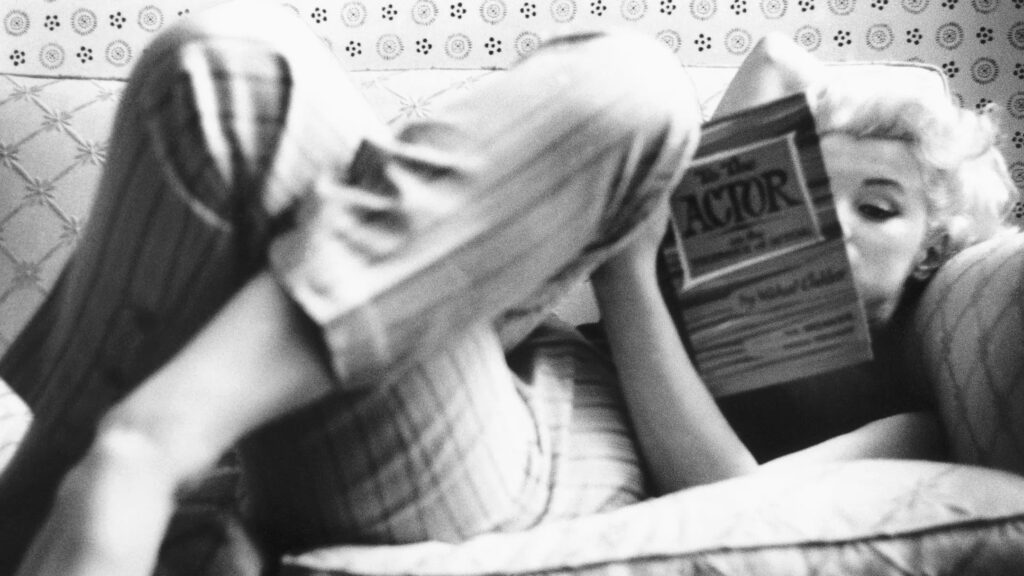
Marilyn Monroe’s personal library contained more than 400 books.
At the time of her death, Marilyn Monroe’s personal library contained more than 400 books. Here are their titles.