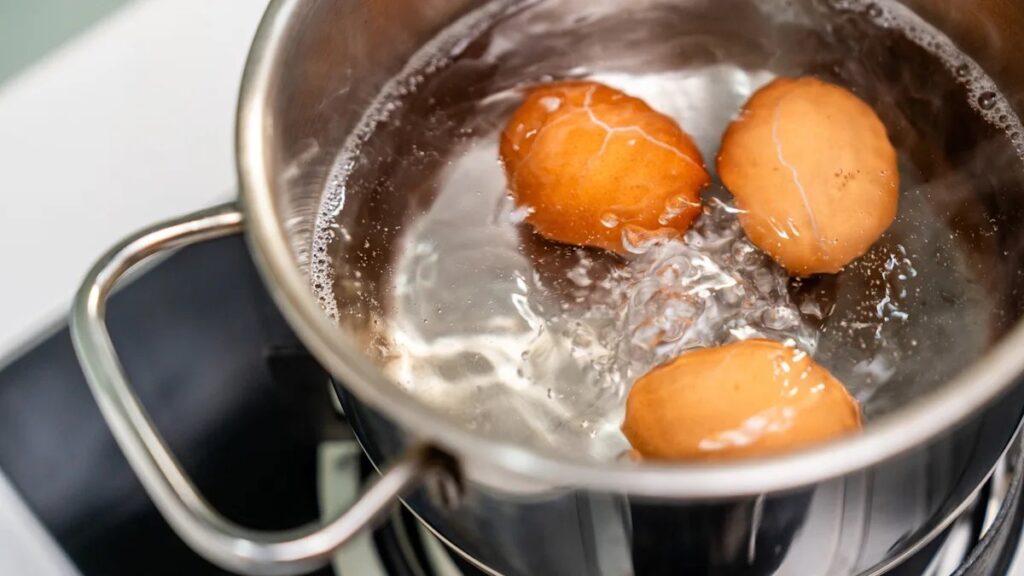
How to use water from boiled eggs in the garden and at home.
Usually after boiling eggs, the water from the pot goes straight down the drain along with the minerals dissolved in it. Yet this cloudy liquid is essentially a free fertilizer for houseplants and garden plants, which need not only water and light but also minerals from the soil. Let’s figure out what exactly is useful in it, how to use it properly, and whether you should expect any serious effect.
What Does Water from Boiled Eggs Contain
Eggshell is almost entirely composed of calcium carbonate — the very same substance used in garden lime to reduce soil acidity. When eggs are boiled, some of this calcium, along with small amounts of potassium, phosphorus, and magnesium, leaches into the water.
These are exactly the elements plants use for photosynthesis, building cell walls, and root growth. Essentially, you get a light mineral solution without spending a penny on fertilizers. Admittedly, the concentration of substances in it is low — but more on that below.
Why Plants Need Calcium from Egg Water
Calcium for a plant is roughly the same as a frame for a building. Without it, cell walls become weak, new shoots and roots develop poorly, and fruiting crops run into trouble.
The most well-known problem is blossom end rot. This is when tomatoes, peppers, or eggplants develop characteristic black spots on the tip of the fruit. The cause is a lack of calcium in the tissues. Moreover, the issue isn’t always poor soil: sometimes the plant simply can’t “pull” calcium fast enough due to irregular watering.
So an extra dose of calcium from egg water certainly won’t hurt — especially if you’re growing tomatoes, zucchini, peppers, or cabbage in your garden.
Recipe for “Egg Tea” for Watering
There are two ways to get this useful water. The first is the simplest. After boiling eggs, don’t drain the water. Wait until it cools to room temperature and use it to water your flowers or garden beds.
The second method is an eggshell infusion, sometimes called “egg tea”:
- Boil about 4 liters of water.
- Add 10–20 rinsed eggshells.
- Let it steep overnight at room temperature.
- In the morning, strain and use for watering.
About two cups of this solution is enough for one plant. You can water once a week, and store the leftovers in a sealed container. Important: the water must be cooled first. Boiling water will simply cook the roots.

Eggshell infusion — a simple and free fertilizer.
Which Plants Benefit from Egg Water and Which Don’t
Not all plants are equally happy about extra calcium. Calcium carbonate shifts soil acidity toward the alkaline side, and for some crops this is a blessing, while for others it’s a problem.
Plants that will benefit from egg water:
- tomatoes and peppers (especially for preventing blossom end rot)
- cabbage and eggplants
- zucchini and squash
- roses and hydrangeas, if the soil is acidic
However, for plants that prefer acidic soil, this type of watering is best avoided:
- blueberries and bilberries
- azaleas and rhododendrons
- geraniums
If you’re unsure about your soil, it’s worth checking its acidity. Simple test kits are sold at any garden store.
How Effective Is Egg Water Really
Here’s where we need to be honest. Laboratory analysis showed that a single eggshell steeped in water for 24 hours releases only about 4 milligrams of calcium into the solution. Meanwhile, the shell itself contains around 2,200 milligrams. That means the water “extracts” only a tiny fraction — less than 0.2%.

Egg water is a light supplement, not a replacement for proper fertilizer.
This means that egg water is more of a light boost than a full-fledged fertilizer. If your plants are seriously lacking calcium, water alone won’t cut it. You’ll get much more benefit by grinding eggshells into powder and adding them directly to the soil or compost. In this form, calcium is gradually absorbed as it decomposes. The ideal approach is to grind dry eggshells in a coffee grinder until they reach a flour-like consistency.
Egg water isn’t useless, but it’s no miracle fertilizer either. If you’re already watering your flowers or garden, why not do it with water that contains at least some useful minerals? It’s free, simple, and certainly better than pouring everything down the drain. But if you want real benefits from eggshells, don’t limit yourself to an infusion. Collect them, dry them, grind them up, and add them to your soil or compost — that way, calcium will reach your plants in much greater quantities.