The most insane spacewalk: an astronaut without a tether catches a satellite
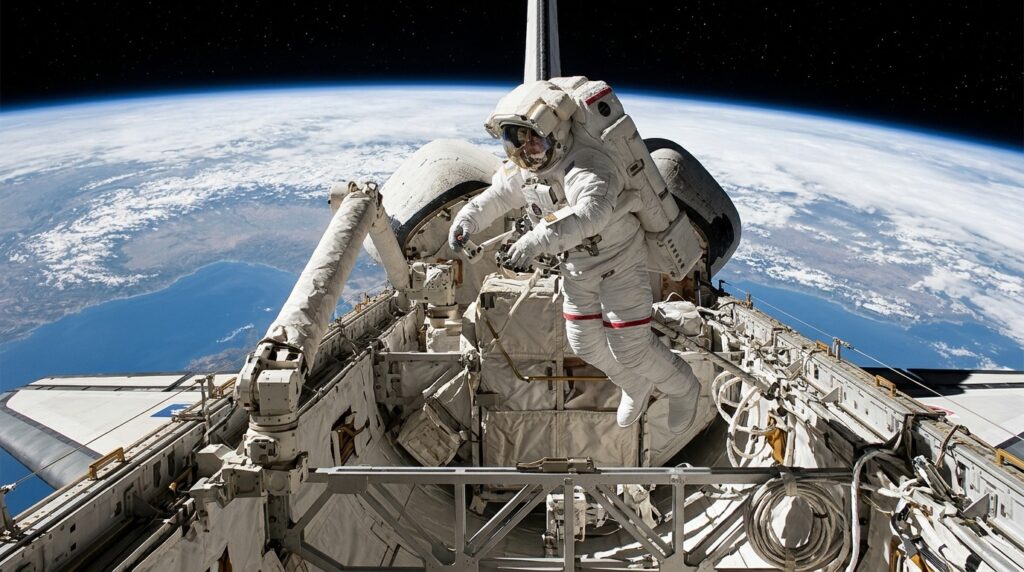
In November 1984, astronaut Dale Gardner unclipped from the space shuttle and flew toward a broken satellite. He had no safety tether, traveling at an orbital speed of about 29,000 km/h. This story still surfaces online and makes a strong impression even on people far removed from space exploration. And behind the spectacular details lies one of the most ingenious rescue operations in the history of crewed spaceflight.
Why NASA Sent Astronauts to Catch Satellites by Hand
According to IFL Science, the story begins in February 1984. The shuttle Challenger deployed two telecommunications satellites into orbit — Westar 6 and Palapa B2. Both successfully separated from the shuttle, but then everything went wrong: the PAM-D upper stage motors on both spacecraft malfunctioned, and the satellites ended up in useless low orbits at altitudes of about 260–960 km instead of the intended 35,800 km geostationary orbit.
The satellites themselves remained functional. Insurance companies paid the owners approximately $200 million in compensation and became the new owners of expensive but uselessly orbiting equipment.
NASA proposed an unconventional solution: send astronauts to literally catch the satellites by hand and load them into the shuttle’s cargo bay. The mission was assigned to the STS-51-A crew aboard the shuttle Discovery, which launched on November 8, 1984, from Kennedy Space Center.
How the Jetpack for Untethered Flights Worked
The main tool for capturing the satellites was the Manned Maneuvering Unit — a jetpack that the astronaut wore over their spacesuit. Essentially, it was an individual spacecraft: 24 nitrogen micro-thrusters allowed maneuvering in any direction, two joysticks controlled translation and rotation, and an autopilot system maintained the desired orientation.
The unit weighed about 140 kg without fuel and used compressed nitrogen, a safe inert gas. The supply lasted approximately six hours of operation. No tether: the astronaut floated freely in space, relying solely on the precision of the micro-thrusters and their own composure.
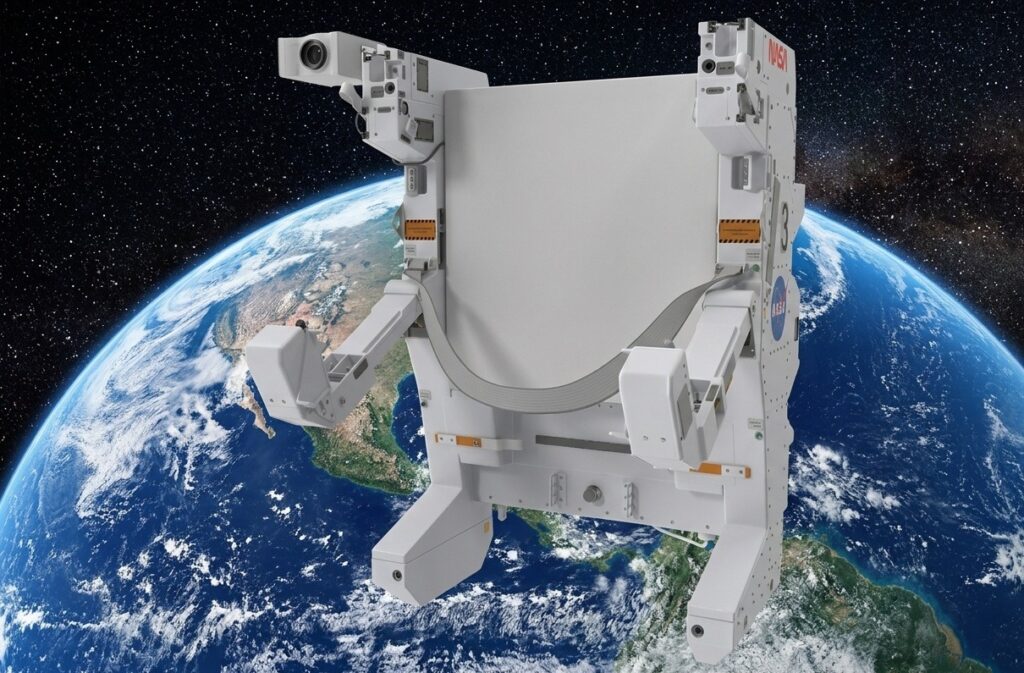
Manned Maneuvering Unit jetpack
Before the STS-51-A mission, the jetpack had been used twice. Bruce McCandless was the first to test it in February 1984 — he moved 98 meters away from the shuttle Challenger and became the first person to perform an untethered spacewalk. That flight produced one of the most famous photographs in NASA’s history.
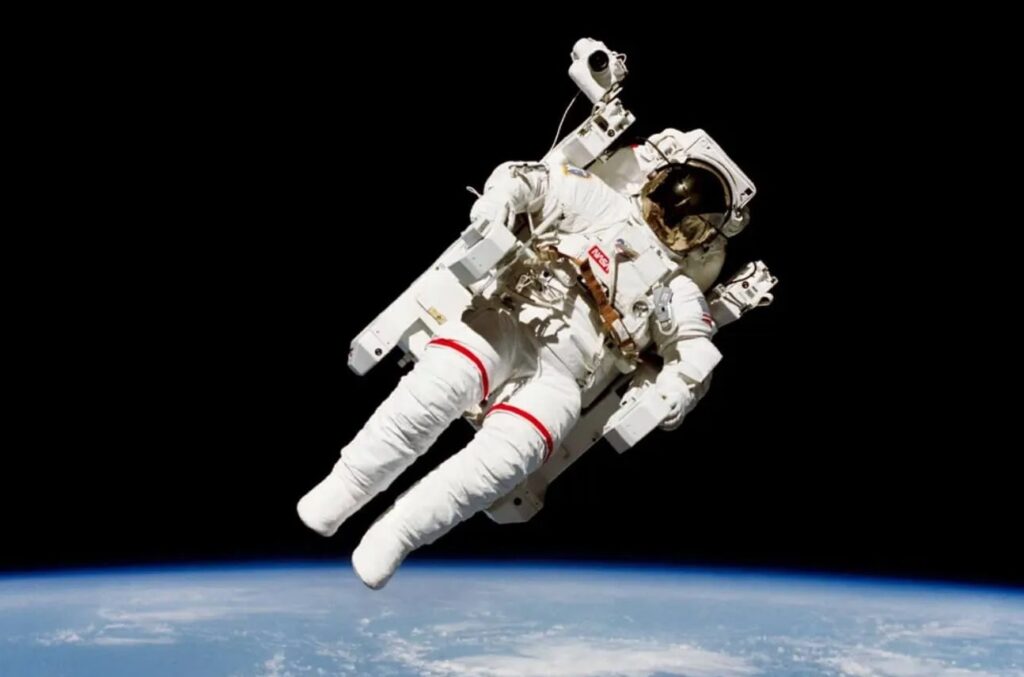
Astronaut Bruce McCandless in open space. Photo source: NASA
How Astronauts Captured Satellites in Open Space
The operation plan looked like this: pilots would bring Discovery to within about 10 meters of the satellite, one astronaut on the MMU would fly to the spacecraft, insert a special stinger device into the nozzle of its engine, stop the rotation, and then Anna Fisher would use the robotic Canadarm to move the assembly into the cargo bay. The second astronaut would help secure the satellite.
On the fifth day of the flight, November 12, the first operation began — the capture of Palapa B2. Joseph Allen put on the jetpack, flew to the satellite, and inserted the stinger into the upper stage nozzle. But then an unforeseen problem arose: the mounting structure didn’t fit due to an unexpected gap on the satellite’s body that was unknown before the flight.
The crew switched to a backup plan. Allen manually held the satellite by its antenna while Gardner attached an adapter from below. Essentially, the two-ton spacecraft was placed into the cargo bay by hand, using an improvised method that took six hours.
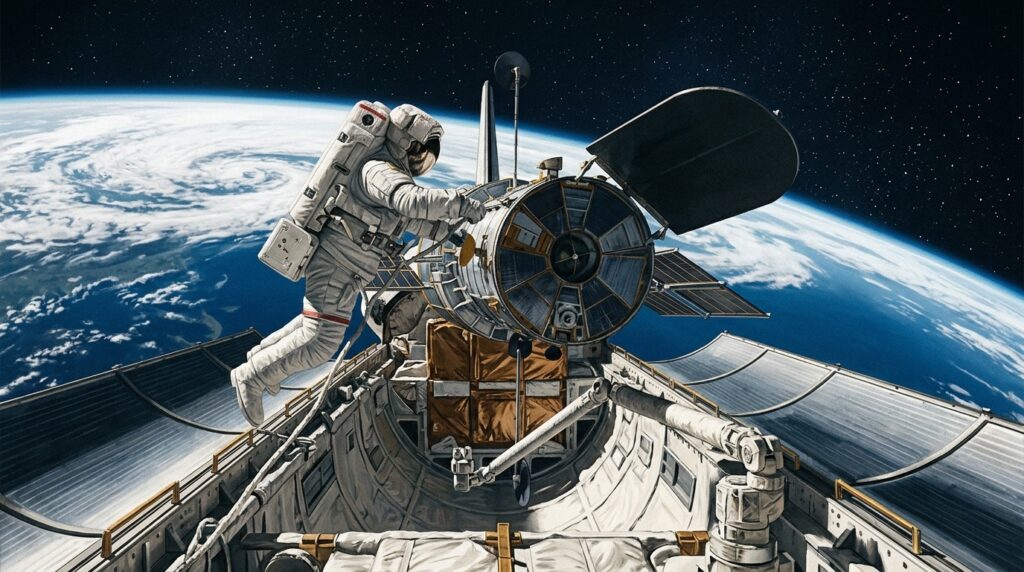
An astronaut holds a captured satellite manually before loading it into the cargo bay
The second operation, the capture of Westar 6, took place two days later and lasted 5 hours and 42 minutes. This time Gardner flew on the MMU while Allen assisted from the cargo bay. The procedure went more smoothly, as the astronauts learned from the mistakes of the first attempt and didn’t remove the satellite’s antenna, using it as a convenient handle instead.
Why NASA Will Never Repeat This Mission
STS-51-A remains the only mission in history during which astronauts returned satellites from orbit to Earth. After the Challenger shuttle disaster in January 1986, NASA conducted a major safety review. The MMU jetpack was deemed too risky and placed in storage.
Throughout its entire history, the jetpack was used on only three missions in 1984. Its total operating time in space amounted to just 10 hours and 22 minutes. Modern astronauts work in open space only with tethers, and for emergency situations they carry the compact SAFER module — its gas supply allows returning to the station, but nothing more.
If a satellite needs to be rescued today, a robotic spacecraft will handle it. A living person without a tether near a spinning satellite is a situation that modern safety standards simply do not permit.
What Happened to the Rescued Satellites
The captured spacecraft returned to Earth on November 16, 1984, along with the Discovery crew. After landing, an astronaut jokingly held up a “For Sale” sign, posing next to the two satellites in the cargo bay. And the joke turned out to be prophetic.
Westar 6 was actually sold — to Hong Kong-based company AsiaSat for $58 million. The satellite was repaired, renamed AsiaSat 1, and relaunched on April 7, 1990, on a Chinese Long March 3 rocket. It successfully operated in geostationary orbit, providing telecommunications services for several Asian countries, and was replaced only in 1999. Palapa B2 also got a second life: it was returned to Indonesia and relaunched under the name Palapa B2R.
The STS-51-A mission is a story about how engineering ingenuity, crew composure, and the ability to improvise saved equipment worth hundreds of millions of dollars. It is also a reminder that there was a time when ordinary people in spacesuits flew to broken satellites without a safety line. And came back.