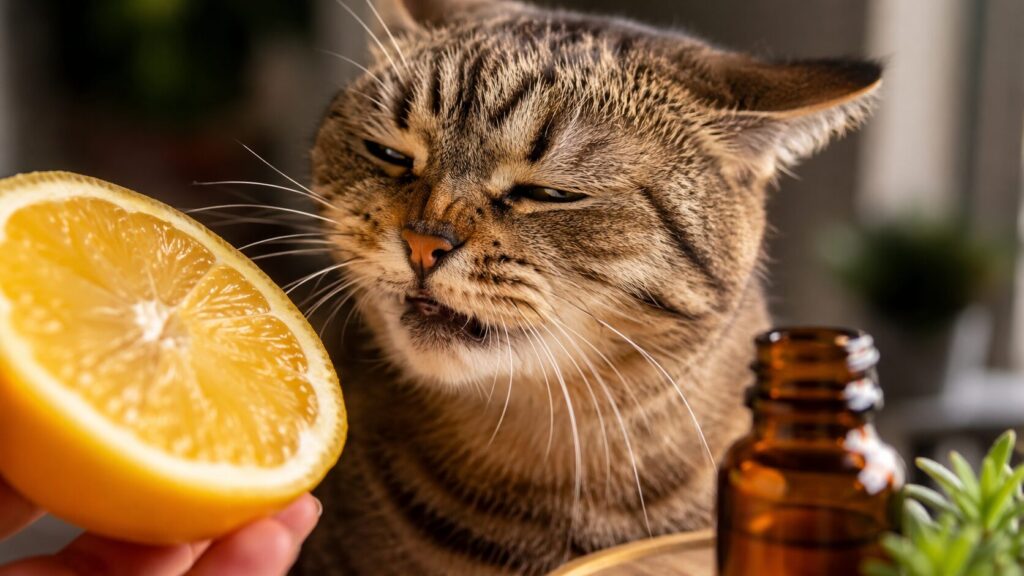
What smells do cats hate?
Cats have up to 200 million olfactory receptors in their noses. For comparison, humans have roughly 14 times fewer. They also have a special “scent organ” in the upper part of their mouth that helps them literally taste the air. Imagine a smell you find unpleasant and mentally amplify it tenfold — that’s roughly how a cat perceives aromas we barely notice. That’s why many everyday household smells that seem normal to us are absolute torture for cats.
What Smells Do Cats Hate: The Complete List
Veterinarians and zoologists identify about two dozen scents that most cats try to avoid. The reasons vary: some smells are simply too strong, others irritate the mucous membranes, and some cats instinctively consider dangerous.
Here are the main categories:
- Citrus (orange, lemon, lime) — irritating, toxic upon skin contact or ingestion
- Spicy and pungent — chili, mustard, cinnamon, peppermint
- Herbs and essential oils — lavender, eucalyptus, rue, rosemary, menthol
- Household smells — vinegar, coffee, onion, bananas, pine
- Chemicals and smoke — household cleaning products, tobacco smoke, incense
- Unfamiliar scents — the scent of another cat or an unknown animal, dirty or overly fragranced litter
It’s important to understand: all cats are different. Some will calmly walk past a lemon, while others will bolt from a banana. The reaction depends on personality, age, health, and past experience. For example, a rescued street cat with a traumatic past may be afraid of smells that a house cat wouldn’t even notice.
Why Cats Dislike Certain Smells
It all comes down to the structure of a cat’s nose. A cat’s olfactory receptors are so sensitive that even a faint aroma to us can feel like a sharp blow to them. A cat’s sense of smell is adapted to natural scents — meat, grass, earth, other cats. Synthetic and concentrated substances, however, are unfamiliar and often unpleasant for cats.
There’s also a deeper reason: the self-preservation instinct. Many of the “hated” smells are genuinely dangerous. Essential oils from citrus and eucalyptus contain terpenes — substances that a cat’s body processes poorly. In nature, a sharp, pungent smell often signals danger, and cats learned to stay away from such aromas long before they moved into our apartments.
Which Smells Are Dangerous and Toxic for Cats
Not all smells that are “unpleasant” to a cat are merely unpleasant — some are truly dangerous. Essential oils are the main risk group. Cats that love rubbing against everything can easily get skin irritation or inhale fumes. Veterinarians most commonly warn about these essential oils:
- Tea tree oil
- Eucalyptus
- Peppermint and spearmint
- Cinnamon
- Sweet birch (wintergreen)
- Ylang-ylang
Smoke — whether from cigarettes, incense sticks, or aroma lamps with essential oils — is also harmful. Cats’ lungs are very sensitive, and regular smoke inhalation can lead to respiratory problems.
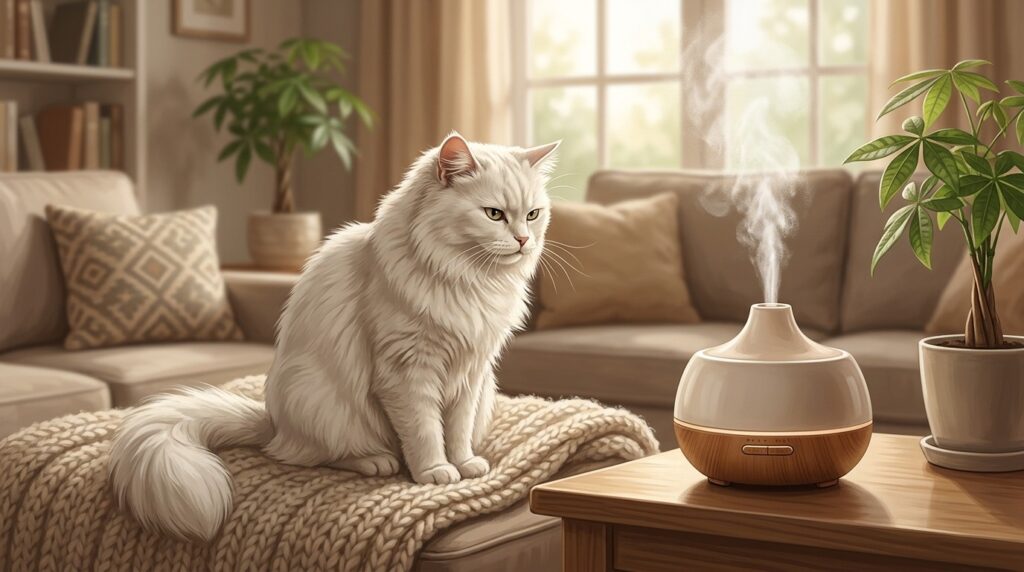
Aroma diffusers with essential oils can be dangerous for cats
Perfume is a separate story. Perfumes and eau de toilette can cause skin irritation and respiratory symptoms in cats, so spraying your favorite perfume on a cat’s bed is a bad idea. If you’re unsure whether a product is dangerous for your pet, it’s best to call your veterinarian.
Which Smells Help Break Cats of Bad Habits
Smells can be turned into a gentle training tool — if approached wisely. Veterinarians confirm: the method works when everything is done carefully.
Here are a few practical examples:
- Diluted vinegar on the kitchen countertop can help discourage a cat from jumping on the table
- A rosemary spray on furniture upholstery can save the couch from claws, but it’s important to remember: when a cat scratches furniture, it’s not getting revenge — it’s simply following its instincts
- A mild citrus scent near the litter box can help if the cat has started missing the target
The main rule — never apply anything directly on the cat. Dilute any products and start with the minimum concentration. If the cat starts avoiding an entire room rather than just the intended spot, you’ve overdone it.
How to Tell If a Smell Is Harming Your Cat
Sometimes even a seemingly harmless smell is enough to make a cat uncomfortable. In such cases, its behavior usually changes quickly.
Signs that mean you should immediately remove the source of the smell:
- Coughing, sneezing, wheezing
- Watery eyes or nasal discharge
- Excessive drooling
- Rapid or labored breathing
- Vomiting or lethargy
- Aggression, hissing, attempts to flee
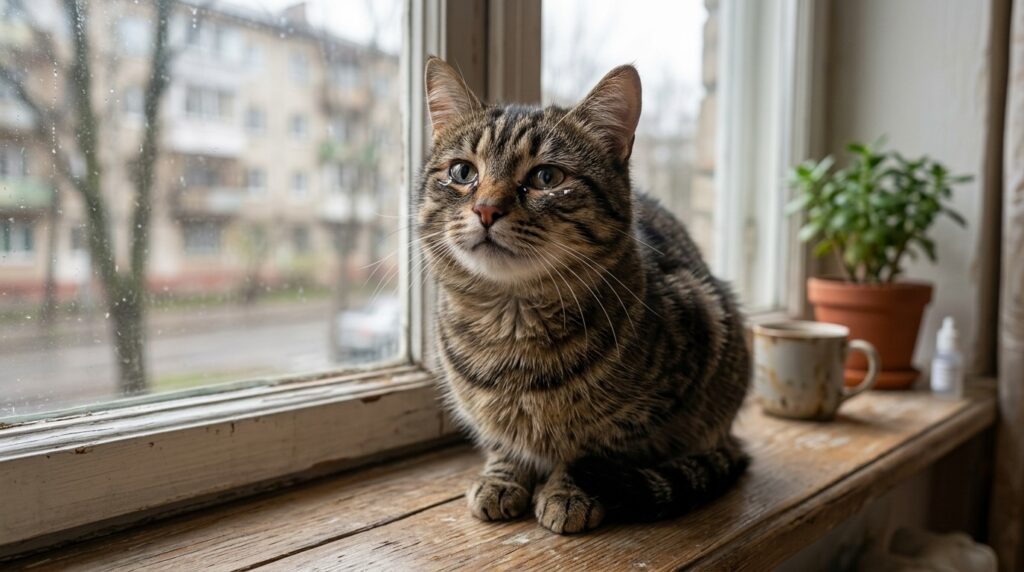
Watery eyes in a cat can be a reaction to a strong smell
Excessive use of strong scents can cause stress and anxiety in cats — to the point where a pet may start avoiding certain areas of the house. If you notice any of the listed symptoms, remove the source of the smell and ventilate the room.
How to Break Cats of Bad Habits Without Using Smells
If scents aren’t suitable or the cat reacts too strongly, there are other ways to correct behavior.
A simple and effective method is redirecting attention. If you notice the cat doing something wrong, offer it a toy or treat. A voice command and a clap of the hands also work well to attract attention and help redirect behavior.
Equally important is creating comfortable conditions for the cat. A clean litter box in a quiet spot, a scratching post, and enough toys solve most “behavioral” problems. Often a cat misbehaves not out of spite but because it’s bored or lacks attention.
There’s also a clever life hack: double-sided tape on surfaces you need to protect. Cats can’t stand the sticky feeling on their paws, and it’s completely safe.
And most importantly — never use physical force or punishment. It doesn’t work with cats and only destroys trust. Positive reinforcement (treats, affection, a calm voice) yields much better results.
And you definitely shouldn’t resort to physical punishments. A cat is unlikely to connect them with its actions, but it may start avoiding its owner. Usually, encouragement (treats, affection, a calm voice) and redirecting attention work much better.