Summer is tough not only for people but also for smartphones. I’ve written separately about how to properly use your smartphone in hot weather to avoid killing it with overheating. But today I want to dive deeper into the topic: what happens inside the device when the temperature rises, and what cooling systems manufacturers use to combat this. From cheap graphite film to a full-fledged cooler with a fan — the difference is enormous. Let me break it down in order.
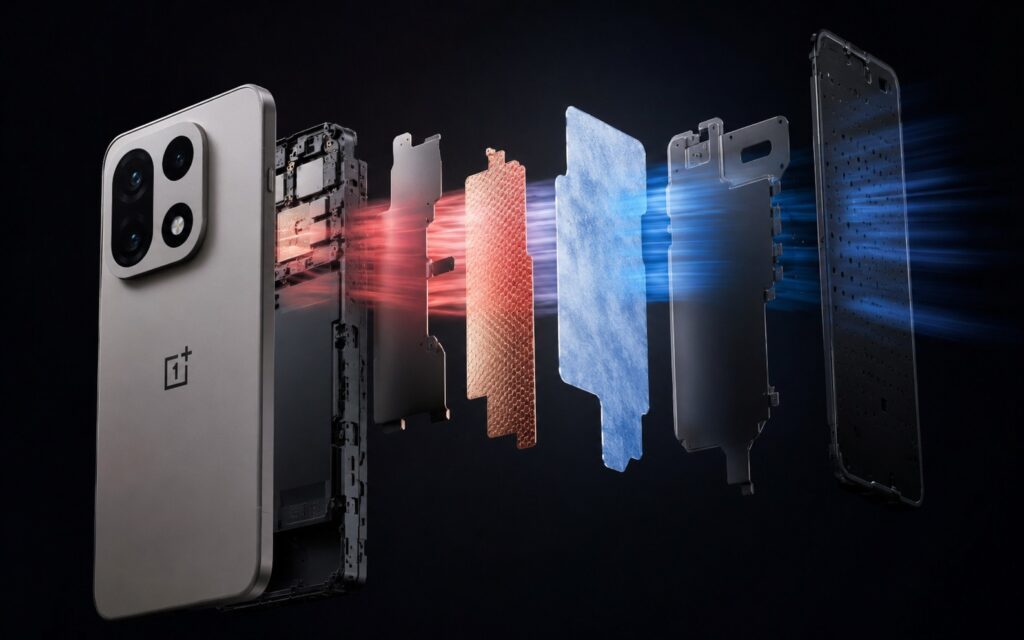
Everything about cooling in a modern smartphone
Why Smartphones Overheat and Why It’s Dangerous
When a phone heats up, it’s not a malfunction or a sign of poor quality. It’s physics: any processor generates heat during operation. The more powerful the chip and the more intense the workload — the more heat is produced. A Snapdragon 8 Elite Gen 5 in a flagship device under load can easily reach 40-50 degrees inside the case.

The more powerful the smartphone’s processor, the more thoughtful its cooling needs to be
The problem starts when heat isn’t dissipated quickly enough. Then throttling kicks in — an automatic reduction in processor performance to protect against overheating. The smartphone heats up beyond the acceptable limit, and the chip slows itself down. In games, this looks like a sharp FPS drop after 15-20 minutes. In everyday tasks — like unexplained lag.
Long-term consequences are worse: constant overheating accelerates battery degradation. The battery loses capacity faster if the smartphone regularly operates at high temperatures. We’ve discussed separately why Android smartphones overheat and what specific factors cause it. Here I’ll focus on the solution: how manufacturers fight heating from the inside.
Graphite Plates and Thermal Paste — Basic Smartphone Cooling
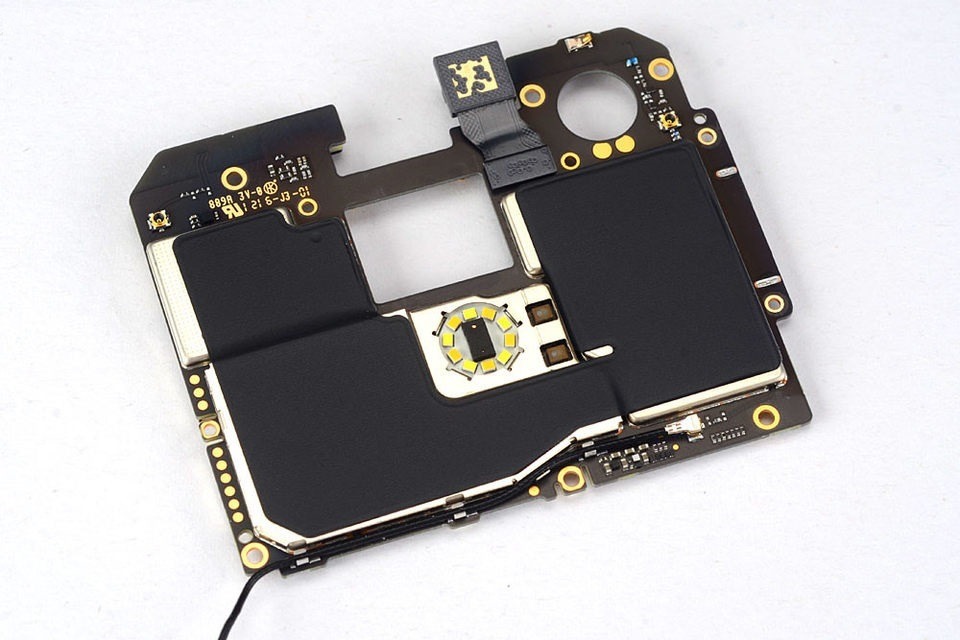
This is what a standard graphite plate looks like — found everywhere. Image: it168.com
The first and simplest level of a smartphone cooling system is graphite plates and copper heat sinks. Graphite is an excellent heat conductor: it quickly absorbs heat from the processor and distributes it across a larger area of the case, from where it dissipates into the air. Between the processor and the heat sink, thermal paste or a thermal pad is applied, filling micro-irregularities and improving contact. It’s the same logic as in computer processors, just on a much smaller scale.
Where it’s found: in most budget and mid-range smartphones priced up to 25,000-30,000 rubles. In particular, graphite cooling is found in the powerful and extremely popular POCO X8 Pro. For extended gaming sessions at maximum settings, it’s not quite enough.
Vapor Chamber — Cooling for Android Flagships
A vapor chamber in a smartphone is a fundamentally different level. Inside the chamber there’s a liquid (usually distilled water). When heated, it evaporates, the vapor moves to cooler zones of the chamber, condenses there and releases heat, then returns to the heat source in liquid form. And so on continuously.
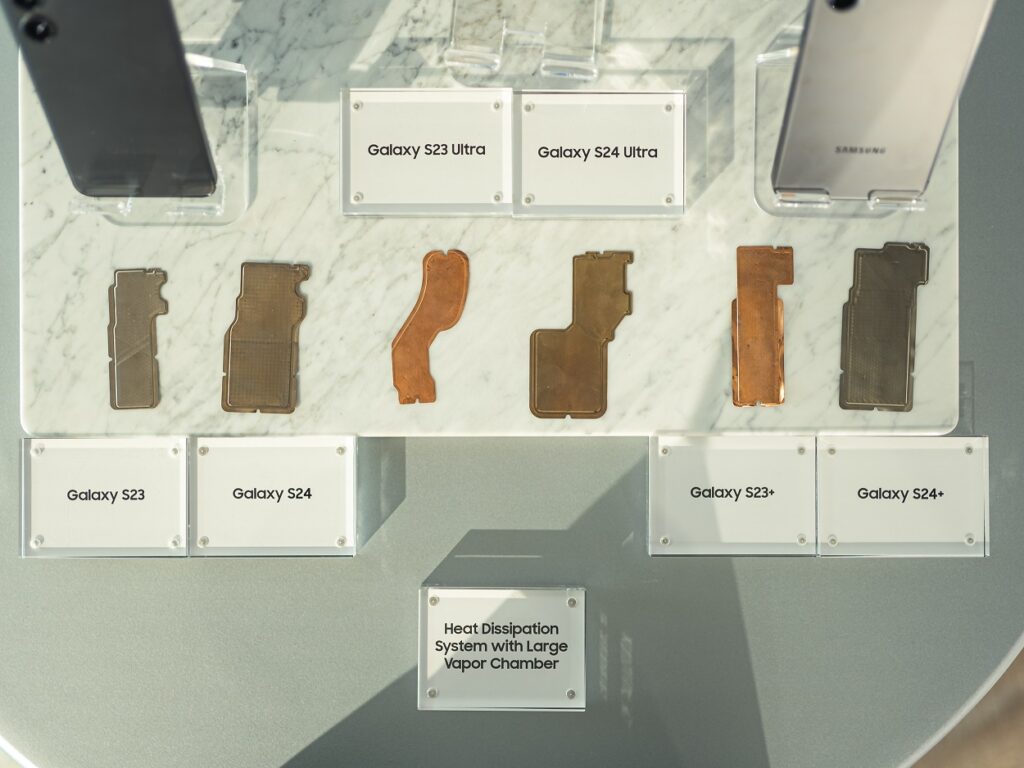
Actual vapor chambers from Samsung smartphones. Image: productnation.co
The key parameter is the chamber’s surface area. The larger it is, the more effective the heat dissipation. Here are examples from real flagships:
- Xiaomi 17 Ultra — vapor chamber with an area of over 6,000 mm²;
- OnePlus 15 — multi-layer system with a vapor chamber and graphene layers;
- OPPO Find X9 Ultra — vapor chamber combined with graphite and copper heat sinks;
- vivo X300 Ultra — Gimbal OIS and vapor chamber in a unified design.
The vapor chamber is now the standard for any flagship priced above 50,000 rubles. A smartphone with good cooling based on a vapor chamber maintains stable performance significantly longer than a device with graphite. The difference in games becomes noticeable after just 10-15 minutes of load. Read about what things kill a smartphone the fastest in a separate article — sometimes overheating can be prevented by simply changing habits.
Loop LiquidCool — Cooling by Xiaomi
Xiaomi went beyond the vapor chamber and created the Loop LiquidCool system. The fundamental difference from a regular vapor chamber: liquid and vapor move through separate closed channels, separated by a valve. This prevents them from mixing and makes heat exchange significantly more efficient.
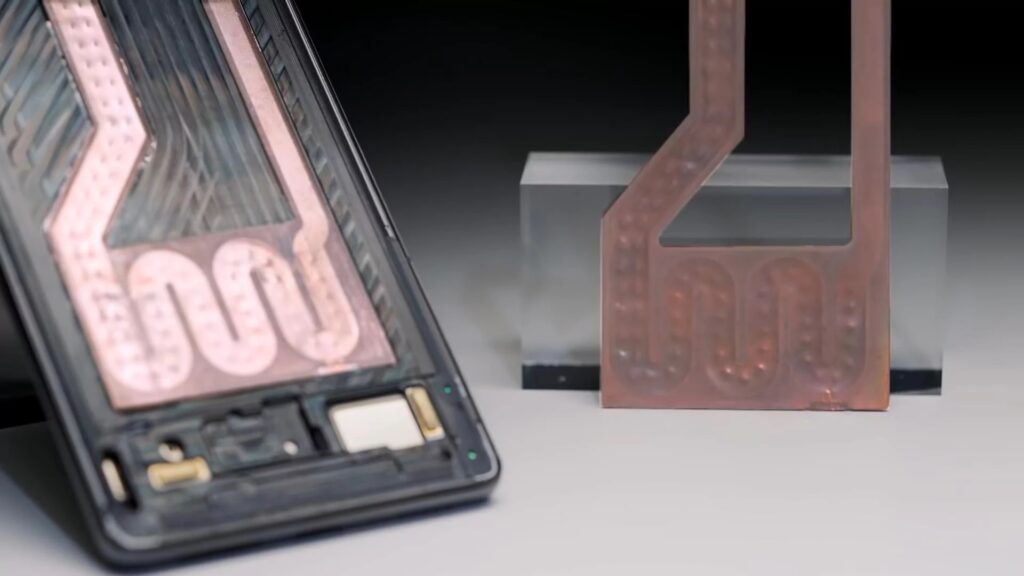
Xiaomi’s proprietary plate. Image: Xiaomi
The system first appeared in the Xiaomi 12S Ultra and has since been present in flagship models of the lineup. In the Xiaomi 17 Ultra, it is combined with a vapor