I’ve already written about how to install MAX on Android and created a step-by-step guide. But “how” and “should you” are different questions. The MAX messenger is mandatory for pre-installation on all new Android smartphones sold in Russia. That means it’s already on most phones whether you want it or not. Let me break down what it is, why it exists, what the risks are, and whether you should actually use it.
Install it or stick with other messengers?
What MAX on Android Is All About
The MAX app is a state-backed messenger created by VK with government support. The official idea: a Russian equivalent of China’s WeChat — not just a messenger, but a unified digital platform for communication, government services, payments, and everything else. Sounds ambitious.
MAX is not just a messenger but a government project to create a domestic digital platform.
In practice, MAX appeared as a direct response to Russians’ growing dependence on foreign messengers — primarily Telegram and WhatsApp (owned by Meta, recognized as extremist and banned in Russia). Authorities have long wanted a domestic alternative that complies with local legislation. And MAX on Android is precisely that alternative, promoted from the top.
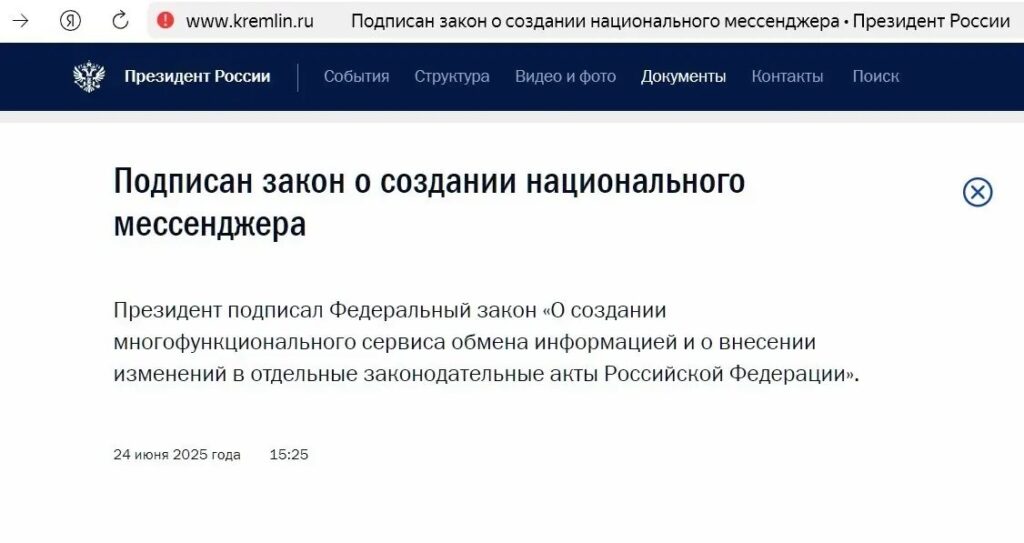
MAX was created under a special law. Source: kremlin.ru
Technically, the app is built on the former ICQ platform and VK’s developments. Pre-installation on new smartphones since September 2025 ensured rapid audience growth: 100 million registered users by spring 2026. The real question is how many of them use it voluntarily and regularly.
Why Install MAX on Your Phone
Let’s be straightforward here: it makes sense to install MAX primarily because all other popular messengers in Russia work unstably or are outright blocked. Telegram and WhatsApp (owned by Meta, recognized as extremist and banned in Russia) no longer work, and remaining foreign services could become unavailable at any moment.
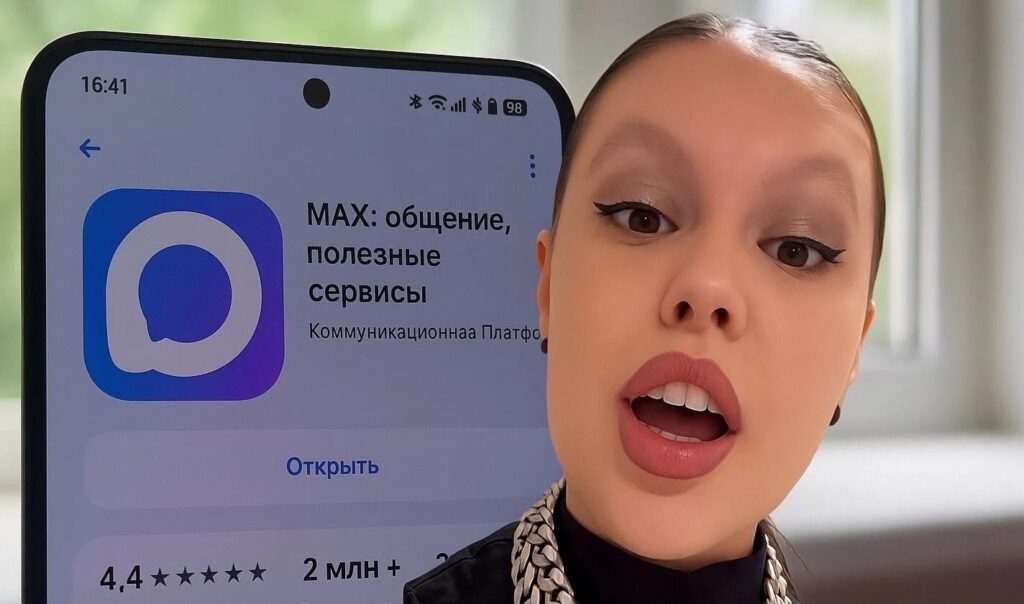
Download it because you have to
MAX on your phone is the only messenger guaranteed to work in Russia without any workarounds. It’s included in the list of socially significant services, meaning it continues to work even when mobile internet is restricted. For those who don’t want to jump through hoops — that’s a real argument.
The main argument in favor of MAX: it works in Russia without a VPN under any circumstances.
Additional reasons to download MAX on your phone that can’t be ignored: integration with Gosuslugi (Government Services) for identity verification and notifications, support for Sferum for school and university students, stable calls on weak signal thanks to NoLACE technology. If your children attend school or you regularly interact with government services — MAX is no longer optional but a necessity.
What MAX on Android Has to Offer
MAX’s features look quite decent on paper. Here’s what actually works:
- personal and group chats, channels in MAX for public broadcasting;
- calls in MAX: voice and video, including on weak internet;
- file sharing up to 4 GB for free;
- integration with Gosuslugi: notifications, age and benefit verification;
- digital ID for identity confirmation;
- stickers, reactions, voice messages, video circles;
- mini-apps from partners: banks, booking services, and others.
Sounds like a complete package. But the devil is in the details. MAX vs Telegram is a conversation about what the competitor has had working for ages, while here it’s still in development or completely absent: no proper message search, no end-to-end encryption in regular chats, the interface is less user-friendly, sticker creation only just appeared and works through a bot. MAX messenger capabilities right now are roughly Telegram circa 2015.
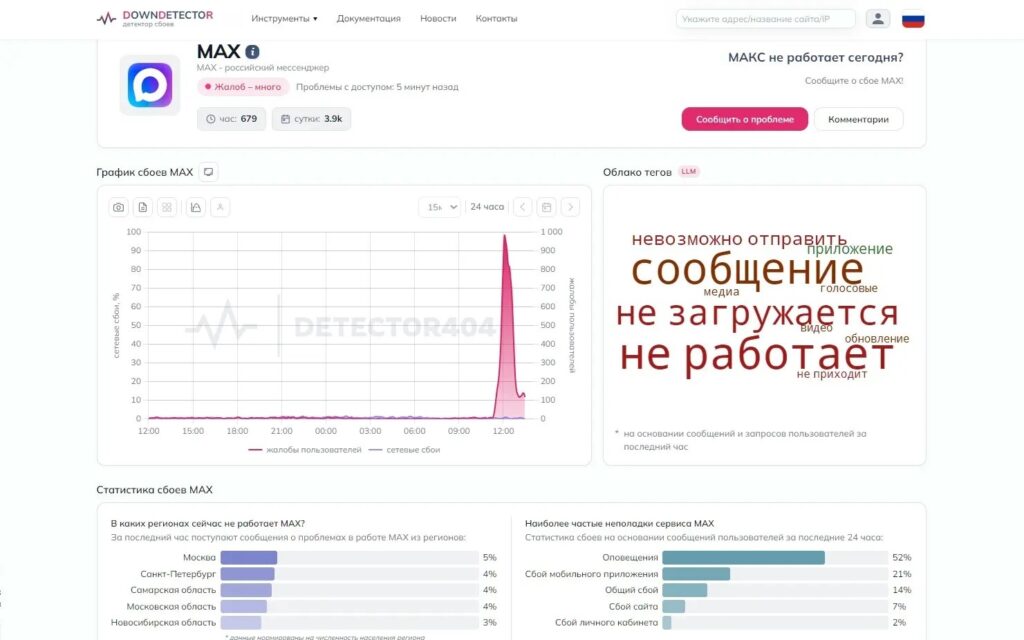
Also, MAX messenger constantly glitches
Stability is another story. MAX outages happen regularly. The messenger stops working for some users, then others, and this is actively discussed in reviews. If something breaks, check out the guide that details what to do if MAX isn’t working. For a government project with WeChat-level ambitions, stability leaves much to be desired.
In terms of functionality, MAX right now is Telegram circa 2015, but with Gosuslugi built in.
What Makes the MAX App on Your Phone Dangerous
This is where things get really interesting. MAX security is a topic the developers prefer not to publicize. There’s no official direct surveillance of messages in the “someone is reading your texts” sense. But there are nuances. According to the privacy policy, MAX’s protection doesn’t imply full anonymity: the app collects user data and can share it with third parties, including at the request of authorities. This is standard practice for Russian services, but it’s worth knowing about.
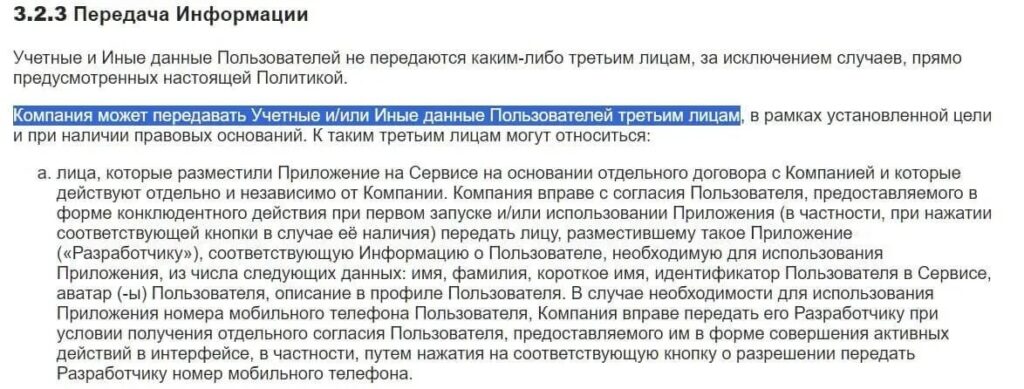
MAX shares user data upon request and doesn’t hide it. Source: legal.max.ru
Network activity is another story. In March 2026, technical specialists discovered that surveillance in MAX is set up in a non-trivial way: the app contacts third-party services to determine the user’s IP address, checks whether a VPN is being used, and establishes connections to Telegram, Amazon Web Services, and Google servers. The results are sent back to MAX’s server.
MAX checks whether you're using a VPN and sends that data to its servers.
The interpretation is this: the app apparently analyzes the effectiveness of blocks in the Russian internet and identifies ways to circumvent them. Formally, this isn’t “reading your messages.” In practice, the question of MAX’s danger for those who use VPN or discuss sensitive topics becomes rhetorical. Read more about this in the article on what dangers the MAX messenger poses. If you’re being forced to install this app — also look into options for what to do if you’re being forced to download MAX.
Should You Install MAX on Your Phone
Whether to install MAX messenger depends on what exactly you need it for. My answer is ambiguous, and I’ll explain.