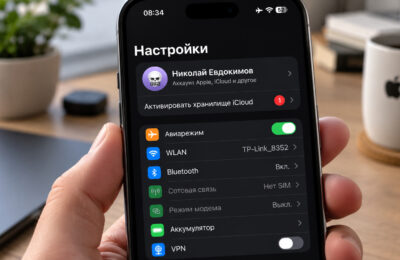
It was just revealed that Russian operators signed a moratorium on expanding communication channels with Europe, which should significantly slow down foreign traffic and make it much more expensive, when a new threat emerged. Hosting providers may be required not just to refrain from helping VPN services, but to actively identify and disconnect them. Amendments to the “Antifraud 2.0” bill are being prepared for the second reading and propose that companies providing server capacity will be transformed from technical intermediaries into controllers.

The new law could almost completely kill VPN
New Law Against VPN in Russia: What Exactly They Want to Ban
As reported by Kommersant, amendments prepared for the second reading of the bill would prohibit hosting providers from providing server capacity for systems that enable access to information blocked in Russia. If previously a hosting provider could refrain from interfering with a client’s server operations until a complaint was received, now they will be required to proactively check clients against Roskomnadzor databases and terminate contracts upon discovering violations.
With the new amendments, self-hosted VPNs are on the verge of extinction
Market participants are already warning about the consequences. Additional costs to comply with the requirements will inevitably lead to higher prices for hosting services. Meanwhile, the Ministry of Digital Development clarifies that there is no final version of the document yet — the amendments are at the stage of interdepartmental coordination.
It’s important to understand: this is not about blocking VPN — that has already been done for a long time through special equipment at ISPs. The new amendments target those who rent servers to create their own VPNs — so-called self-hosted solutions. It is precisely to these that advanced users have massively migrated in the past year.
VPN Restrictions in Russia
Using VPN in Russia formally remains legal, however the infrastructure around this technology is being systematically narrowed. By the beginning of March 2026, Roskomnadzor had restricted access to 469 VPN services. For comparison: in January 2026 there were 439, and in October 2025 — 258. In three months, the regulator blocked as many services as in the previous several years.
In early 2023, filtering equipment only blocked OpenVPN and IKEv2 protocols in eastern regions. By February 2026, WireGuard and OpenVPN were completely blocked, and SOCKS5, VLESS, and L2TP came under restrictions.
The head of the Ministry of Digital Development, Maksut Shadayev, did not rule out the possibility of introducing administrative liability for using circumvention tools, although he expressed hope that it would not come to that. Instead of fines, an economic deterrence model was proposed — charges for international traffic exceeding 15 GB, blocking VPN users on major platforms, and restricting payment methods for VPN applications.
VPN Apps in the App Store
For Apple users, the situation differs from the Android world, and not for the better. Apple removed popular VPN clients from the Russian App Store — Streisand, V2Box, v2RayTun, and Happ. All of them are no longer available for download with Russian accounts. In total, more than two dozen apps have disappeared from the Russian store.
According to the Apple Censorship project, currently 717 apps in the Utilities category — which includes VPN services — have been subject to Apple censorship in Russia. The developers of v2RayTun published a letter from Apple in which the company states that the app was removed at Roskomnadzor’s request because it contains “content that is illegal in the Russian Federation.”
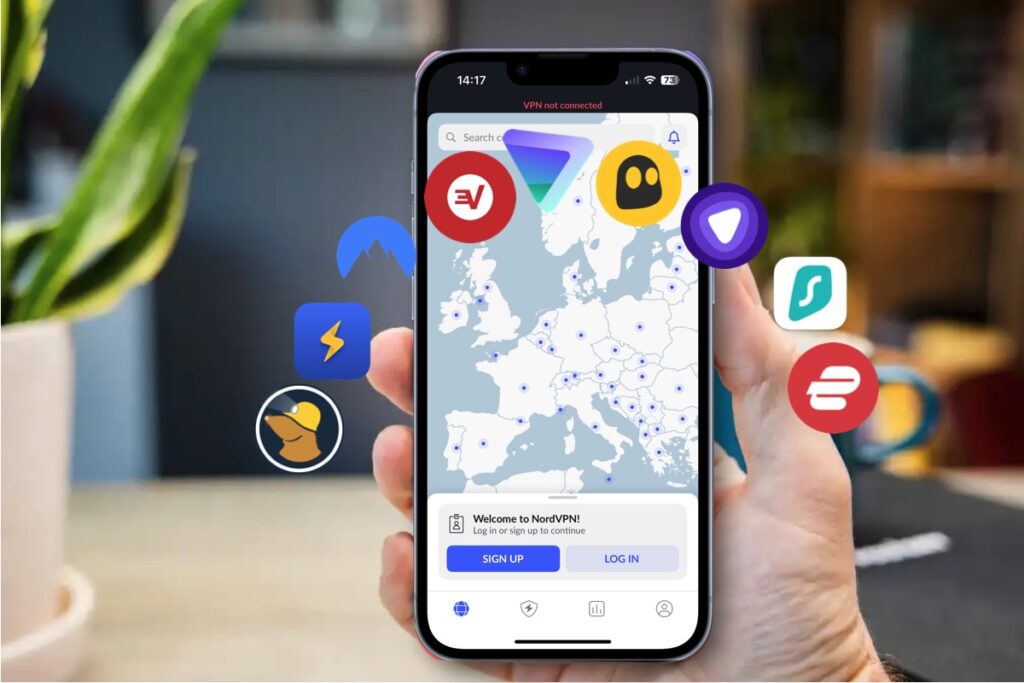
At Roskomnadzor’s request, Apple removed a large number of VPNs from the Russian App Store
On Android, installing apps from third-party sources is technically possible. On iPhone — it is not. This is a key limitation: already installed apps will continue to work but won’t receive updates without using a foreign account. And without updates, a VPN client will eventually simply stop bypassing blocks.
Additionally, starting April 1, 2026, MTS and Beeline carriers disabled direct Apple ID payment from mobile phone balances. The goal is to indirectly complicate VPN subscription payments through the App Store.
Websites and Services That Don’t Work with VPN
Companies on “whitelists” were given a condition: either you restrict access for users with VPN enabled, or you risk being removed from those lists. Marketplaces Wildberries and Ozon, the Yandex search engine, VK, banks, and other platforms came under pressure. They will have to implement systems that detect VPN traffic and block such users.
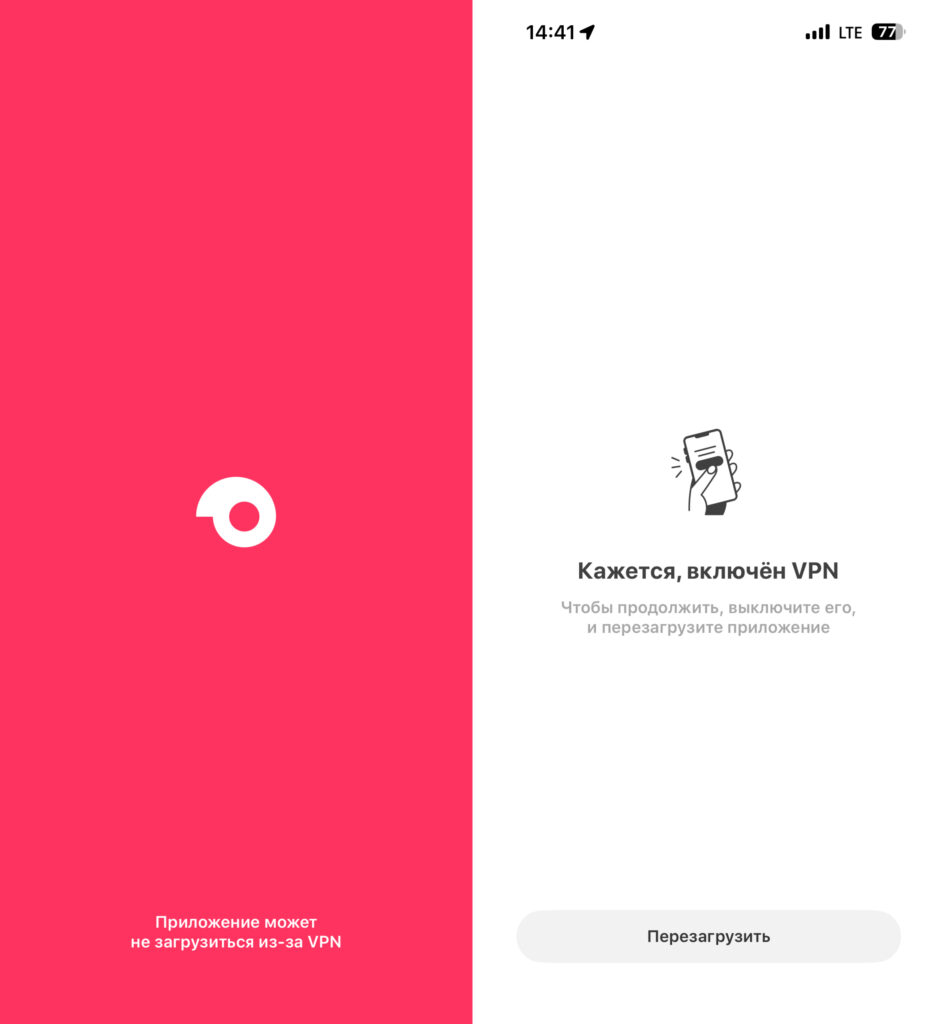
Most Russian services no longer launch with VPN
The RKS Global project analyzed 30 popular Android apps from Russian companies and found that 22 of them already track VPN. Among them are Yandex Browser and Maps, VKontakte, My MTS, Sberbank Online, Wildberries, Ozon, and others. Samokat and Megamarket obtain a list of all VPN applications installed on the device.
In practice, this means that keeping VPN constantly enabled is becoming not just useless but harmful: Russian services may work unstably or outright refuse service if they detect a VPN connection.
What the New VPN Blocking Law Means for Apple Users in Russia
A picture is emerging in which VPN is being attacked from multiple sides simultaneously:
- Protocol blocking — ISP equipment detects and cuts VPN traffic at the network level
- Removal from the App Store — the selection of VPN clients for iPhone is narrowing, and on iOS you cannot install an app bypassing the store
- Blocking on services — major Russian websites and apps are beginning to deny access to users with VPN enabled
- Payment restrictions — topping up Apple ID from a mobile balance has become more difficult, complicating VPN subscription purchases
- Targeting self-hosted solutions — new amendments to “Antifraud 2.0” are aimed at those who rent a server and set up their own VPN
Although officially using VPN in Russia is not prohibited, the reality is that accessing blocked services through regular VPN applications is becoming extremely difficult or expensive.