You open a window for five minutes, close it, and within an hour your head feels heavy and there’s nothing to breathe. The issue is almost always the same: there’s no proper air exchange in the house. Oxygen leaves, carbon dioxide accumulates, and an air conditioner won’t help here since it just recirculates the same air. Below we’ll break down how proper ventilation in a home works and what modern devices solve this problem without drafts or street dust.

Understanding how to properly organize ventilation in a home
Why You Need Proper Ventilation in Your Home
Air in a closed room deteriorates faster than you’d think. A 15-square-meter bedroom with a closed window reaches a critical CO2 concentration in just a couple of hours of sleep. That’s where morning grogginess, poor sleep, and the feeling that you didn’t get enough rest come from, even though you spent eight hours in bed.
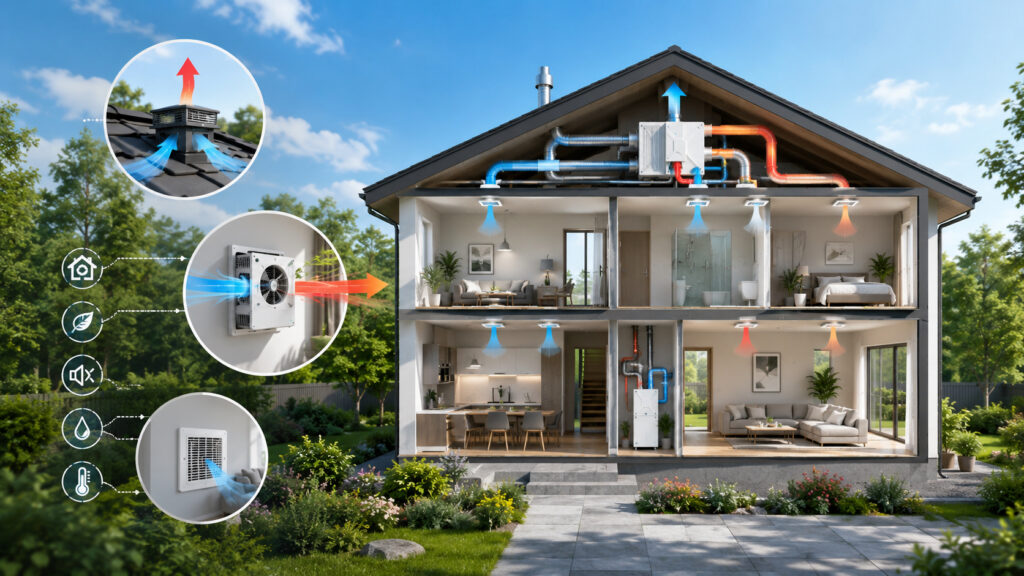
Proper ventilation in a home is very important
Excess humidity is equally harmful. When stale air doesn’t leave the house, moisture settles on walls and in corners. Then mold appears, along with a damp smell and real health risks. So the question isn’t whether you need proper ventilation in a private home, but how to set it up neatly without redoing half the walls.
How to Properly Set Up Ventilation in a Private Home
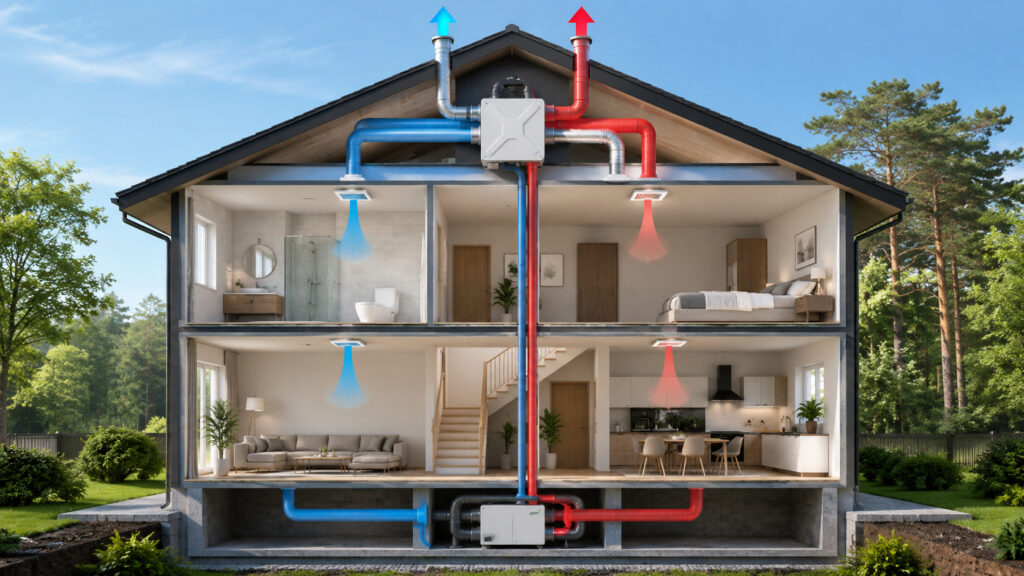
It’s critically important that fresh air not only comes in but stale air is also removed
Any system relies on a balance of two flows: fresh air intake from outside and exhaust of stale air. If there’s only exhaust, there’s nowhere for air to come from, and the draft drops. If there’s only intake, the house builds up excess pressure and doors start slamming.
In older homes, the bet was on natural draft through ventilation channels. Today that’s not enough, especially after replacing windows with airtight double-glazed units that no longer allow air to seep in. So when people ask how to properly set up ventilation in a home, the answer almost always comes down to forced air intake. This is where modern devices come into play.
Breathers: Supply Ventilation in Your Home DIY
A breather is a compact supply ventilation unit that’s mounted in a wall and delivers clean outdoor air into the room. The air passes through filters, is cleaned of dust, exhaust fumes, and allergens, and in winter it’s also heated, so you won’t get hit with a cold stream in your back.
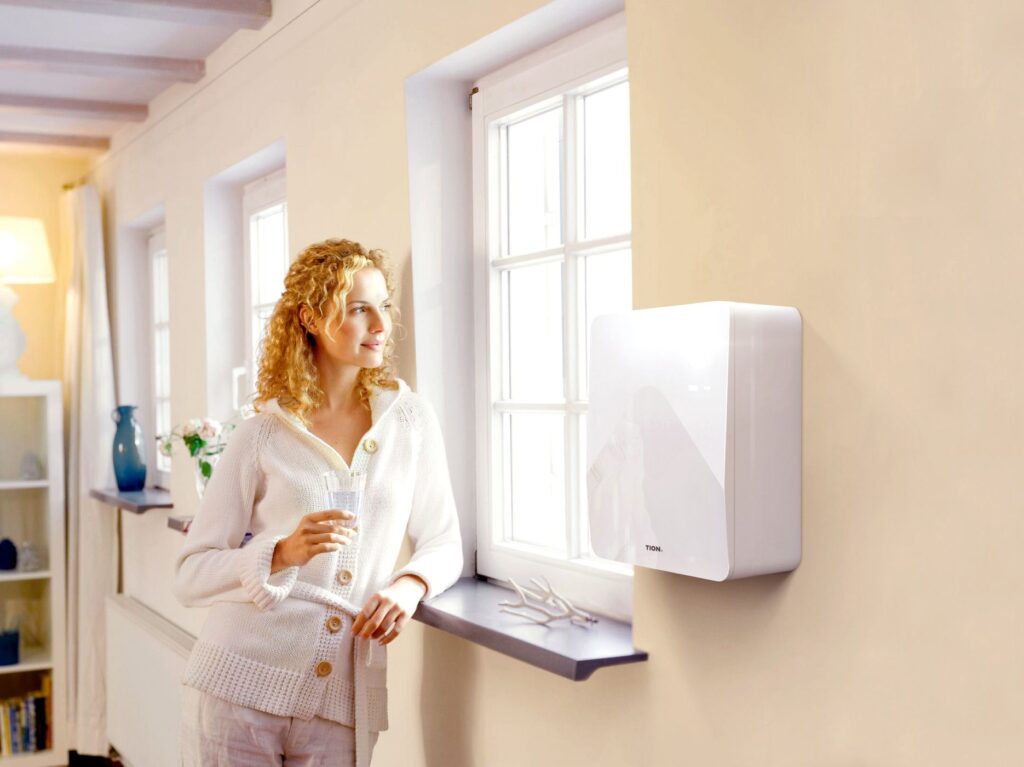
A breather is a top choice. Image: prorus.ru
The main advantage for a private home is that proper supply ventilation using breathers doesn’t require running ductwork across the entire floor. One unit per room, a hole in the wall about 12 centimeters wide, and you’re done. Many people install them themselves, so the idea of proper DIY home ventilation with breathers is quite realistic, though drilling through a load-bearing wall is better left to a professional.
Choosing a model for your space and budget is easier with a ready-made list: a large catalog of breathers with filters by performance and noise level is useful both for bedrooms where quiet matters and for allergy sufferers who need powerful units with HEPA filters.
Recuperators and Ventilation Systems for Large Homes and Offices
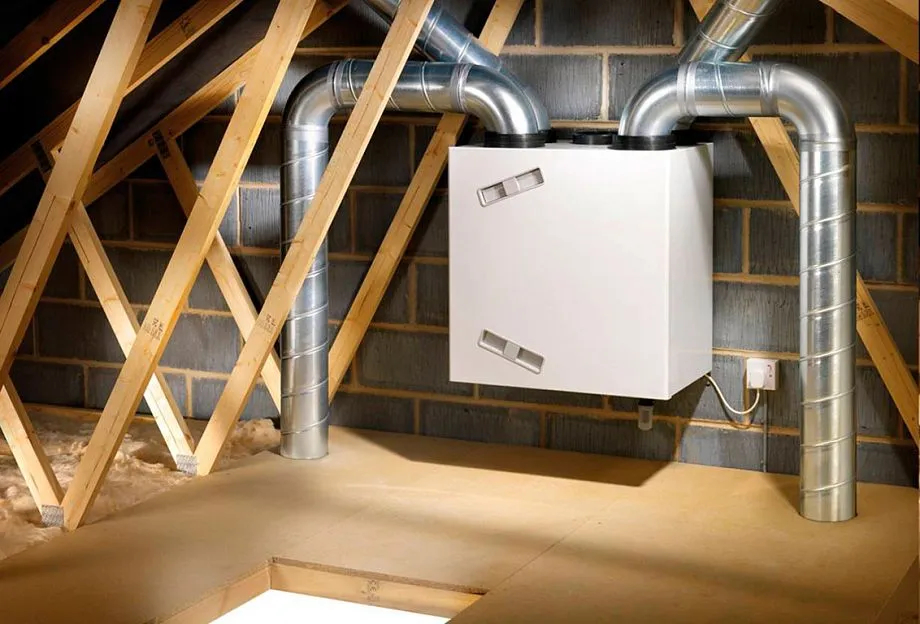
A recuperator is essential in a private home. Image: m-strana.ru
If the house is large or you’re setting up an office, individual breathers in each room won’t be enough. This is where centralized supply and supply-exhaust ventilation with ductwork and a single unit for the entire building comes in.
At the core of such a system is a recuperator. It captures heat from the exhaust air and transfers it to the fresh incoming air. In winter, this means significant savings on heating because warm air isn’t just thrown outside but is reused. The efficiency of good recuperators reaches 80 percent and above, and you’ll notice it on your heating bill right away.
Supply Valves and Ventilation in a Frame House
Among the most budget-friendly intake options is a wall or window valve. Essentially, it’s a controlled opening with a filter and a damper. It has no heating, so the airflow will be cool in winter, but the price is minimal and installation is straightforward.
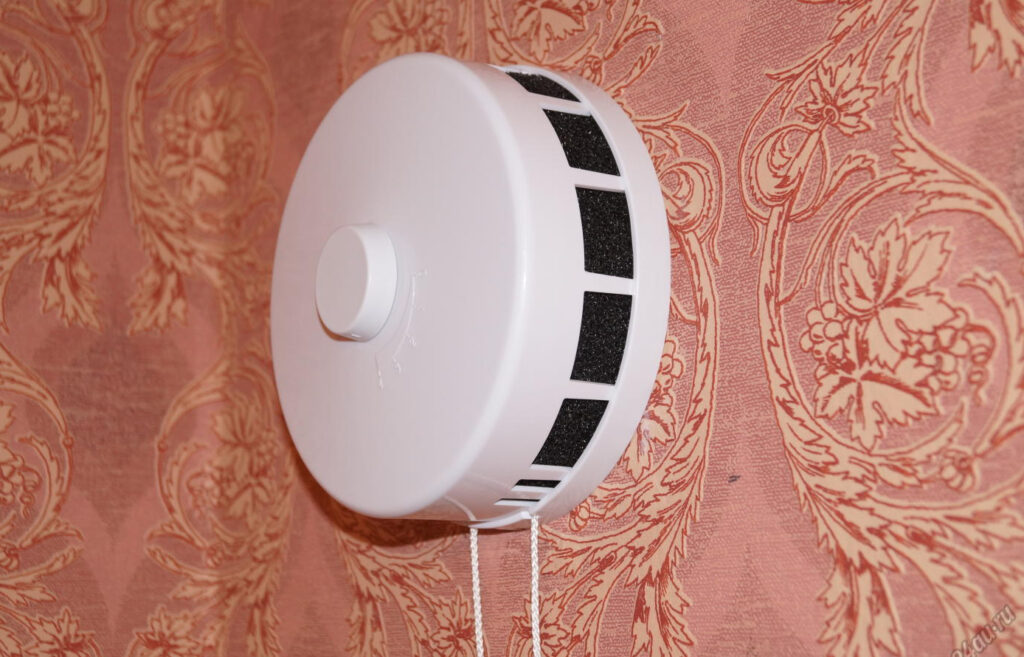
A supply valve is the most basic ventilation method and also the cheapest. Image: zilantvent.ru
Ventilation in a frame house deserves special attention. A frame house is very airtight by design, and air barely passes through the walls. Without forced air intake, it quickly becomes stuffy, and condensation forms on the windows. That’s why in a frame house, air intake is always included, and the earlier it’s planned during the design phase, the cheaper and neater the result.
Proper Basement Ventilation
The basement suffers from dampness more than any other room. Proper basement ventilation is built on cross-flow air movement: supply vents at the bottom on one side and exhaust vents at the top on the opposite side. If the basement is livable or houses equipment, an exhaust fan is added to the natural draft. Otherwise, the dampness will rise to the living floors and return to you as a mold smell.
An important point: in summer and winter