Alongside the release of the Mi Band 10 Pro smart band, Xiaomi unveiled the POCO Pad C1 — a budget option with a 9.7-inch 2K display, Snapdragon 6s 4G Gen 2 chipset, and a 7,600 mAh battery. If it looks familiar, there’s a good reason: this is essentially the Redmi Pad 2 9.7 in a POCO shell. Let’s break down who this tablet is for and whether it’s worth your attention.
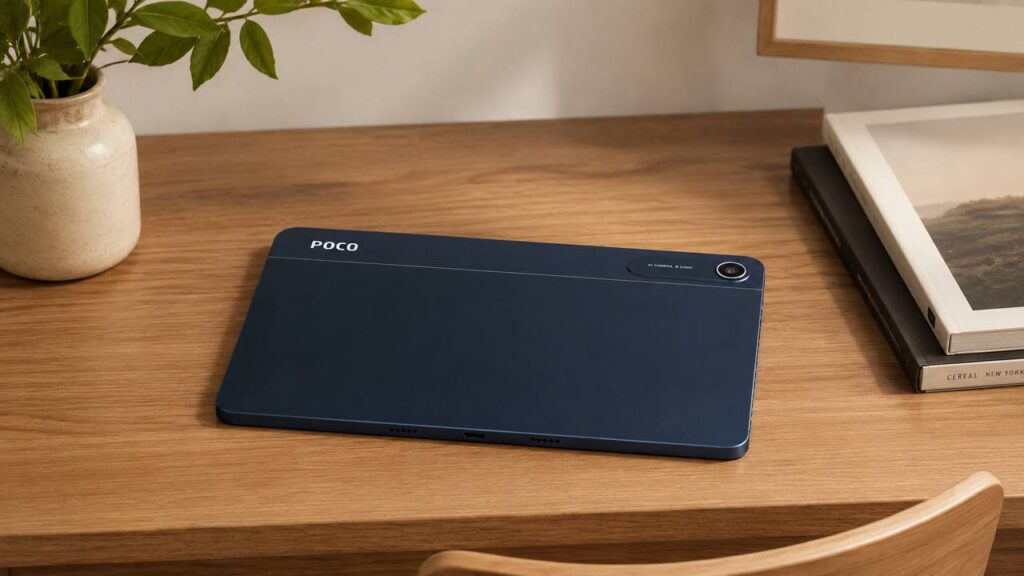
POCO released a new tablet with a 2K display
POCO Pad C1 Specifications
The tablet’s main feature is a 9.7-inch IPS display with 2K resolution (2048 × 1280 pixels), a 120 Hz refresh rate, and peak brightness of 600 nits. The display also received TÜV Rheinland certification for reduced blue light and flicker — useful for those who read a lot or watch videos before bed.
Inside is the Snapdragon 6s 4G Gen 2 — an 8-core chip built on a 6nm process with clock speeds up to 2.9 GHz. It’s worth clarifying right away: despite the fresh name, this is essentially a rebranded Snapdragon 685 with a slight overclock. The chip only supports 4G — there’s no 5G here. It’s perfectly adequate for watching videos, social media, reading, and light gaming, but you shouldn’t expect it to handle serious workloads.
The POCO Pad C1 comes in two modest configurations: 4 GB RAM + 64 GB storage and 6 GB RAM + 128 GB storage. Storage can be expanded with a microSD card up to 2 TB (a nice bonus for a budget device). The memory type is LPDDR4X and UFS 2.2 — not the fastest by modern standards, but normal for this class of device.
POCO Pad C1 Battery Life
The tablet features a 7,600 mAh battery. Xiaomi claims up to 1.7 days of mixed usage and up to 15 hours of video playback. These are decent figures for a device of this class, though real-world results will of course depend on brightness and whether 120 Hz is enabled.
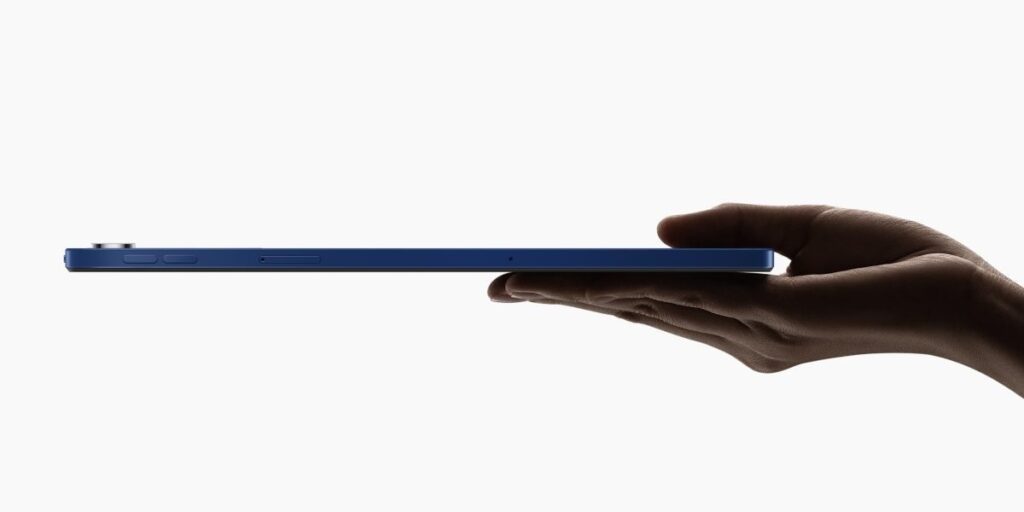
Despite its slim profile, the tablet has a large battery. Image: POCO
Charging, however, is a weak point. Only 18W is supported, which means a fairly long charging time for such a large battery. For comparison: many budget smartphones with batteries half the size charge faster. On the plus side, the tablet can charge other devices — 10W reverse charging is supported, allowing you to use it as a power bank for earbuds or a smartphone.
POCO Pad C1 Camera
The cameras here are purely utilitarian: 8 MP on the back and 5 MP on the front. It’s enough for video calls and scanning documents, but you’re unlikely to be taking photos with a device at this level.
On the software side — Xiaomi HyperOS 3 with a set of built-in AI-powered features: Google Gemini for text tasks and Circle to Search — a function that lets you circle any object on the screen and instantly find information about it in search. Ecosystem integration with other Xiaomi and POCO devices is also promised — syncing calls and notifications between the tablet and smartphone. The body is metal, 7.4 mm thick, and weighs 406 g. There are stereo speakers and a 3.5 mm headphone jack, which is more of a pleasant exception for tablets nowadays.
POCO Pad C1 vs Redmi Pad 2 9.7 Comparison
If the POCO Pad C1 specifications seem familiar, it’s because this is practically a complete clone of the Redmi Pad 2 9.7 (not to be confused with the regular Redmi Pad 2), introduced slightly earlier. The display, chipset, battery, cameras, body dimensions — everything matches. Xiaomi has been frequently using this approach lately: the same device is released under different sub-brands for different markets and audiences.
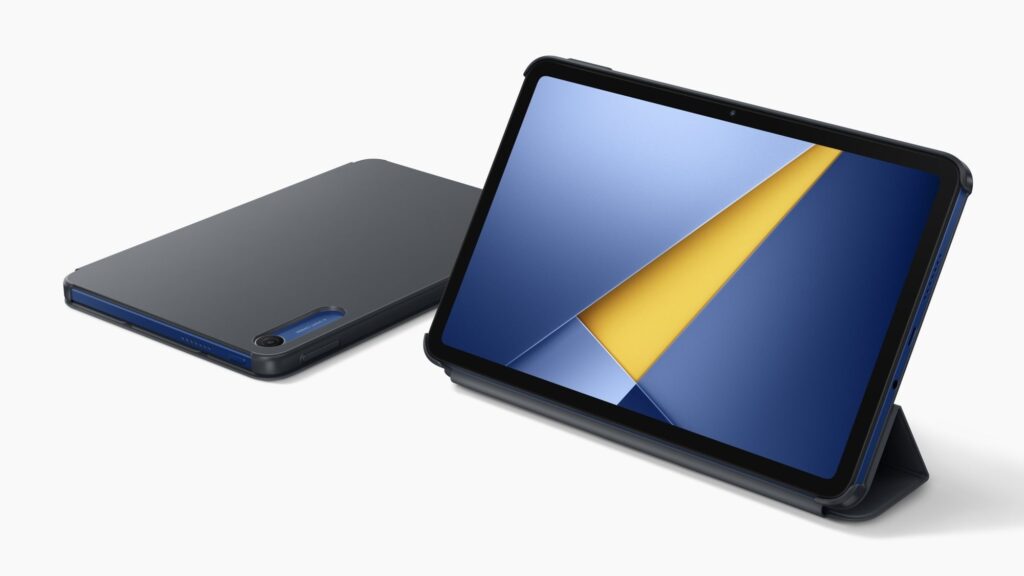
The POCO tablet is just as compact and affordable
The POCO version differs in design and possibly memory configurations. The Redmi Pad 2 9.7 starts with only 4 GB RAM, while the POCO Pad C1 offers a 6 GB option. For a budget tablet, the extra 2 GB of RAM will noticeably affect multitasking — browser tabs will be less likely to be unloaded from memory.
POCO Pad C1 Release Date and Price
The tablet is launching on the global market. According to preliminary data, the starting POCO Pad C1 price will be $139 for the 4/64 GB version (approximately from 15,000 ₽ in Russia) and $179 for the 6/128 GB version (approximately from 20,000 ₽ in Russia). Prices in local currency have already been announced in Malaysia: 599 and 799 ringgits for the lower and higher versions respectively. In Europe, the estimated price is around 149 euros.
Available in two colors: gray and blue. Sales begin through official Xiaomi channels and marketplaces. Prices for specific regions, including Russia, have not yet been announced.
Is the POCO Pad C1 Worth Buying at This Price?
The POCO Pad C1 is an honest budget tablet of 2026 for those who need a comfortable screen for video, reading, and social media without overpaying. A 2K resolution display with 120 Hz at this price point is a notable advantage. The battery is large, the body is metal, and there’s a microSD slot and headphone jack. But there are obvious compromises too. The chipset is 4G only — there’s no 5G support, and in 2026 that’s noticeable.
Charging is slow, cameras are minimal, and the processor itself is essentially a rebranded chip that’s been around for years. If you need a tablet for studying, YouTube, and messaging — the POCO Pad C1 will handle it excellently. If you need at least some performance headroom for the future, it’s worth looking at devices with the Snapdragon 7s Gen 4, which offer more modern internals in the same price range.