Apple released a press release announcing that Tim Cook is stepping down as CEO of Apple. Starting September 1, 2026, the company will be led by John Ternus — a person most users have never even heard of. Let’s figure out who he is and why Apple bet on him specifically. And let’s quietly start hoping that Apple products will become at least more interesting.
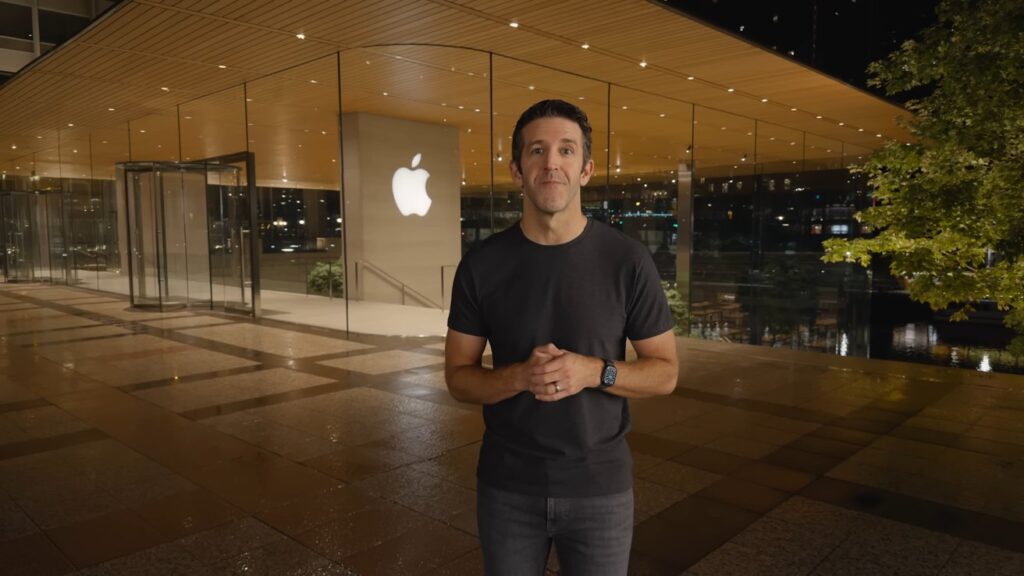
All Apple presentations will now begin with this face
Tim Cook Steps Down as Apple CEO
Just a month ago Tim Cook was talking about the future of new iPhones, and on April 20, Apple officially announced that he is leaving the CEO position. The board of directors made the decision unanimously. Cook will remain at the company in the role of executive chairman of the board of directors — handling interactions with regulators and politicians worldwide.
This is the first leadership change at Apple since 2011, when Cook replaced Steve Jobs. Over 15 years under Cook, the company’s market capitalization grew from approximately $350 billion to $4 trillion — more than 10-fold. Cook called his time as CEO “the greatest privilege” of his life.
Until September 1, Cook will continue to serve as CEO. This means WWDC 2026 and the possible announcement of an updated Siri will still happen under his leadership. But the September presentation — that’s already the new CEO’s territory.
Who Is John Ternus and What Has He Done at Apple
Previous leaks about who would lead Apple ultimately proved correct. John Ternus is 51 years old — exactly the same age Cook was when he took over Apple in 2011. Coincidence? Unlikely. The board of directors is clearly counting on Ternus to lead for more than one decade.
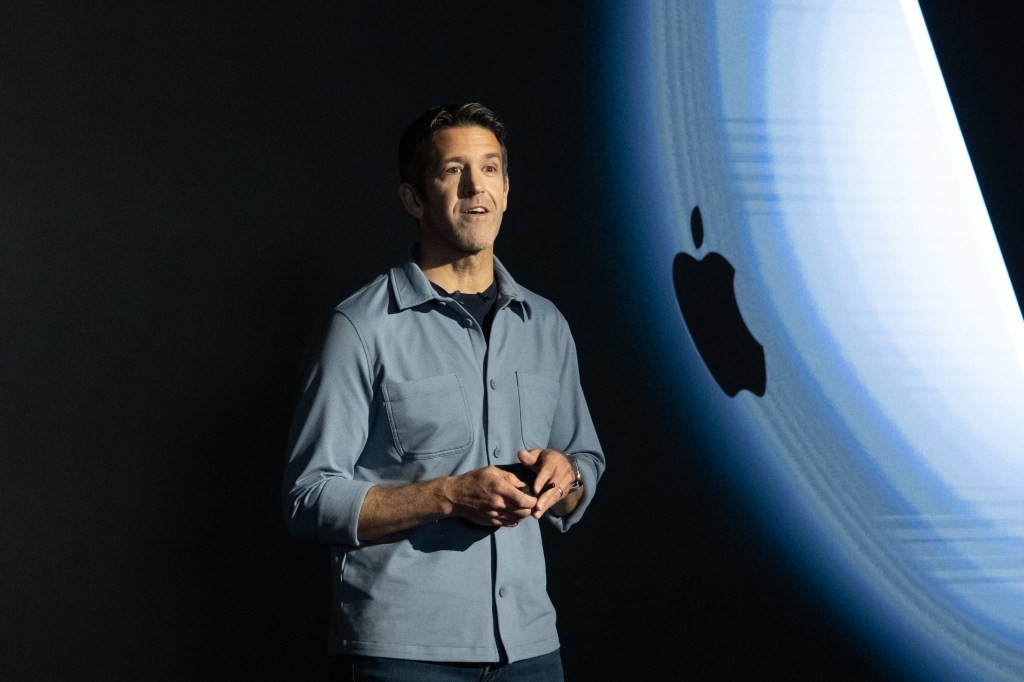
John Ternus has spent a long time at Apple — he’s not an outsider
Ternus is Vice President of Engineering. He leads all the teams that develop Apple’s hardware: iPhone, iPad, Mac, Apple Watch, AirPods, Vision Pro. Essentially, every Apple device you hold in your hands has gone through his department.
He earned a bachelor’s degree in mechanical engineering from the University of Pennsylvania in 1997. During his studies, he competed on the university swim team. And his senior thesis project was a mechanical arm for feeding people with quadriplegia, controlled by head movements. Even then, it was clear that Ternus knew how to solve engineering problems with a human touch.
After university, Ternus joined Virtual Research Systems — a small company that developed VR headsets. It was the 1990s, and virtual reality was experiencing its first wave of interest. Four years of working with display technologies and interaction interfaces proved invaluable — especially when years later Ternus oversaw the creation of Apple Vision Pro.
Ternus joined Apple in 2001 — on the product design team. His first project was the Apple Cinema Display. In his commencement speech to University of Pennsylvania students in 2024, he recalled how in his first year of work, he ended up at a supplier’s factory far from home, late at night examining screws through a magnifying glass. The screw head had 35 grooves instead of the required 25. Ternus argued with the supplier over those ten extra grooves — and even then wondered if this was normal.
Turns out — for Apple, it was more than normal.
Apple Products That John Ternus Created
By 2013, Ternus had risen to Vice President of Hardware Engineering. His area of responsibility expanded rapidly. Here are the key Ternus projects that went through him:
- AirPods — Ternus oversaw the launch of the lineup from the very beginning. The earbuds became one of the most successful new Apple products of the Cook era.
- iPad — expanding the product lineup with new form factors, including the iPad Pro 2018 with a new design without the Home button.
- Transition to Apple Silicon — one of the most risky and ambitious engineering moves in the last 20 years. Ternus led this process.
- iPhone Air — Ternus personally presented this product at a keynote, which was a signal of his growing role.
- MacBook Neo — Apple’s budget laptop at $599, running on an iPhone chip. Ternus said that creating the Neo required developing a device from scratch.
- Apple Vision Pro — although the headset hasn’t become a commercial hit yet, it was Ternus’s department that was responsible for its hardware.
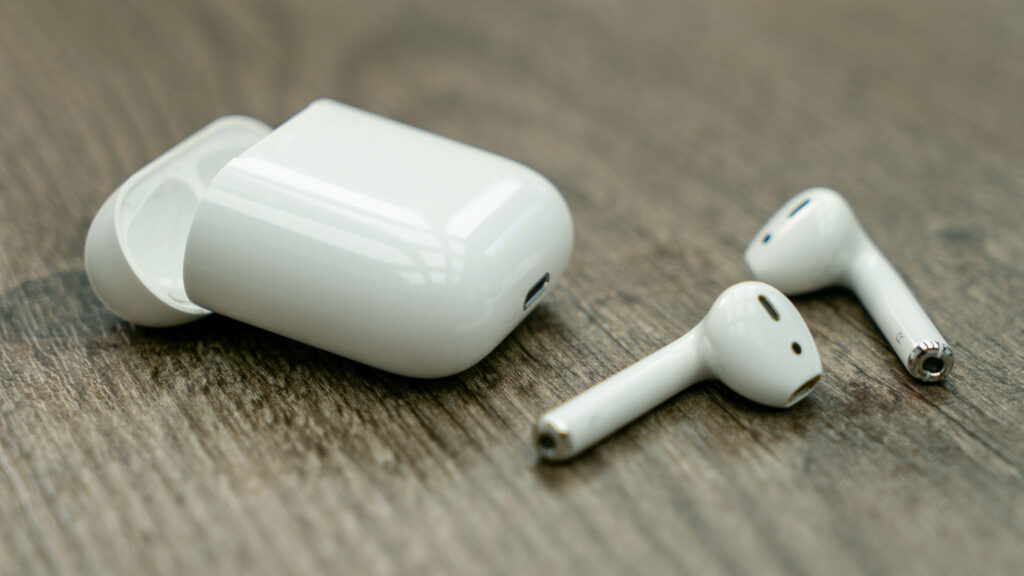
You could say Ternus got us hooked on wireless earbuds
Ternus also regularly appeared at WWDC and Apple Events — presenting updates to iMac, MacBook Pro, iMac Pro, and the completely redesigned Mac Pro 2019.
How John Ternus Differs from Tim Cook and Steve Jobs
A former colleague who worked with all three leaders gave Bloomberg a very accurate characterization: Jobs was a product visionary, Cook was a supply chain genius, and Ternus is the person who ensures the actual development of gadgets.
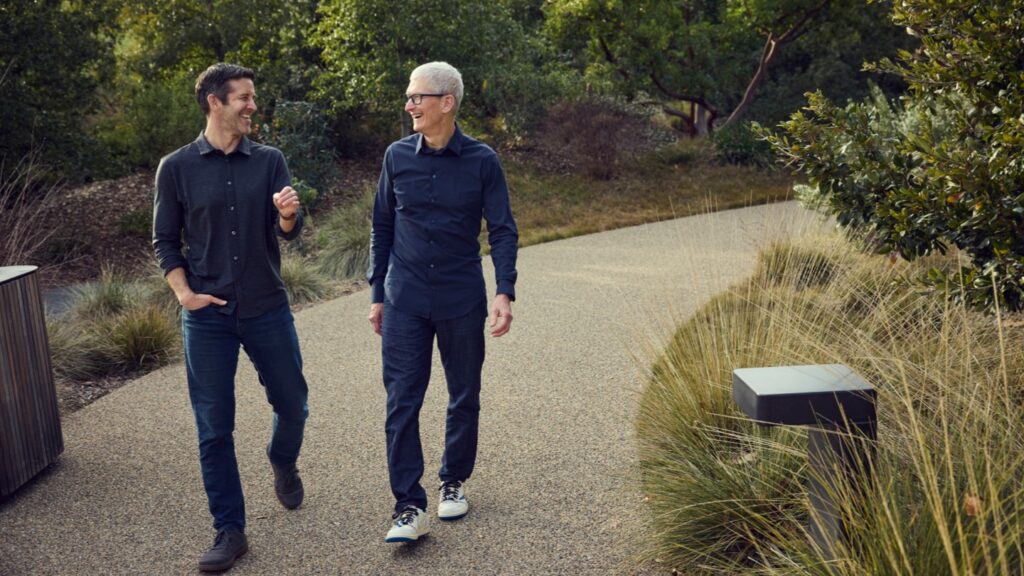
Cook will still remain at the company but will be doing entirely different work
Cook focuses on strategy, financial performance, and logistics. He doesn’t participate in product development directly. Ternus is the opposite. He dives deep into details, gets into technical minutiae during meetings, and repeats that Apple’s culture is built on engineers who go beyond established boundaries.
There’s one story that Ternus loves to tell. Steve Jobs was moving a dresser, pulled it away from the wall, and noticed the back panel. The carpenter who made the dresser had finished the back side just as beautifully as the front — even though no one would ever see it. Ternus says he thinks about this constantly because it perfectly describes the philosophy of Apple.
In the tech world, where there’s no shortage of inflated egos, Ternus stands out for his humility. In that same commencement speech, he told students: be confident that you’re just as smart as anyone else in the room, but never think you know more than everyone else. Incidentally, he doesn’t even have an account on X (formerly Twitter).
Apple’s Problems That John Ternus Will Have to Solve
Ternus inherits not only a powerful product machine but also a serious strategic debt.
Problem number one — artificial intelligence. Apple is frankly behind its competitors in this area. The Siri update has been repeatedly delayed, and in December 2025, the company even replaced its AI division leader, bringing in a Google veteran. The updated Siri is planned to launch in 2026 based on Google’s Gemini model. Analyst Dan Ives warns: there will be enormous pressure on Ternus, especially on the AI front.
Ternus’s biggest problem right now is Siri