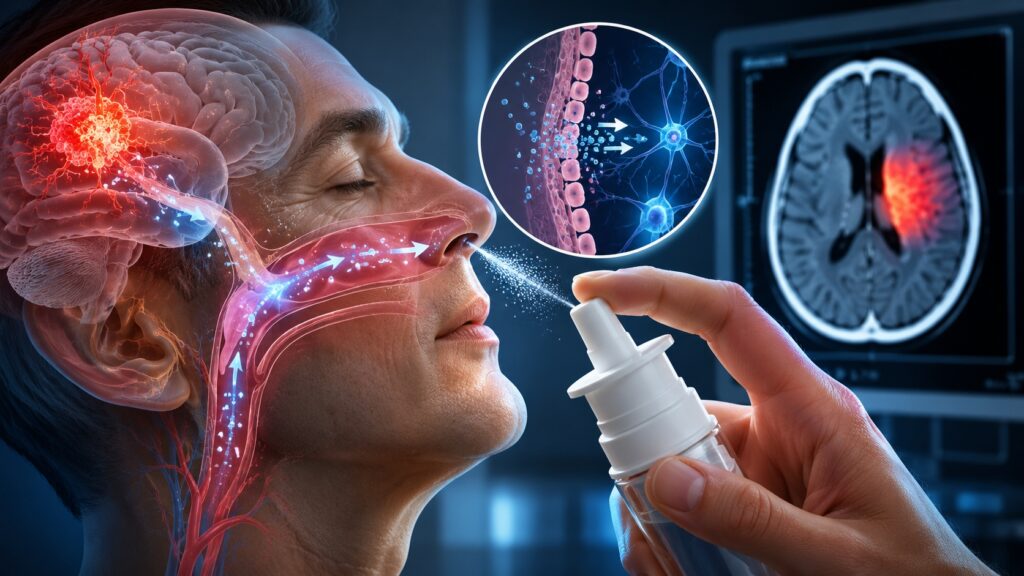
A nasal spray against stroke could save a person from complications
Japanese scientists have developed the world’s first nasal spray that protects brain cells immediately after a stroke, before the ambulance arrives. In animal experiments, the drug reduced brain tissue death by more than 80% when applied within the first half hour.
Nasal Spray After a Stroke
A team from the University of Hong Kong presented a product called NanoPowder. It is a nasal spray containing neuron-protecting medications that have been converted into a very fine inhalable powder.
Instead of treating a stroke only at the hospital, the spray can begin protecting the brain right at the scene. The spray can save a person at home, on the street, or in an ambulance. When applied promptly at the very onset of a stroke, the spray saves time, protects brain cells, and reduces complications.
Why the First Minutes Matter During a Stroke
Ischemic stroke is a blockage of a blood vessel that supplies the brain with blood. Without oxygen, nerve cells begin to die very quickly, and every minute without help means lost neurons. That is why doctors talk about a short window when intervention can still save tissue.
The problem is that this window is very short, and far from everyone manages to get to the hospital and receive treatment in time. As researchers note, more than 85% of patients do not receive timely help, and this gap between the attack and the hospital is exactly what the spray targets.
How the Medication Gets From the Nose Directly to the Brain
The brain has the blood-brain barrier, a protective wall between the blood and the brain that prevents harmful substances and microbes from entering. It protects the brain from infections but also blocks most medications.
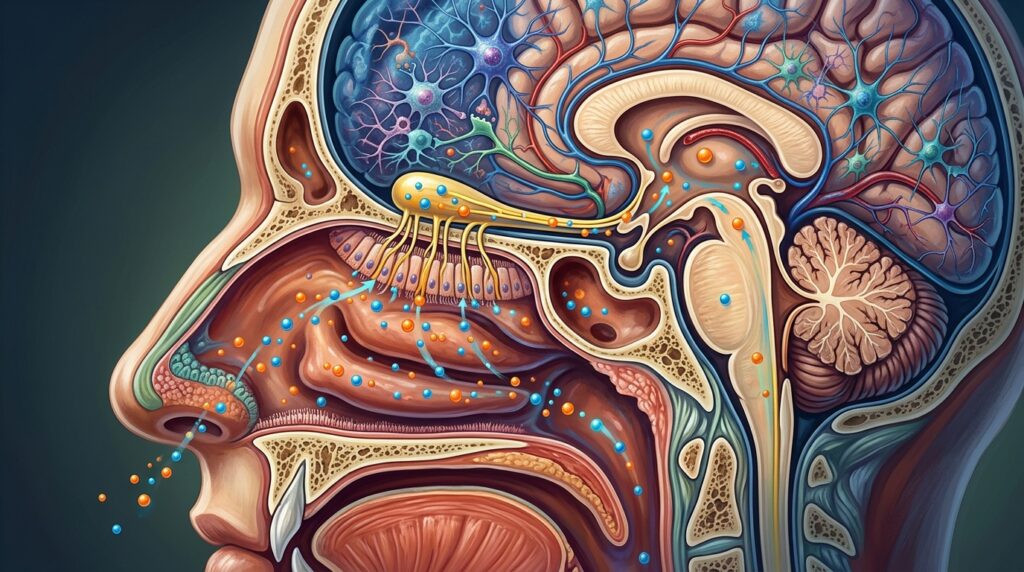
Drug particles travel from the nose to the brain, bypassing the protective barrier
The spray bypasses this wall from an unexpected angle — through the nose. The microscopically sized powder is inhaled into the nasal cavity, where it settles in the right zone, and upon contact with mucus, quickly breaks down into nanoparticles that travel along the pathway from the nose to the brain, bypassing the blood-brain barrier and delivering the medication directly.
This nose-to-brain pathway is also interesting because it requires no injections, surgeries, or complex hospital equipment. This means that, theoretically, even an ordinary person could use the spray.
Does the Nasal Spray Really Reduce Brain Tissue Death?
It is important to note that so far we are talking about preclinical animal trials, not human studies. But the results look impressive. Based on the results of animal testing, the team concluded that patients who inhaled the medication within 30 minutes of symptom onset would be able to reduce brain damage caused by blood vessel blockage by more than 80%.
Beyond saving the tissue itself, the drug also has more subtle effects. According to the scientists, the spray can reduce inflammation, prevent cell death, and preserve the integrity of the blood-brain barrier. This potentially extends the time window available for treatment. The authors also emphasize that the product helps preserve the ability to move, speak, and control the body.
When Will the Stroke Spray Be Available in Pharmacies?
The development has already attracted attention and was recognized at an international exhibition of inventions in Geneva. But pharmacies are still a long way off. Scientists expect clinical trials around 2030.
The plan for introducing this medication is also phased. First, the drug is planned to be made available for use by paramedics, then for high-risk groups in care facilities, and only then made available for sale through pharmacies. In other words, it is primarily a tool for emergency services and medical professionals, not a “home medicine cabinet item.”
What to Do at the First Signs of a Stroke
It is important to note that the spray, even when it becomes available, will not replace emergency medical services.
For now, the most reliable medicine for stroke is the speed of reaction from those around the patient. A simple scheme helps remember the warning signs of a stroke:
- facial asymmetry — when one corner of the mouth or eyelid droops, the smile is crooked;
- weakness in an arm or leg — usually on one side of the body;
- speech impairment — when the person confuses words, speaks unclearly, or cannot understand others’ speech;
- sudden severe headache, dizziness, loss of balance.
If you notice even one of these signs, you need to immediately call an ambulance and note the time when symptoms appeared. This information is critically important for doctors.
NanoPowder spray is important not because it is already saving lives. Rather, it is important for the idea — because with its help, the brain can be protected before the ambulance arrives. And not with an injection, but with an inhalation through the nose. If the technology proves effective in humans, it could reshape the entire logic of first aid for stroke.