
A frozen Yakutia resident survived clinical death
His heart had not beaten for over five hours, blood pressure was at zero, and the ECG showed a flat line — yet doctors in the Yakutian city of Mirny brought the man back to life. The case, which occurred in late March 2026, is one of the longest documented clinical deaths in Russian medical practice. Let’s explore how this was even possible and what role cold played in the rescue.
A Man Froze in Yakutia
According to RIA Novosti, a Yakutia resident was walking home after a gathering, felt tired, sat down on a bench, and fell asleep. This decision proved to be mortally dangerous, because it is extremely cold in this region. Several hours later, passersby noticed the motionless man and called an ambulance.
The arriving medical team recorded clinical death: there was no pulse or breathing, arterial blood pressure was at zero, and the electrocardiogram showed an absolutely flat line with no cardiac activity whatsoever. By all standard criteria, the person before the medics was dead.
But the paramedic did not pronounce death. Instead, he contacted the intensive care unit of the Mirny Central District Hospital.
Can You Survive Clinical Death?
To understand the scale of what happened, it’s worth understanding what clinical death is. It is a reversible stage of dying in which the heart stops beating and breathing ceases, but the body’s tissues — and above all the brain — remain potentially viable.
The key word here is potentially. At normal body temperature, clinical death is usually reversible within 4–6 minutes, rarely up to 8–10 minutes. After just 5 minutes, cells begin to die. The brain consumes an enormous amount of oxygen, and without blood flow, neurons are destroyed first.
But in severe hypothermia, the rules change. Cold can buy time for rescue: when the temperature drops below 35 degrees Celsius, metabolism slows down, and brain cells require less oxygen. In essence, cold preserves the body the way a freezer slows food spoilage. Only instead of food, it’s nerve cells being preserved.
In medical history, there are known cases where people were brought back to life many hours after cardiac arrest without irreversible brain damage. Special conditions can delay cell death — drowning, electric shock, or severe hypothermia.
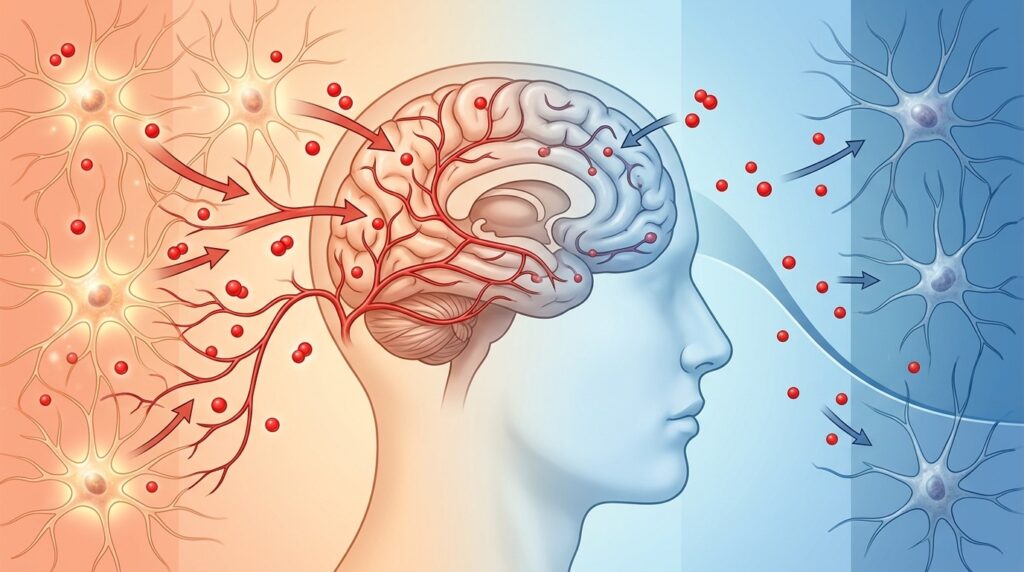
The lower the body temperature, the less oxygen brain cells need
What Is Hypothermia?
Hypothermia is a decrease in body temperature below 35 degrees Celsius. In the early stage, shivering, rapid breathing and heartbeat, drowsiness, and apathy are observed. Then the function of all organs and systems becomes suppressed; as the condition worsens, coma and death occur. This is precisely why freezing outdoors is so dangerous: a person falls asleep and doesn’t feel death approaching.
However, this same process has a flip side. Hypothermia itself is dangerous because the heart and lungs can fail. But if the heart has already stopped, low temperatures slow metabolism in the body, protecting cells from death.
The patient from Mirny had a body temperature of 24 degrees Celsius upon admission to the hospital. According to the medical classification of hypothermia, the 24–28 degree range is considered a severe stage, bordering on irreversible. Paradoxically, it was precisely this severe hypothermia that slowed brain destruction enough to give doctors hours instead of minutes.
How Can You “Thaw” a Person?
On duty in the ICU that day was anesthesiologist-resuscitator Dmitry Bosikov. He had been implementing a unique rescue methodology for hypothermia cases and knew exactly what to do.
And here begins the most delicate part. A frozen person cannot simply be warmed up, because rapid temperature increase would destroy the smallest blood vessels. As the Mirny Central District Hospital explains, the methodology is based on gradual thawing that does not damage the microvascular bed — the network of the smallest vessels in tissues. Damage to these vessels would lead to infarctions, brain edema, kidney failure, and death.
The process took four hours: body temperature was raised from 24 to 34 degrees Celsius. It was, as the hospital’s press service described, coordinated, meticulous, and technically flawlessly executed work.
Only after reaching the 34-degree threshold did doctors proceed with advanced cardiopulmonary resuscitation:
- chest compressions;
- mechanical ventilation;
- administration of drugs stimulating circulation.
After 25 minutes of resuscitation, electrical activity of the heart appeared on the monitor. The total duration of clinical death was 5 hours and 34 minutes.
Resuscitation and Recovery: What Happened Next
After restarting the heart, the man was placed into an induced (medically induced) coma — a standard practice that allows the brain to recover in a gentle mode without stress. After 24 hours, he was brought out of the coma.
The result astonished even the doctors: vital organs were functioning normally. No severe neurological impairments, no kidney failure, no brain damage that might have been expected after such a prolonged absence of blood circulation. After five days, the man was discharged home.
For comparison, the longest cardiac arrest recorded in the Guinness Book of World Records occurred in 2017 with a 31-year-old climber named Roberto in the Italian Dolomites — his heart did not beat for 8 hours and 42 minutes. In Russian medical practice, such cases are exceptionally rare.
Why This Case of “Thawing” a Person Is So Important
The case in Mirny is not a miracle or a coincidence. It is the result of having a specialist with the right qualifications and a ready protocol of actions at a district hospital. The gradual rewarming methodology for hypothermic cardiac arrest is well described in scientific literature, and back in 2002, two studies demonstrated the positive effects of controlled hypothermia after cardiac arrest; by 2003, the American Heart Association had already sanctioned the use of this approach.
The problem is that not every hospital and not every emergency physician is prepared for such a scenario. Standard resuscitation protocols call for stopping efforts after 30 minutes without results. According to the Red Cross, the probability of surviving resuscitation in a hospital is about 20%, outside of it — no more than 10%, and after half an hour of unsuccessful attempts to restore a pulse, the chance of rescue nearly vanishes. But in cases of hypothermia, standard time frames are inapplicable, and knowing this literally saves lives.
This story is a strong argument in favor of specialized protocols for hypothermic patients being implemented more widely, especially in regions with harsh climates. A frozen person without a pulse is not necessarily a dead person. The case of Dmitry Bosikov and his team in Mirny is perhaps the best illustration of this principle.